

I adore hummingbirds. It’s lovely to have these tiny, jeweled visitors zipping around each year. Every spring, before I make the first batch of nectar and hang the feeders, I glance at the old note taped inside my recipe cabinet – the one that reminds me of the perfect sugar-to-water ratio.
Here’s the safe, bird-approved and expert-recommended recipe I’ve relied on for years . . .
Mix 1 part white sugar with 4 parts water. This mimics natural flower nectar without unnecessary additives like dye, honey, or brown sugar. This ratio keeps hummers healthy and returning. Overly sweet blends may seem tempting, and tend to build swarms around a feeder, but the 1:4 ratio keeps their little bodies safe and their visits consistent!
If you put out a feeder, try to keep it stocked so the birds can rely on it. Many will nest nearby or make your yard part of their daily routine once they’ve found a steady food source.
If you start offering a food source (nectar for hummers, seed for cardinals, suet for woodpeckers), plan to keep it going for the whole season. They’ll come to expect it, and suddenly removing it can leave them scrambling to find enough to eat, especially when they have chicks to feed.
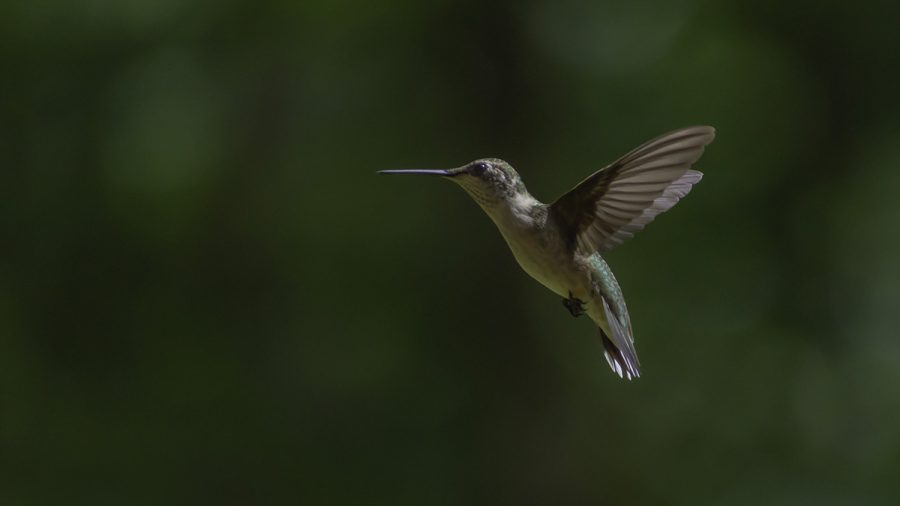
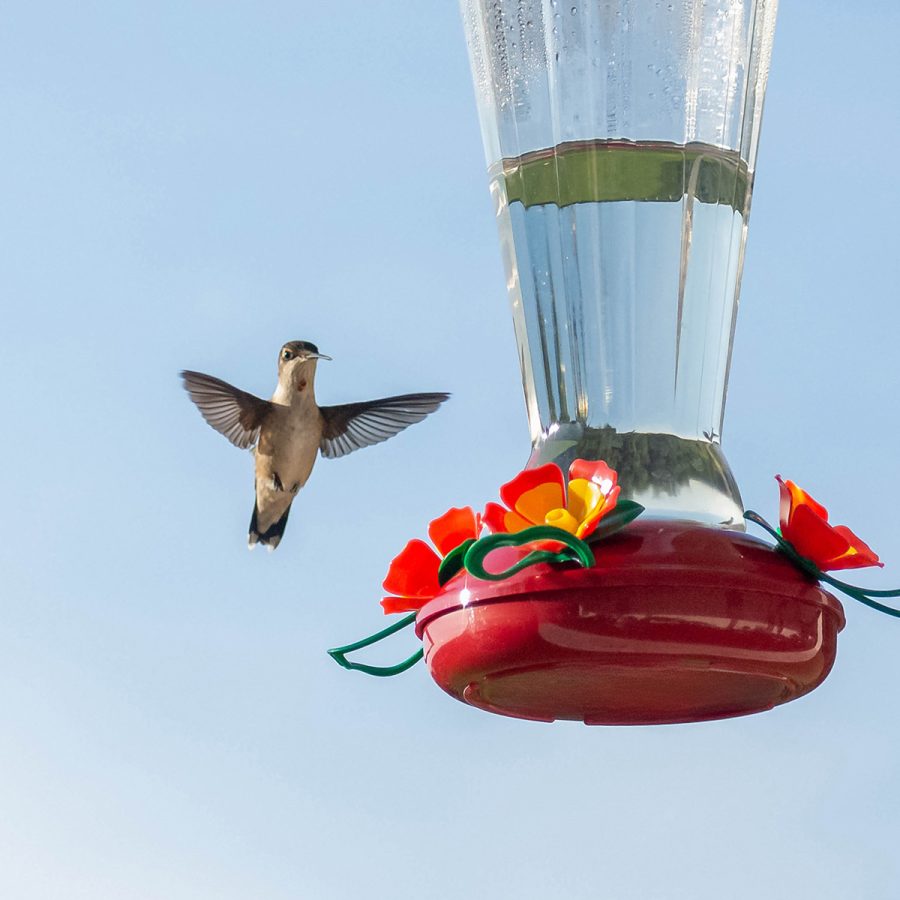
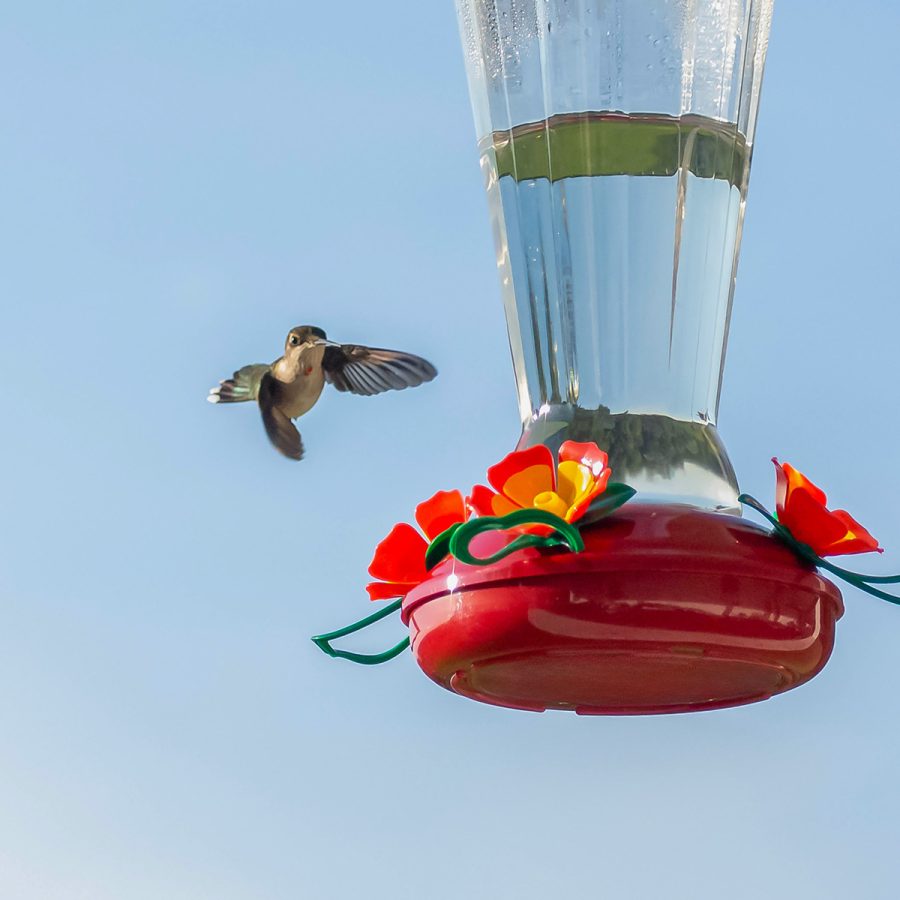
All of the hummingbird images in this article are my own. I’ve been putting out and maintaining hummingbird feeders every year since the early 2000s, and many of these photos are the result of patient spring and summer days spent watching and waiting.
Our Visitors Through the Season
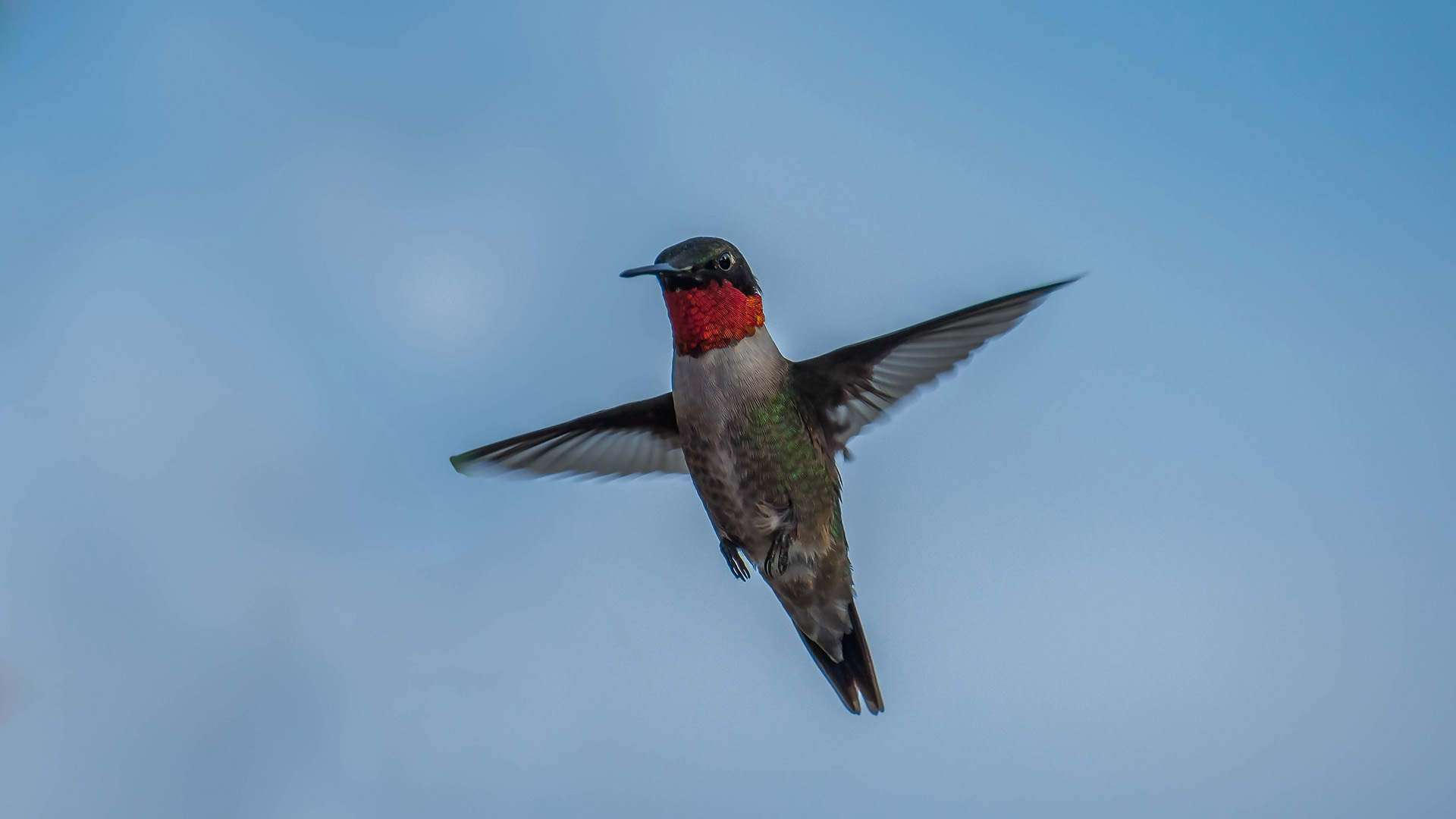
We get lots of visiting hummers every year, most are Ruby-throated Hummingbirds. We generally start to see males sometime in March, scouting food sources ahead of the females perhaps. One of my favorite photos is the featured image at the top of this article. It’s not perfect, but you can definitely see the full red of his gorget and a bit of the depth of his green. And he’s in flight.
The females arrive shortly after, sometimes even chasing the males away from the feeders. They often linger in nearby bushes or tree limbs, keeping a diligent watch over the area.
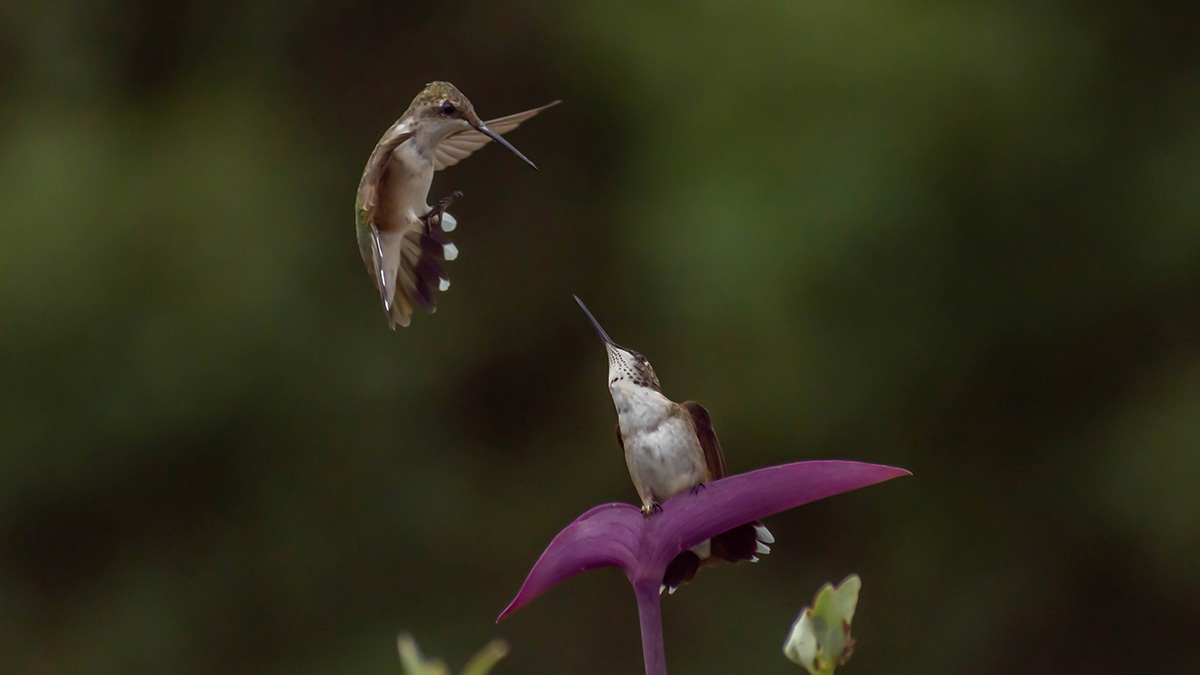
I caught this little female hummer perched in a bush near our front porch, a reminder that once they’ve found a reliable feeder, they tend to hang out and nest nearby. If you put a feeder out, it’s kind to keep it going so that the little hummers who have found it can actually rely on it as a source of food.
Planting for Hummingbirds
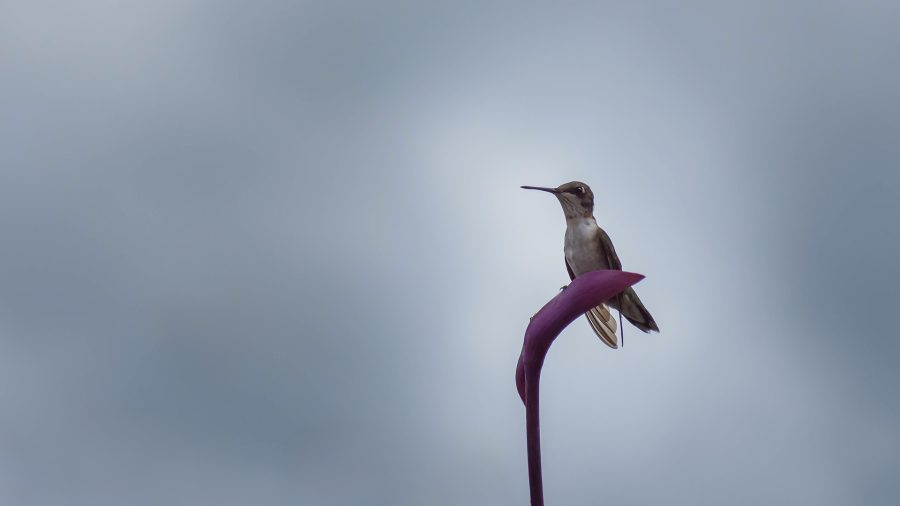
If you’re not able to maintain a feeder regularly, consider planting a hummingbird-friendly garden. We have three butterfly bushes and a few annuals to bring plenty of color and nectar to our yard, but I still keep feeders up.
As a general rule, trumpet-shaped flowers are irresistible to hummingbirds. Petunias, impatiens, and other nectar-rich blooms can also help attract them. I also have a trumpet vine, also known as a hummingbird vine (Campsis radicans) but I definitely need a new, safe place for it since its a beast of a grower. Hummers love the orange trumpet flowers. I’d also like to get my hands on some Coral honeysuckle (Lonicera sempervirens), I’ve heard it’s not as aggressive as other honeysuckle species and that hummers love it, too.
For a deeper look at plants, feeder placement, water sources, and everything else that brings hummingbirds to your yard and keeps them coming back, see How to Attract Hummingbirds to Your Yard.
Making Homemade Hummingbird Food
There’s no need to buy special, pre-made food. If you do, research the brand carefully before buying. Making your own is as easy as boiling water:
- Water – Fill a tea kettle or saucepan and bring it to a boil.
- Sugar – Use only pure white granulated cane sugar. Add ¼ cup sugar for every cup of boiling water.
I usually boil a full kettle, then measure 2 cups of sugar into a large glass mixing bowl. Once the water boils, I pour 8 cups into the bowl, stir until dissolved, and let it cool completely before filling the feeders.
- Avoid honey, brown sugar, Jell-O, or food coloring.
- Clear nectar makes it easier to spot cloudiness or spoilage.
- Store extra nectar in the fridge for up to a week.
Is boiling the water necessary?
I like to boil the water as a precaution and to help the sugar dissolve quickly. I have heard it isn’t necessary, but it certainly doesn’t hurt and I’d rather be safe than sorry. It definitely doesn’t hurt to boil it and an electric kettle makes quick work of it.
Should I add red food coloring?
No. Cornell Lab of Ornithology and the Audubon Society both say clearly: there is no reason to add dye to hummingbird nectar. Natural flower nectar is clear. The red parts on the feeder do the attracting just fine. The dye adds nothing useful and carries real risk, given how much nectar a hummingbird drinks daily and how small they are. Skip it.
This full-page printable includes the 1:4 recipe, quick-reference measurement chart, and feeder-care tips.
Print it as-is for your recipe binder, or fold it in half for a handy card to keep by your feeders.
Finding The Perfect Hummingbird Feeders
I’ve gone through a lot of hummingbird feeders over the past 20+ years and honestly, at this point, I prefer the tough plastic ones that are easy to maintain, easy to clean, and easy to see through to the food from a distance.
For everyday practical feeders, I stay at $10 or under and replace them couple of years or so. They’re out in the weather and they fade and age. Spending less and replacing more often just makes sense. You can find good basic feeders at local hardware stores, nurseries, Tractor Supply, and most big box stores and, of course, online.
One I’d specifically recommend right now: this 20-ounce Birdream feeder, available in blue, red, purple, green, or pink. They come in a two-pack for around $16, so under $8 each, and they’re genuinely easy to clean. I used them all last summer, and am using them again this summer.
If you need a feeder, Chewy carries a good selection at reasonable prices, practical plastic ones and nicer glass options. I go for this 13-ounce, wide-mouth feeder because it’s easy to clean. I also adore this 12-ounce feeder because it’s easy to clean and you get a better view (and photos) of the hummers who come to it.
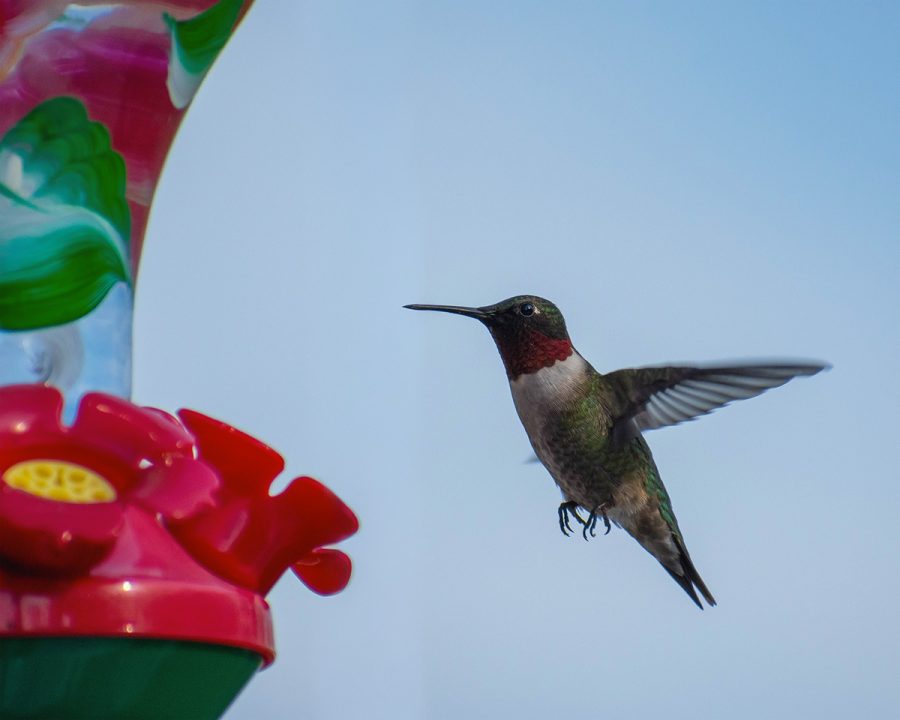
I’ve also had some really pretty light-bulb-shaped glass ones with hand-painted details. Beautiful, honestly. But they’re heavy, the small opening makes them hard to clean, and they eventually fade and get issues just like the cheaper ones do. These days I keep it simple. The hummers don’t care how fancy the feeder is.
For a wider selection including specialty and glass feeders, Duncraft is a good destination. Family owned since 1952, they carry everything from practical plastic to glass works of art, plus accessories like cleaning brush sets, feeding port brushes, and replacement bee guards.
No matter what kind of feeder you buy, make sure it’s easy to clean, and make sure it holds the right amount of sugar water for the number of birds you’ve got coming around. Too small and you’re refilling constantly. Too large and you’re dumping good nectar before the birds can drink it. Depending on the weather, you should clean your hummingbird feeder every 2 to 3 days, or every 3 to 5 days in cooler weather.
Keeping Feeders Clean and Fresh
Sugar-water spoils pretty quickly outside in the heat. Though it lasts up to a week in the fridge, be prepared to make a visual check once a day in hot weather. During the heat of the summer, you’ll probably need to give it a quick clean and food replacement every other day. If the sugar-water has a cloudy appearance, it’s past time to take it down. In cooler, less humid weather you may need to clean it just every 5 days or so.
To clean:
- Empty any leftover nectar.
- Disassemble the feeder.
- Rinse it out using hot water. If needed, a bit of diluted Dawn works great, or you can soak your feeder and its parts in vinegar water, or a diluted bleach solution (1 part bleach to 9 parts water). Rinse thoroughly either way and air dry completely before refilling.
- Scrub the parts with a bottle brush, rinse well, allow to dry, and then refill.
A toothbrush works for small feeding holes, and a toothpick can dislodge something stubborn. The little twist ties on bread also work fantastic for threading through feeder holes, and they sell various brushes that are also just the right size for getting in there to give your feeder a good clean.
TIP: You can actually use vinegar and uncooked rice to effectively clean out the inside part of a feeder that has a smaller filling hole and it’s tough to get a brush in all the spots where the nectar is kept. Just be sure to thoroughly rinse the feeder if you try that.
I rotate my feeders, taking one down to immediately replace it with a freshly filled feeder. That gives me plenty of time to get the old feeder cleaned and ready for its turn outdoors.
I hope you’ll give hummingbird feeding a try. If you do, commit to keeping that feeder going. They’ll come to rely on it. It’s a small responsibility with a big reward: the joy of watching these incredible little birds return day after day (and even year after year).
Last updated: May 22, 2026
Originally published: April 22, 2010


Our favorite plants for hummers include rhododendrons, azaleas and rose of Sharon bushes.
great post as usual!
Great work! Very informative and well-written.
To clean and soak hummingbird feeders, IMHO 1 cup of bleach to 10 cups of water is too much bleach. For 10 cups of water, only 1 tablespoon of bleach would sanitize very well…or fill the feeder bottle with water and add 1 teaspoon of bleach to that and let set for 10 minutes. If there is black mold, scrubbing may be needed after the bleach soak…but black mold shouldn’t have time to form if the feeder is cleaned and the sugar water changed at least 2 times a week.
hummingbirdgrammy has great points! You need very little bleach if you need to use any at all. Vinegar is a decent alternative, too, adding just a tiny bit to your soaking water will help. But if you have black mold forming, you’re definitely leaving your feeder out way too long. Circulating the food regularly means very little effort in cleaning!
In super hot-weather, use just enough food for a couple days and change it out. In cooler weather, you can go longer between changing it out. It also helps if you place the feeder in the shade.
Thank you for reminding us that feeding the hummers is a commitment. You have shared some great info.
Hi, I love your blog. I am trying to find out all there is to know on hummingbirds. They are amazing how they just seem to hover so effortlessly whilst feeding.
This post is really great. It’s nice that you are able to come up with an interesting idea on making your own food for your hummingbirds. They are such exquisite birds.
Making your own hummingbird food is economical and also it is much safer since we know what our birds eat since we make it ourselves instead of buying it in pet shops.
This post is really full of information. I haven’t tried making food for hummingbirds since I usually buy it from the store. This is quite economical. I’ll try to make some one of these days.
Great tips on how to find the perfect hummingbird feeder and make their food. And you’re so right about not using red food coloring. I was sceptical at first, but it made no difference without the red so I never use the coloring now.
Thanks for sharing.
Geoff
You ought to be a part of a contest for one of the best sites on the net.
I am going to highly recommend this website!