
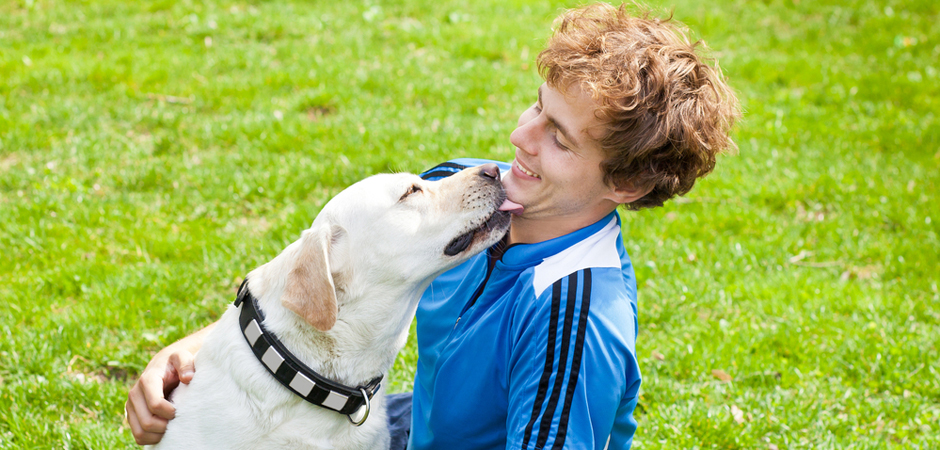
Sometimes when my husband is lounging on the couch watching TV, one of our dogs will jump up behind him and start licking the top of his head. Another dog thinks bare feet are irresistible targets, and our little “designer dog” occasionally tries to lick my eye if he wakes up before I do.
Dog licking can be funny, affectionate, and sometimes downright annoying.
Most dog owners see this behavior regularly. Dogs lick people when greeting them, lick their paws while settling down for the night, and sometimes even lick their beds or blankets before falling asleep. They may also lick other dogs as part of normal social interaction.
While a few dog “kisses” can be sweet, constant licking can be seriously obnoxious and can make us wonder what’s really going on.
Why Do Dogs Lick So Much? What Your Dog Is Trying to Tell You
Why Licking Is Natural for Dogs
Licking is a behavior that begins early in a dog’s life.
Mother dogs lick their puppies to clean them, stimulate important bodily functions, and help strengthen the bond between them. Puppies also lick their mother and littermates as a way of communicating and interacting within the pack.
Because of this early learning, licking remains a natural form of communication and grooming throughout a dog’s life.
For most dogs, licking serves several different purposes.
Affection and Communication
One of the most common reasons dogs lick people is simply affection.
When your dog licks your hand while you’re petting them, it’s often their way of showing comfort, trust, and connection. Many dogs also lick as a form of greeting, especially when they are excited to see someone they know.
In these situations, licking is simply a dog’s version of saying hello.
Taste and Curiosity
Dogs experience the world largely through scent and taste.
Human skin often carries salt from sweat, especially after exercise or time spent outdoors. Many dogs enjoy this salty taste, which can lead to enthusiastic licking of hands, legs, or feet.
While it might seem odd to us, to a dog it’s simply an interesting flavor.
Normal Grooming Behavior
Dogs also lick themselves as part of normal grooming.
Occasional paw licking or cleaning their coat is completely normal. Just like cats, dogs sometimes use licking to keep themselves clean.
However, if a dog repeatedly focuses on the same spot for long periods, it may signal that something is bothering them.
Skin Irritation or Allergies
Excessive licking can sometimes be caused by irritation.
Common triggers include:
- flea bites or parasites
- environmental allergies
- dry or irritated skin
- infections
- small injuries such as thorns or splinters
Dogs often lick areas that feel itchy, painful, or uncomfortable. Over time, this behavior can make the irritation worse and may lead to hair loss or sores.
Boredom or Anxiety
Sometimes licking is simply a coping behavior.
Dogs that are bored, stressed, or anxious may develop repetitive habits, including licking their paws or licking objects around them.
Just like people might bite their nails or fidget when nervous, dogs may lick to relieve stress.
Increasing exercise, play, and mental stimulation can often reduce this type of behavior.
When Licking Becomes a Problem
Most licking is harmless, but excessive licking may signal a deeper issue.
Watch for signs such as:
- constant licking of the same spot
- hair loss or irritated skin
- sores or redness
- licking that interferes with sleep or normal activity
Persistent licking can sometimes lead to skin infections, hot spots, or lick granulomas, which require veterinary attention.
What To Do About All That Licking
If your dog’s licking seems excessive, start by paying attention to when and where the behavior occurs.
Ask yourself questions such as:
- Does your dog lick when excited or greeting people?
- Do they focus on one specific area of their body?
- Does the licking happen when they are bored or alone?
Understanding the pattern can help you determine the cause.
Simple steps such as increasing exercise, providing toys for mental stimulation, and avoiding reinforcement of attention-seeking licking may help reduce the behavior. If skin irritation or injury appears to be involved, a veterinarian can help identify the underlying cause and recommend treatment.
If your dog’s licking becomes frequent or bothersome, the most important step is figuring out why the behavior is happening in the first place. Different causes require different solutions.
If It’s Affection or Attention-Seeking
Some dogs lick simply because it gets a reaction from their owners.
If this becomes excessive, avoid rewarding the behavior. Instead:
- calmly say “no” or redirect your dog
- stop petting when licking starts
- reward calm behavior instead
Over time, dogs often learn that licking isn’t the best way to get attention.
If It’s Boredom or Anxiety
Dogs sometimes lick when they’re under-stimulated or stressed.
In this case, the best solutions are:
- more exercise and daily walks
- interactive toys or puzzle feeders
- additional playtime and engagement
Mental stimulation and activity can often reduce repetitive behaviors like licking.
If It’s Skin Irritation
If your dog is licking the same area repeatedly, check for signs of irritation such as:
- redness
- swelling
- hair loss
- small sores or “hot spots”
Common causes include fleas, allergies, or environmental irritants. Maintaining a regular grooming routine and parasite prevention plan can help reduce these issues. If irritation persists, a veterinarian may need to evaluate the area and recommend treatment.
If It’s Pain or Injury
Dogs sometimes lick an area because it hurts.
Check for things like:
- a thorn or splinter in the paw
- cuts or scrapes
- swelling or limping
Minor irritants can sometimes be removed at home, but more serious injuries or persistent licking should always be checked by a veterinarian.
The Bottom Line
Dogs lick for many reasons, including affection, grooming, communication, curiosity, boredom, or discomfort.
Most of the time, the behavior is completely normal and harmless. But when licking becomes excessive or focused on one particular spot, it may signal that something is bothering your dog.
Paying attention to your dog’s habits and health can help you decide whether those slobbery kisses are simply a sign of love, or a signal that your dog needs a little extra care.
Last updated: March 8, 2026
Originally published: August 16, 2016