
What to Know, What to Do, and What Your Cat Won’t Tell You
Your cat knew something was wrong the moment you pulled out the carrier. They’ve been watching you from the top of the bookshelf ever since, calculating their options.
Flying with a cat is manageable. Most cats travel in-cabin, which means the carrier goes under the seat in front of you and your cat stays close the whole flight. But easier to book doesn’t mean easier on the cat. Cats mask discomfort in ways that are easy to miss. Your cat can be frozen, silent, and completely stressed out and look fine from the outside. The prep matters just as much as the ticket.
jump to…
First Question: Should Your Cat Fly?
Sit with this one before you book anything.
Cats that tolerate car rides, vet visits, and carrier time without completely falling apart have a reasonable chance of managing a flight. Cats that drool, scream, or lose control of their bladder at the sight of the carrier are already telling you something. The flight won’t reset any of that. It compounds it.
Pay attention to how your cat responds to the specific combination of confinement and unfamiliar noise. Those two things describe most of what happens on a plane.
Flat-faced breeds — Persians, Himalayans, British Shorthairs, exotic shorthairs — need a specific conversation with your vet before any flight. Their shortened airways make breathing harder under stress, and the combination of anxiety and altitude can push a flat-faced cat into respiratory distress faster than you’d expect. Most airlines restrict or ban them from cargo. Even in-cabin, the risk is real enough that many vets recommend against it unless the trip is unavoidable.
Senior cats and cats managing chronic health conditions need the same honest conversation. Flying is a stressor. If your cat is already fragile, you’re adding a significant variable.
And sometimes the right answer is a good cat sitter or a boarding facility that actually knows cats. Leaving your cat home for a week is not a failure. It may be the kindest thing you can do.
Most Cats Fly In-Cabin
Most cats qualify for cabin travel. They’re small enough by definition, which means the carrier goes under the seat and your cat stays with you for the whole flight. The cargo decisions that dominate dog travel planning largely don’t apply here, which means flying with a cat is primarily a logistics and anxiety management problem rather than a regulatory maze.
Don’t mistake “easier to book” for “easier on the cat.” Cats mask discomfort in ways that are easy to miss. A cat that seems quiet and still during travel may be coping fine, or may be shut down from stress. A quiet cat isn’t necessarily a calm one.
What Airlines Actually Require
Policies change and vary by airline. Verify with your specific carrier before you book. Here’s the general landscape as of 2026.
Health certificate. Most airlines require one, issued by a licensed vet within 10 days of travel. Get it even if your airline says they might not check it. Your destination state or country might.
Carrier dimensions. Soft-sided carriers, under the seat in front of you, typically max around 18x11x11 inches. Confirm your specific carrier fits the specific aircraft on your flight. Under-seat dimensions vary by aircraft type, not just airline. The carrier that fits on a 737 may not fit on the regional jet that operates your connection.
Fees. In-cabin pet fees run $50 to $150 one way. Confirm at booking and again at check-in.
Age minimums. 8 weeks for domestic travel. 16 weeks for travel to the EU.
Book your cat’s spot separately. Most airlines cap the number of in-cabin pets per flight, typically 4 to 6 total across all species. These spots fill up. Book as soon as you have your own ticket and call to confirm. Online booking doesn’t always capture pet reservations correctly.
Code-share flights. If a partner airline operates your actual aircraft, their pet policy applies, not the airline you booked with. Check both.
Flat-faced breed restrictions. If your cat is a Persian, Himalayan, British Shorthair, or similar, confirm with the airline before you book. Some have outright restrictions, others require additional documentation.
Premium Cabins: What You’re Actually Seeing
The carrier has to fit under the seat in front of you. Many lie-flat business class seats and bulkhead rows don’t have usable under-seat space, so airlines restrict carriers in those rows even while allowing pets on the flight.
The confusion comes from seeing dogs in premium cabins. Those are almost always service dogs traveling under DOT rules, which allow them to occupy floor space regardless of size. Your cat and a pet dog face identical cabin restrictions. The service animal distinction is the only variable.
Confirm your seat works for a carrier, by aircraft type and seat row, before you pay for an upgrade.
The Carrier Has to Feel Like Home
This is the section that matters most for cats and the one most people skip.
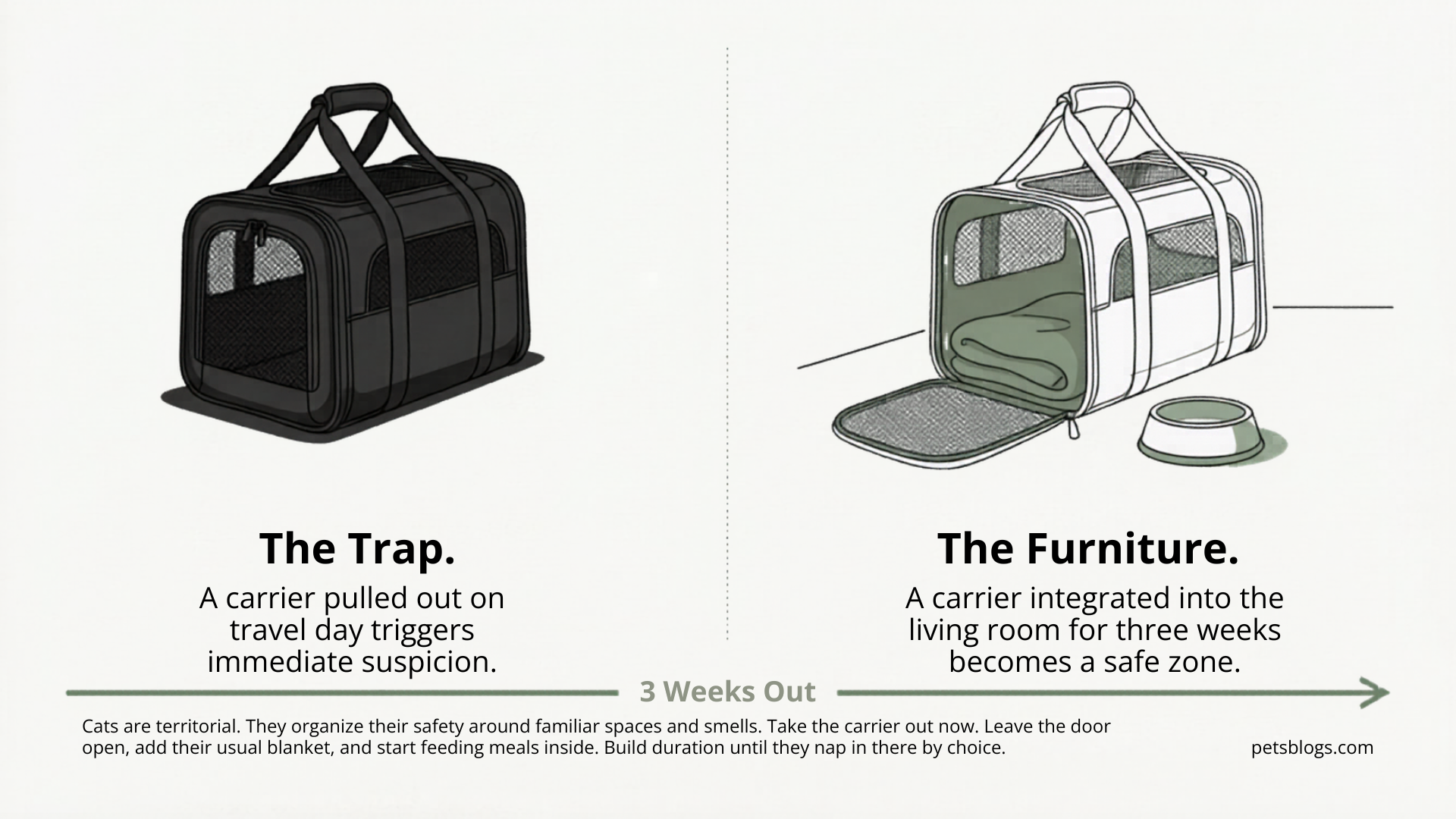
Cats are territorial. They organize their sense of safety around familiar spaces and familiar smells. The carrier your cat only sees before vet visits is a trap to them. The carrier that’s been sitting open in the living room for three weeks, with their blanket inside and their food bowl next to it, is furniture.
That difference is everything on a travel day.
Take the carrier out now. Put it in a room your cat already uses. Leave the door open. Put a worn shirt or their usual blanket inside. Don’t push them toward it. Let them investigate on their own terms, which they will, because cats can’t resist investigating things.
Once they’re going in voluntarily, start feeding meals inside with the door open. When they eat comfortably in there, close the door briefly while they finish. Stay in the room. Build duration over days, then weeks. The goal is a cat that naps in the carrier by choice, because that cat boards a flight with a completely different baseline than one that saw the carrier for the first time this morning.
If you have a few weeks, use them. If you have less time than that, start anyway.
Feliway: Worth Starting Early
Feliway mimics the facial pheromone cats deposit when they rub their cheeks against surfaces they consider safe. It signals to the cat’s nervous system that this space is claimed, familiar, and not a threat.
Start using it at home before travel, not just on the day. A plug-in diffuser near where the carrier lives gives your cat weeks of low-level pheromone exposure that builds a positive association with the space. Spray the inside of the carrier 15 to 20 minutes before your cat goes in. Let the alcohol carrier evaporate fully before they get in. The spray itself smells chemical; the pheromone effect activates once it airs out.
Use it again at your destination to help your cat settle into the new space.
It doesn’t work for every cat. Nothing works for every cat. But it’s drug-free, low-risk, and has enough evidence behind it that vets recommend it consistently. Start it early enough to know how your cat responds before travel day.
Day of the Flight
Skip the meal. Hold food for 4 to 6 hours before the flight. An empty stomach reduces nausea and accidents. Water is fine until you leave.
Check the litter box. Give your cat access right up until they go in the carrier. Note when they last went. You want them empty before boarding.
Line the carrier with a pee pad. Most cats hold it for the duration of a flight, stress suppresses the urge for many of them, but delays happen. A dry surface matters.
Put something familiar in the carrier. A worn shirt, the blanket they already sleep on, a toy they’ve had for years. Your scent is the most useful thing in there. Don’t use anything so bulky it restricts their ability to turn around.
Arrive early. Not on-time early. Genuinely early. Rushing through an airport with a cat in a carrier while watching the clock is a bad combination. Give yourself an extra 30 to 45 minutes beyond your normal cushion.
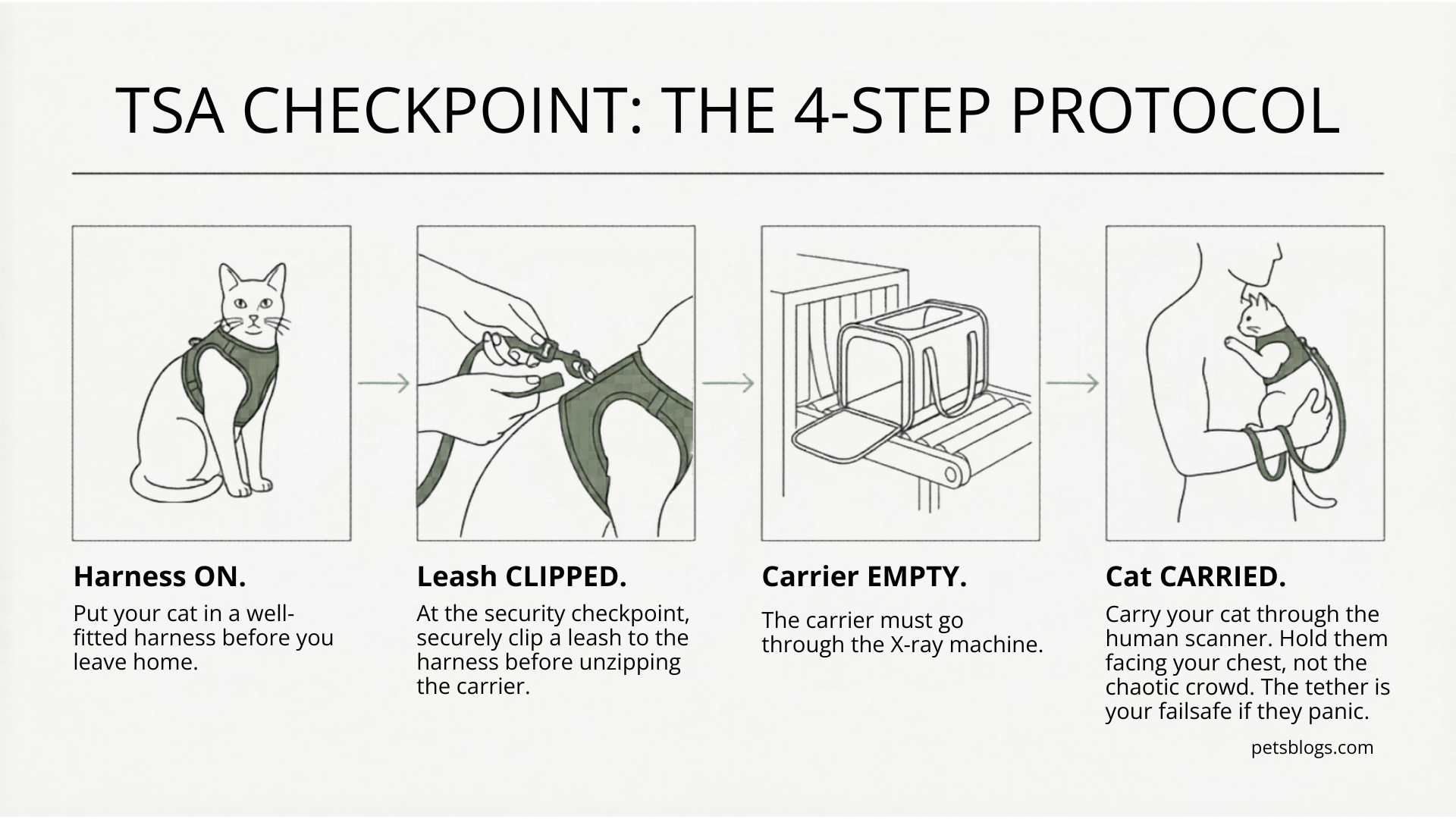
At security. Your cat comes out of the carrier. The carrier goes through the X-ray machine. You carry your cat through the human scanner.
This is the moment most people are least prepared for. Put your cat in a harness before you leave home. At security, clip a leash to the harness before you open the carrier. Hold your cat against your chest, facing inward, not toward the crowd or the noise. The harness gives you a tether if they panic.
You can call TSA Cares (1-855-787-2227) three to five days before your flight to request a Passenger Support Specialist. They can arrange a private screening room, which lets you remove your cat from the carrier away from the chaos of the main screening line. For an anxious cat, this is worth the phone call. One owner traveling with two Siamese — notoriously vocal — requested a private room, and the cats stayed completely quiet the entire flight. The airport was the hard part.
TSA PreCheck helps too. Fewer shoes off, shorter lines, less surrounding chaos.
On the plane. Carrier goes under the seat in front of you. Not the overhead bin. A dog died in an overhead bin on a United flight in 2018 when a flight attendant instructed the passenger to put the carrier up there. The rule applies to cats too. The carrier goes under the seat, period. If a crew member says otherwise, decline clearly.
Don’t open the carrier during the flight. Even if your cat is vocalizing. Opening it removes the one space that feels enclosed and known to them and creates an escape risk you cannot recover from at 35,000 feet. Slide a finger through the mesh and let them sniff it. Talk in a normal, matter-of-fact voice. Don’t go high-pitched or overly reassuring. Cats read owner anxiety and it escalates their own.
Most cats go quiet once the flight levels out. The white noise of the engines seems to help. Some sleep the whole way. Others spend the flight pressed against the back of the carrier, frozen and silent, and then eat a full meal twenty minutes after you arrive. Both are normal.
Reading Your Cat’s Stress
Some cats are great at masking stress which can make it hard to read.
What stress actually looks like in a cat: panting (abnormal in cats and worth taking seriously), drooling, rapid shallow breathing, repeated low vocalization, pressing hard against the carrier walls, or freezing completely. Frozen and quiet is not the same as calm. It’s often the opposite.
After the flight, some cats need hours to decompress. Don’t expect normal behavior immediately on arrival. A cat that hides for the rest of the day after a flight is processing, not damaged. Give them a quiet space, familiar smells, and time.
Keeping Your Cat Calm: What Actually Works
Feliway spray. Spray the carrier 15 to 20 minutes before your cat goes in. The most cat-specific calming tool available without a prescription.
Thundershirt. Works for some cats, rejected outright by others. Trial it at home during a genuinely stressful situation before travel day. If your cat freezes and won’t move wearing it, that’s your answer.
Gabapentin. The standard vet prescription for cat travel anxiety. Gentler than benzodiazepines, well-tolerated by most cats, and effective enough that many vets reach for it first. The non-negotiable rule: trial dose at home, at the actual travel dose your vet prescribes, and watch for several hours. You need to know how your cat responds before you’re in an airport.
Sedation. The AVMA advises against sedating pets for air travel. Sedated cats can’t regulate their body temperature or shift position if they’re uncomfortable. Their heart rate and blood pressure can drop. At altitude, where no one is monitoring them, those risks multiply. Never sedate a cat traveling in cargo. For in-cabin cats, any medication decision belongs to your vet, not the internet.
Catnip. Not a joke. One couple traveling with two Siamese put catnip toys in each carrier and reported the cats stayed quiet and relaxed the entire flight. Catnip produces a mild euphoric response in cats that are sensitive to it, without the sedation risks. It doesn’t work on every cat (roughly 30% don’t respond to catnip at all), but if your cat responds strongly to catnip at home, a catnip toy in the carrier is worth trying.
If you go this route, choose a soft plush toy with no crinkle and no squeak — both are annoying on a plane and will stress out everyone around you.
If you go this route, choose a soft plush toy with no crinkle and no squeak. The Kong refillable catnip beaver and the Frisco refillable catnip squirrel are both silent, washable, and refillable. Drop them in the carrier during crate training so they’re already familiar before travel day.
International Travel With Your Cat
Domestic cat travel is straightforward compared to international. If you’re crossing borders, start planning 60 to 90 days out at minimum.
Entering the U.S. with your cat:
Cats face lighter requirements at the U.S. border than most people expect. No CDC import form required. No mandatory federal rabies vaccination proof for entry. Cats must appear healthy and may be inspected at the port of entry. Your destination U.S. state may have additional requirements, so check both federal and state rules.
Traveling to the EU:
Your USDA-accredited vet issues an EU Health Certificate within 10 days of travel; the USDA must endorse it. Microchip implantation must predate the rabies vaccination on record. Cats don’t need a screwworm treatment certificate for EU travel. Minimum age is 16 weeks.
UK and Australia:
Both require cargo regardless of cat size. No in-cabin option. Australia’s biosecurity requirements are among the most stringent in the world. Start that process well before 90 days out and consider hiring a pet relocation specialist for that specific destination.
Destination countries vary significantly. Some require mandatory quarantine regardless of vaccination status. New Zealand, Hawaii, and Japan have strict protocols. Research your specific destination early and don’t rely on general pet travel articles (including this one) for country-specific requirements. Go to the official government source for your destination.
Travel Day Essentials
Airline-Approved Soft Carrier
Not all soft carriers are created equal, and “airline approved” on the label doesn’t guarantee it fits under the seat on your specific aircraft. Dimensions vary by airline and by aircraft type. The same carrier that slides under a seat on a 737 may not fit on a regional jet. Measure the under-seat space for your actual flight before you buy, and confirm with the airline if you’re not sure.
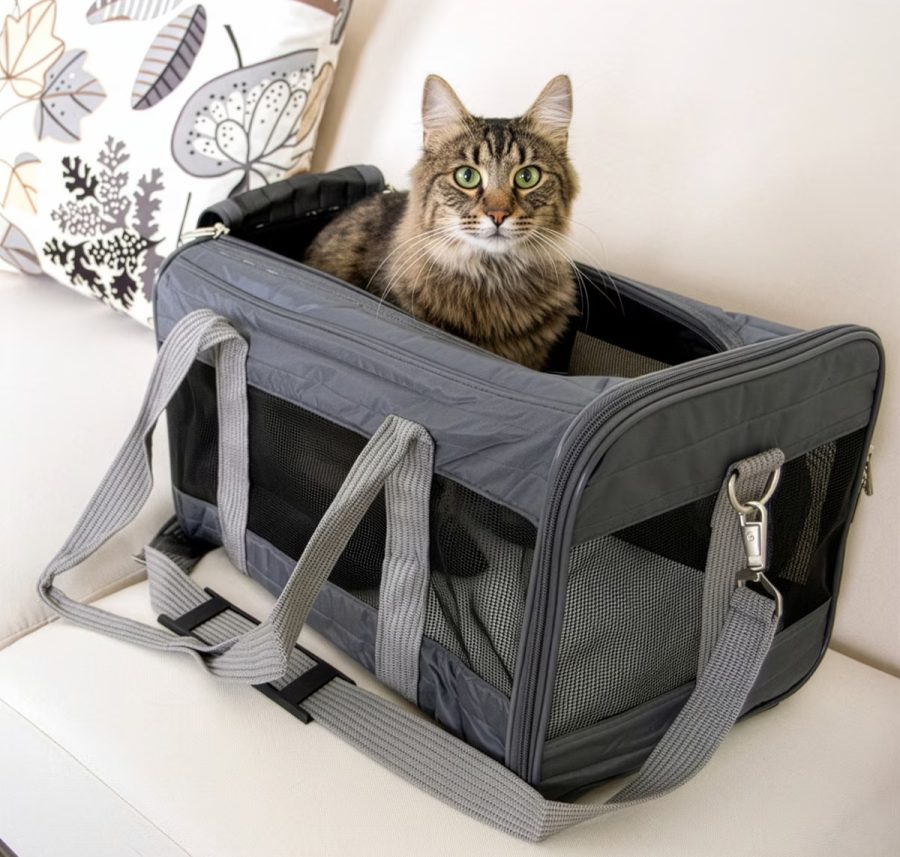
Sherpa Original Deluxe Airline-Approved Dog & Cat Carrier Bag
The spring-wire frame compresses to fit tight under-seat spaces, and the Guaranteed On-Board program refunds your ticket and pet fee if you’re denied boarding due to carrier size.
Feliway Spray
Feliway mimics the facial pheromone cats deposit when they mark a space as safe. Spray the inside of the carrier 15 to 20 minutes before your cat goes in and let it air fully before they get in. The spray is alcohol-based and smells chemical until it evaporates. The pheromone effect activates once it airs out. Don’t spray it directly on your cat.
One important note: Feliway spray is labeled flammable. Apply it at home before you leave for the airport and leave the bottle behind. Don’t pack it in your carry-on.
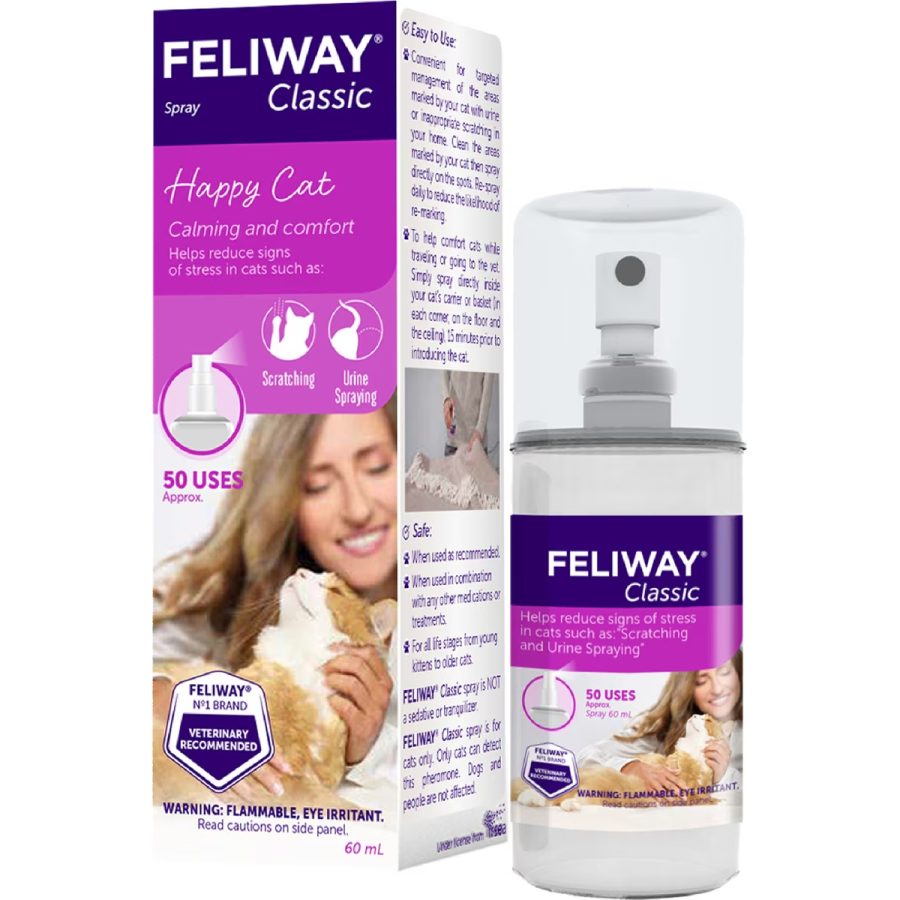
fApply to the carrier interior 15 to 20 minutes before use, not directly on your cat. Leave the bottle at home. Flammable aerosols don’t belong in your carry-on.
Thundershirt
Gentle, consistent pressure reduces anxiety in many cats, same principle as swaddling. The Thundershirt wraps around the torso and fastens with velcro without restricting movement. Trial it at home during something genuinely stressful, a thunderstorm, a vacuum, a vet visit, well before travel day. Some cats settle immediately. Others won’t tolerate it at all. If your cat freezes and won’t move wearing it, that’s your answer.
One practical note from the product guidelines: if your cat will wear it for more than an hour, remove it every one to two hours to check for any irritation. A travel day is a long time.
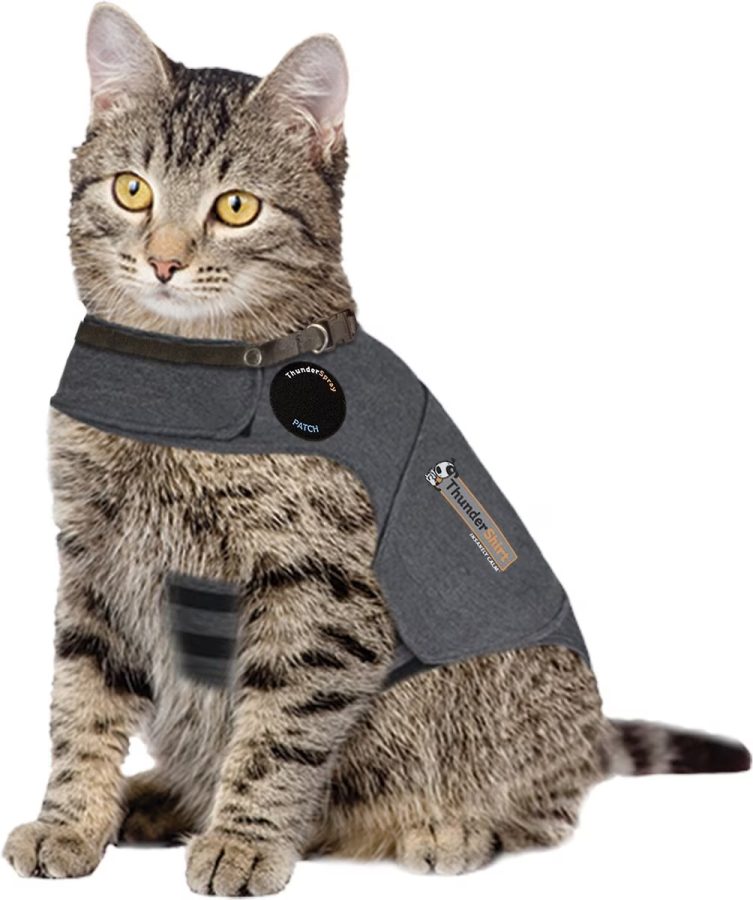
Proven effective in over 80% of cats according to customer surveys. Trial at home before travel day. Cats that won’t tolerate it make that clear quickly.
Cat Harness & Leash
Most cat owners don’t think about a harness until they’re standing at the TSA security scanner with their cat in their arms and nowhere to put them. At security, your cat comes out of the carrier and you carry them through the human scanner while the carrier goes through the X-ray machine. A properly fitted harness with a leash attached gives you a secure hold and a tether if they panic. Put it on at home before you leave, not at the airport.
Look for escape-proof design specifically. A cat that backs out of a loose harness in airport security is a genuine emergency.
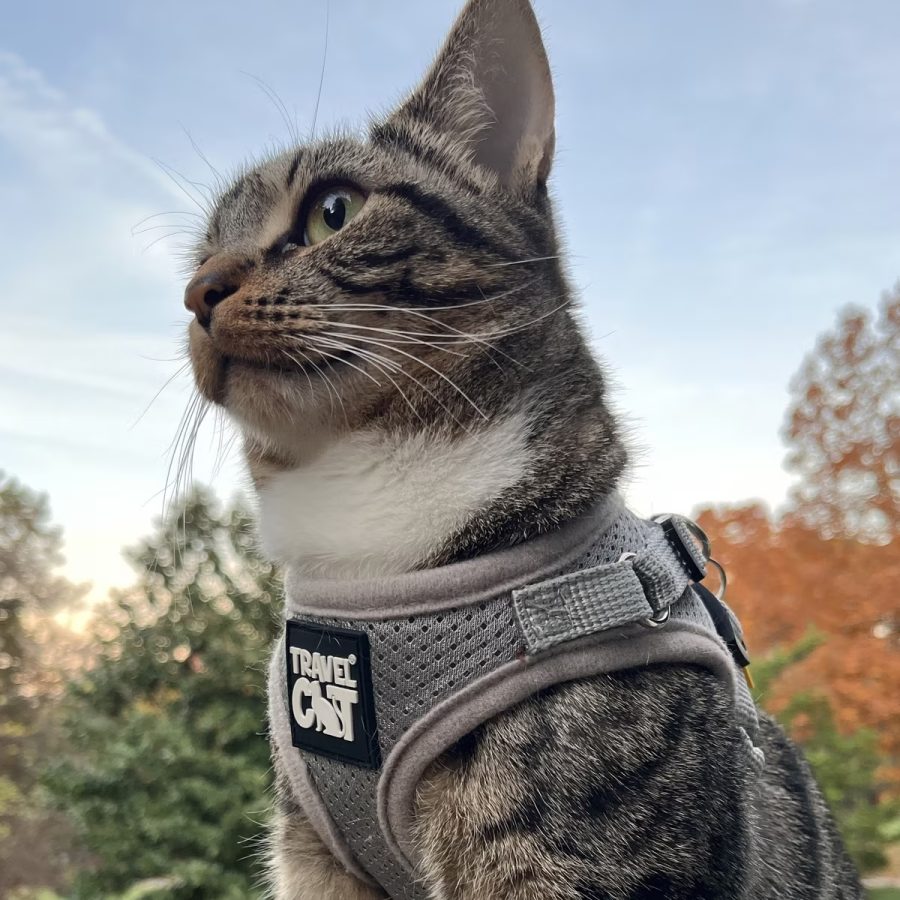
Escape-proof design with adjustable straps and reflective material. Comes with a matching leash. Put it on at home before you leave, not at the airport.
Calming Supplements
Cat calming supplements aren’t interchangeable. These three use different mechanisms and work on different timelines. Start any of them before travel day, not the morning of the flight.
| Product | Key ingredients | How it works |
|---|---|---|
| Purina Pro Plan Calming Care | Probiotic strain BL999 | Blunts cortisol over time; takes 4 to 6 weeks for full effect. Best started well before travel, not as a last-minute option. Sprinkled on wet food; cats eat it readily. |
| Pet Honesty Cat Calming Chews | L-theanine, thiamine, chamomile | Works in 3 to 5 hours; can be given as needed rather than daily. Cats that reject other calming treats consistently eat these. Good for situational travel anxiety. |
| Sentry Calming Chews for Cats | Proprietary university-developed blend | Kicks in within 30 minutes, effects last 2 to 3 hours. Crunchy texture like Temptation treats, a good option for cats that refuse soft or chewy supplements. Start with half the recommended dose. |
Pee Pads
Line the carrier with one before your cat goes in and pack several extras. Most cats hold it for the duration of a flight but delays happen, and a long travel day is a long time. Having a dry surface matters more for comfort than you’d think.
Not all pee pads are created equal for travel. The right choice depends on your flight situation.
| Best for | Product | Why it works |
|---|---|---|
| Long flights or cargo | DryFur Super Absorbent Pet Travel Pads | Rigid core stays flat even when your cat moves around. Dries instantly and insulates against heat and cold. |
| Odor control in cabin | Bark & Clean Premium Activated Charcoal Traveler’s Pads | Activated charcoal neutralizes odors and instant-gel technology locks liquid so nothing leaks through. |
| Custom fit for any kennel | Drymate Crate Mat Liner | Trim to size, machine washable, and reusable. Waterproof slip-resistant backing keeps it in place. |
Travel Litter Kit
Most cats won’t use a litter box mid-flight — stress suppresses the urge and the carrier isn’t the place anyway. But airports have long layovers, connections get delayed, and a cat that’s been traveling for eight hours needs options. A portable litter box handles the airport bathroom break before boarding and the immediate post-flight need before you get to your destination.
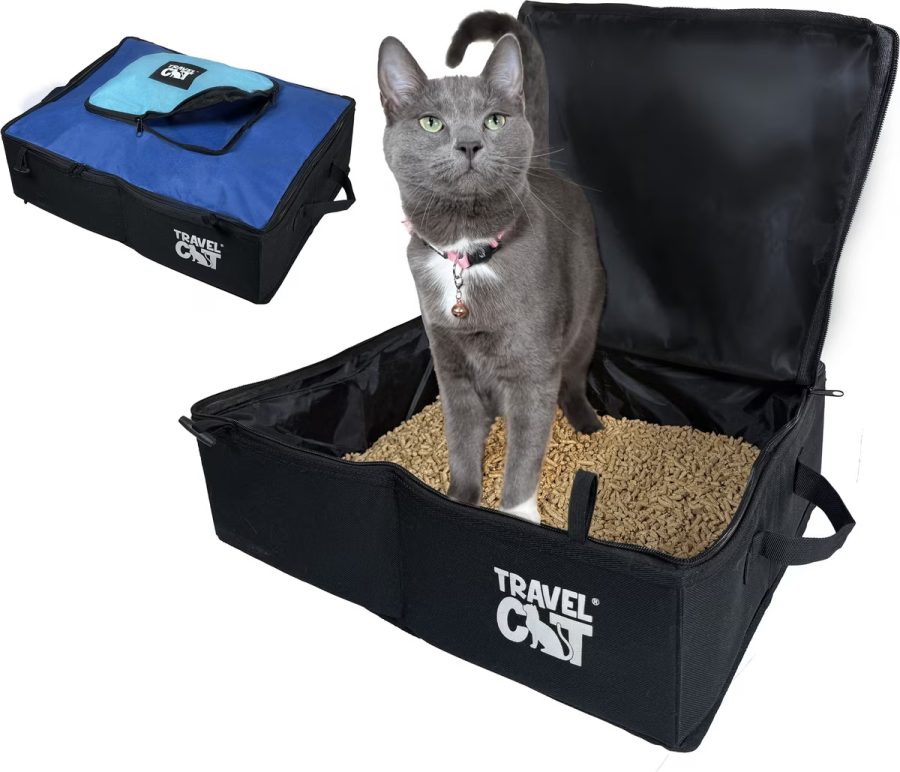
Porta-Pawty Portable Cat Litter Box
Foldable and leak-proof with a wipeable interior. Bring a small zip bag of your cat’s regular litter — familiar smell helps a reluctant cat use an unfamiliar box.
Collapsible Water Bowl
Your cat may need water access at the airport, after security, at the gate, and immediately after landing. A collapsible silicone bowl takes up almost no space and means you’re not improvising with a cupped hand or a paper cup that tips over. Keep it in your personal bag, not packed in the carrier.
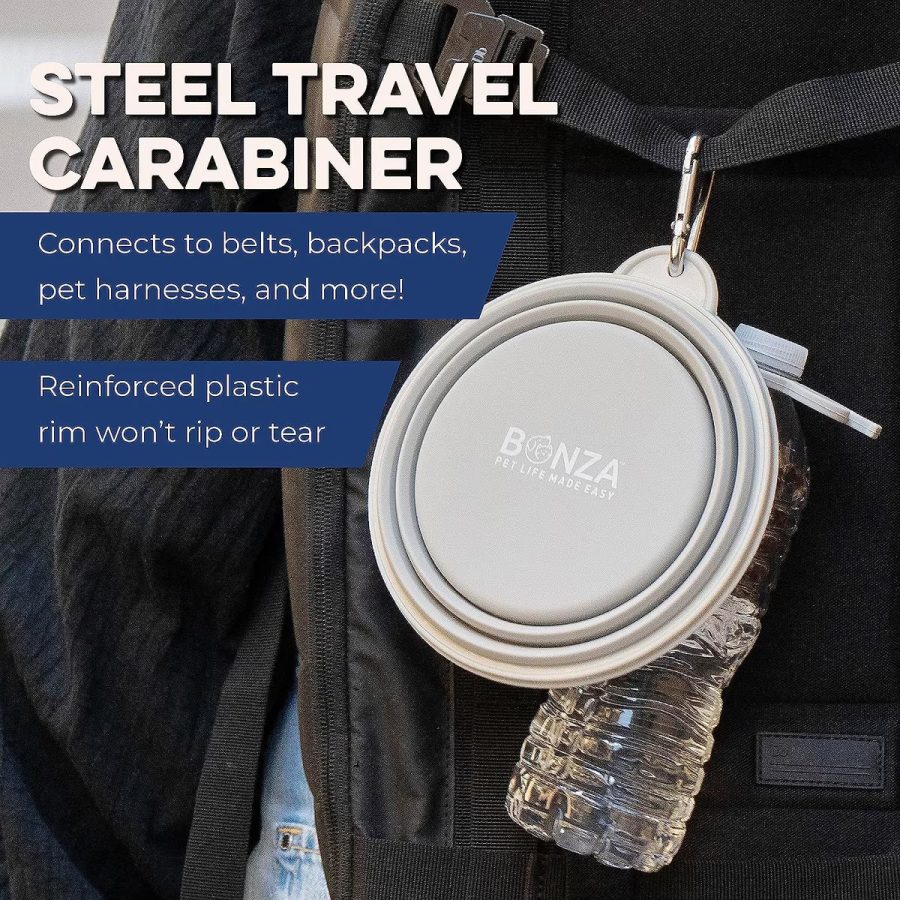
Collapsible Silicone Water Bowl
Clips directly to a leash or bag with the included carabiner so it’s always accessible without digging through a carry-on. Pops open in seconds, collapses flat for storage. Available in small, medium, and large.
Quiet Catnip Toys
Catnip works on roughly 70% of cats and produces a mild euphoric response without sedation risks. A catnip toy in the carrier during crate training builds a positive association with the space before travel day arrives. On the flight, it gives an anxious cat something familiar and comforting to focus on. Choose soft plush toys for air travel. No crinkle, no squeak, nothing that makes noise in a pressurized cabin full of strangers.
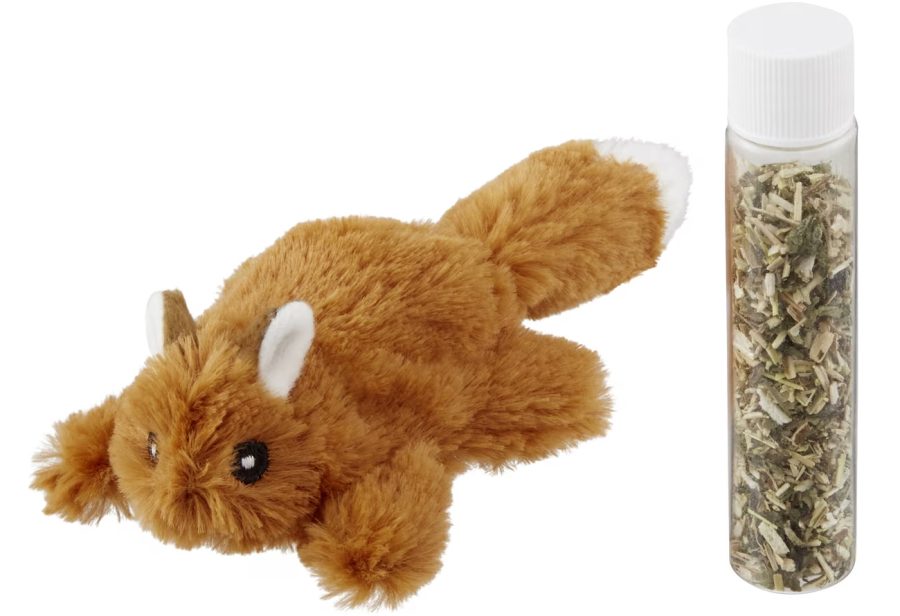
Frisco Squirrel Plush Catnip Toy
Soft plush squirrel with a refillable catnip compartment and no noise-making components. Safe for the carrier and the cabin. Drop it in during crate training so it’s already familiar before the flight.
One More Thing
The flight is a day. Your cat’s adjustment to wherever you’re going may take a few weeks. Some cats settle within 48 hours. Others need a month. Give them a quiet room at the destination with their carrier, their blanket, and their litter box. Let them come out when they’re ready.
The cats that come through travel best are the ones whose people did the prep. The carrier that lives in the living room. The Feliway that started three weeks ago. The vet conversation that happened before booking. None of it guarantees an easy flight, but it changes the odds.
Always verify current pet policies directly with your airline before booking. Policies change. For international travel, consult the USDA APHIS Pet Travel website and your destination country’s official import requirements well in advance of your trip.