
What to Expect, What to Do, and What Nobody Warns You About
Your dog knows something is up before you’ve even packed a bag. They clock the suitcase coming out of the closet, the schedule changes, the way you keep looking at them. By the time you’re standing at an airport check-in counter with a carrier in your hand, they’ve already been anxious for two days.
Flying with a dog is doable. Plenty of people do it every year without incident. But it takes more planning than flying without one, and there are moments (security, handoff to cargo, the first 10 minutes on the plane) where it gets genuinely hard.
jump to…
First Question: Should Your Dog Fly?
This is the one worth sitting with before you book anything.
A dog that handles car rides, vet visits, and new environments without falling apart has a decent chance of managing a flight reasonably well. A dog that trembles through every car ride, refuses food when anxious, or panics at the sight of the carrier is a different situation entirely. The flight doesn’t reset any of that. It stacks on top of it.
Pay attention to how your dog responds to being in an enclosed space, to loud noise, to being handled by strangers. Those three things describe most of what happens at an airport.
Flat-faced breeds — bulldogs, pugs, Boston terriers, French bulldogs, boxers — deserve a specific conversation with your vet before you commit to any flight. Their shortened airways make breathing harder under stress, and heat compounds the problem fast. Most airlines ban them from cargo outright. Even in the cabin, the risk is real enough that many vets recommend against air travel for these dogs unless it’s unavoidable.
Senior dogs and dogs recovering from surgery or illness need the same honest conversation. Flying is a stressor. If your dog is already managing a health condition, you’re adding a significant variable.
And sometimes the kindest answer is a good boarding facility or a trusted pet sitter. Leaving your dog home for a week is not a failure. Putting a dog through six hours of cargo because you didn’t want to board them is worth questioning.
Size Determines Everything
The single biggest factor in how your dog travels is how big they are.
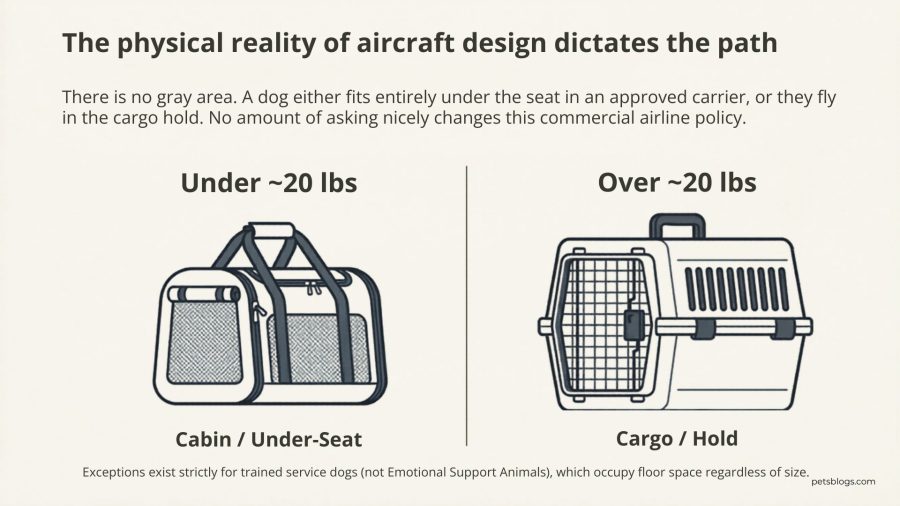
Small dogs, roughly under 20 pounds combined with their carrier, can fly in the cabin with you, under the seat in front of you. They stay close. They can see you. You can hear them. If something’s wrong, you know.
Medium and large dogs don’t have that option on commercial airlines. If your dog can’t fit under an airplane seat in an approved carrier, they fly cargo or they don’t fly. That’s not a policy quirk, it’s the practical reality of aircraft design. No amount of asking nicely changes that.
The one exception is a trained service dog. Under DOT rules, airlines must accommodate service dogs in the cabin regardless of size. They occupy floor space at the handler’s feet rather than going under a seat. A service dog is not the same as an emotional support animal, and the distinction matters: ESAs lost their protected cabin status and are now treated as regular pets with the same size restrictions as any other dog.
If you have a large, non-service dog and you’re planning a flight, build your entire plan around the cargo reality from the start. Don’t research airlines hoping to find an exception that lets your 60-pound lab ride in the cabin. It doesn’t exist on commercial flights. (Bark Air and a handful of specialty pet carriers do fly pets in-cabin regardless of size, but at significant cost and limited routes.)
Cargo: The Real Story
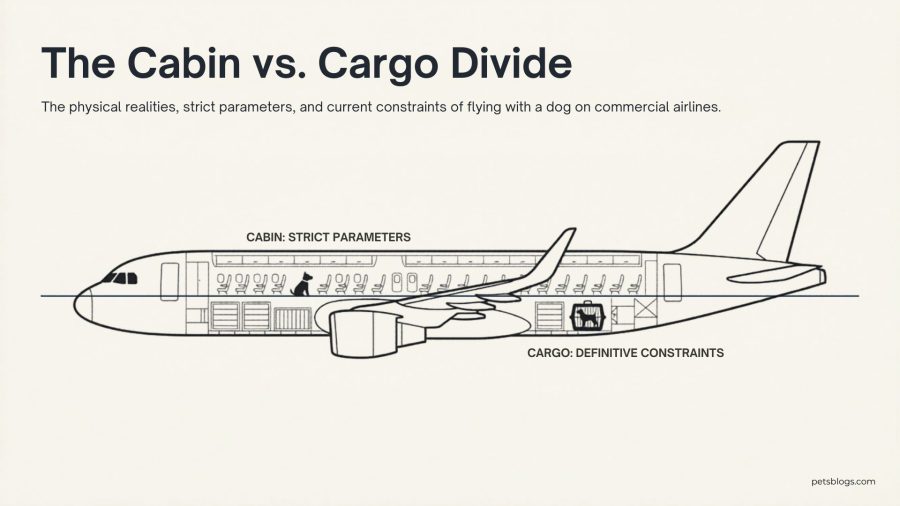
Cargo has a reputation that’s worse than its actual track record, and better than some people want to admit.
In 2017, of more than 500,000 animals that flew in cargo on U.S. airlines, 24 died. Most were brachycephalic breeds (those flat-faced breeds that have shortened airways that make breathing harder under stress). The incident rate was 0.0047%. Those 24 deaths were real losses for real families. The incident rate number doesn’t erase that, it just means the horror stories you read online represent a fraction of what actually happens, and most of the uneventful trips never get posted anywhere.
The horror stories are real, too. Dogs have died in cargo from heat exposure, from mishandling, from being left on a tarmac in summer weather. These incidents get significant news coverage precisely because they’re exceptional. You don’t see the thousands of dogs who came off the plane fine, a little stressed, ready for a walk and a drink of water.
What actually determines how cargo goes:
The airline matters. Alaska Airlines has a strong reputation for pet handling. They confirm loading to the owner, board pets last, and offload them first. Turkish Airlines has clear protocols. Research before you book, not after.
The route matters. Direct flights only. Every connection is another handoff, another potential delay, another period on a tarmac. If your dog has to go cargo, the route should have as few moving parts as possible.
The season matters. Airlines can’t fly cargo pets when the temperature at any point on the itinerary exceeds 85°F or falls below 45°F at ground level. American Airlines specifically bans cargo pets to or through Phoenix, Tucson, Las Vegas, and Palm Springs between May 1 and September 30. Check the weather window for your route before you commit to a date. One person on Reddit spent nearly two weeks waiting for a viable weather window to fly their dog across the country. Build that flexibility into your plan.
The crate matters. Your dog needs to stand up, turn around, and lie down comfortably inside it. The crate needs to meet IATA standards: appropriate ventilation, secure hardware, absorbent lining, water and food dishes attached inside. Measure your dog before you buy anything. A crate that’s technically within the size limit but too small for your specific dog is still the wrong crate.
One small thing that may or may not make a difference: tape a note to the crate with your dog’s name and a few words. “Hi, I’m Biscuit. I like ear scratches.” People who’ve done this report seeing ground crew stop, read the note, and talk to the dog. It costs nothing and it probably doesn’t hurt.
What cargo actually feels like for your dog: loud, unfamiliar, and isolating. They’re separated from you, surrounded by noise and vibration and smells they’ve never encountered. The good news is that dogs are generally more adaptable to novel environments than we give them credit for, and a dog with solid crate training goes into that situation with at least one familiar element; the crate itself.
A dog that has spent months sleeping in their crate, eating meals in it, treating it as their space, arrives at cargo handoff with a different baseline than a dog who only sees the crate when something stressful is about to happen. Crate training is the most useful thing you can do for a cargo-bound dog, by a significant margin.
Cargo isn’t the safest option or the easiest one. But sometimes it’s the only one. The dogs that come through it best are the ones whose people did the work ahead of time. The right airline, the right route, the right crate, and a dog who already knows that crate is home.
What Airlines Actually Require
Policies vary by airline and change without much notice. Always verify with your specific airline before you travel. That said, here’s the landscape as of 2026.
Health certificate. Required by most airlines and by law for interstate and international travel. Must be issued by a licensed veterinarian within 10 days of travel. For international trips, you’ll need a USDA-accredited vet. Get this done even if your airline says they might not check it. They might, and more importantly, your destination state or country might.
Carrier dimensions. In-cabin soft-sided carriers typically max out around 18x11x11 inches, though this varies. Measure your carrier and confirm it fits under the specific seat type on your aircraft. Different planes have different under-seat dimensions. Confirm the aircraft type for your flight and look up the actual measurements.
Fees. In-cabin pet fees run $50 to $150 one way depending on the airline. Cargo costs more and varies by route and dog size.
Age minimums. 8 weeks for domestic travel. If your dog is entering the U.S. from another country, they must be at least 6 months old. This changed in 2024 and catches people off guard.
Book your dog’s spot separately. Most airlines cap the number of pets per flight, typically 4 to 6 total in the cabin. These spots fill up. Book as soon as you have your own ticket. Call the airline to confirm; don’t assume the online booking captured it correctly.
Code-share flights. If your ticket says one airline but a partner airline is operating the actual aircraft, the partner’s pet policy applies. Two flights on the same itinerary can have different rules if they’re operated by different carriers. Check both.
Seat restrictions. Bulkhead rows and exit rows do not allow pets, even if the booking engine let you select them. You’ll be moved at check-in or the gate. Book a standard row seat and confirm it works for an under-seat carrier before you show up.
Premium Cabins: What You’re Actually Seeing
If you’ve ever spotted a dog in first class and wondered why that’s allowed while yours is stuck in economy, the answer is usually service animals.
Under DOT rules, only dogs qualify as service animals for air travel. A trained service dog can fly in any cabin, including business and first class, because airlines are legally required to accommodate them. They don’t need to fit under a seat, they occupy floor space at the handler’s feet.
A pet dog in a carrier faces the same physical constraint in any cabin: the carrier has to fit under the seat in front of you. Many lie-flat business class seats and bulkhead rows don’t have usable under-seat space, so airlines ban carriers in those rows even if they allow pets on the flight. You can end up at your seat, boarding pass in hand, and get moved because the specific seat doesn’t accommodate a carrier.
The booking engine doesn’t always catch this. Confirm your seat works for a pet carrier — ideally with the aircraft type and seat row — before you pay for an upgrade.
Crate Training: Start Now
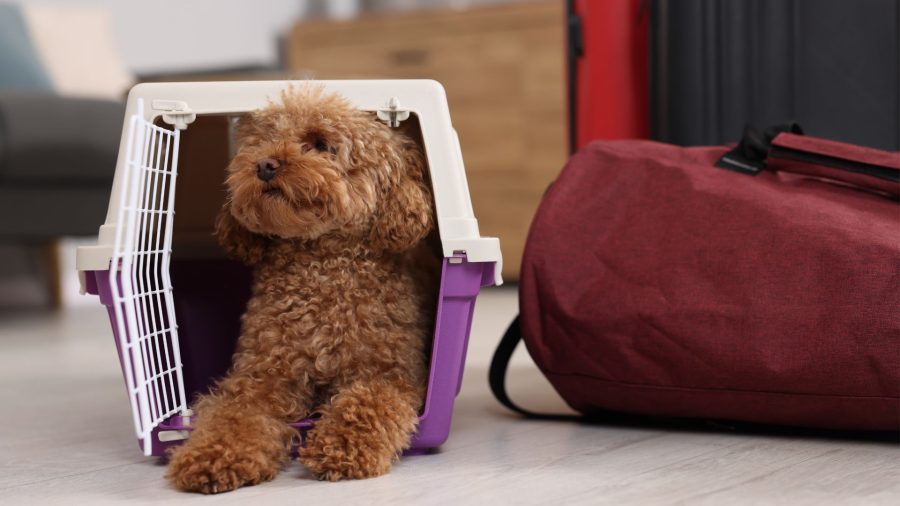
If you’re flying with your dog in the next few weeks and you haven’t done this, rearrange your priorities.
The goal of crate training before a flight isn’t obedience. It’s familiarity. You want the crate to be the one thing in the airport, on the plane, or in the cargo hold that your dog already knows.
Set the crate up in a room your dog already spends time in. Leave the door open. Put a worn shirt inside, something that smells like you. Let the dog investigate at their own pace. Don’t push them in.
Once they’re going in on their own, start feeding meals inside with the door open. When they’re eating comfortably in the crate, close the door briefly while they finish. Stay nearby. Build up the time the door stays closed over several days, then over a week or two, until the dog can rest in a closed crate while you move around the house normally.
For cargo dogs specifically: practice with the crate elevated slightly off the ground once your dog is comfortable inside it. The conveyor belt at cargo loading lifts the crate and sets it down. A dog that has only ever experienced the crate sitting flat on a floor may startle when that happens. It’s a small thing to prepare for.
Day of the Flight
Exercise your dog before you leave for the airport. A real walk, not a quick trip around the block. A physically tired dog starts the experience at a lower baseline of arousal. This matters more than almost anything else on travel day.
Skip the meal, keep the water. Hold food for 4 to 6 hours before the flight. A dog that eats right before boarding is a dog at higher risk for nausea, and for making a mess in the carrier. Water is fine up until you leave.
Line the carrier with a pee pad. For cabin travel this is mostly precautionary. For cargo or long flights, it’s practical. Most dogs hold it for the duration of a flight. Stress actually suppresses the urge in many dogs, but accidents happen, especially on delays.
Put something familiar in the carrier. A worn shirt, a favorite blanket, a toy they already sleep with. Your scent in particular helps, especially for cargo dogs where you won’t be nearby.
Arrive early. Not “on time” early. Genuinely early. Airlines with pets often have dedicated check-in counters or additional paperwork to process. You don’t want to be rushing through security with a dog, fighting the clock.
The security line. This is the part people are least prepared for. Your dog comes out of the carrier. The carrier goes through the X-ray machine. You carry your dog through the human scanner in your arms.
Put your dog in a harness before you leave home. At security, clip a leash to the harness before you open the carrier. You now have a tether if the dog panics or squirms. Hold them close against your chest, facing inward so they’re not scanning the crowd around them.
You can also call TSA Cares (1-855-787-2227) 3 to 5 days before your flight to request a Passenger Support Specialist. They meet you at security and can arrange a private screening room, which lets you take your dog out without the chaos of the main screening area around you. If you have an anxious dog, this is worth the phone call.
TSA PreCheck helps too. No shoes off, no laptop out, shorter lines. Less chaos means a calmer handoff.
At the gate. Let your dog stay in the carrier. Keep things as quiet and settled as possible. Resist the urge to take them out to show them around or let strangers interact with them. Every new stimulus is more input on an already stimulating day.
On the plane. Carrier goes under the seat in front of you. Not in the overhead bin. A dog died in an overhead bin on a United flight in 2018 after a flight attendant instructed the passenger to put the carrier up there. If a crew member tells you to put your pet’s carrier overhead, decline clearly. The carrier goes under the seat, period.
Once you’re seated, you can slide a finger through the carrier mesh and let your dog sniff it. Talk to them in a normal voice. Don’t go high-pitched and anxious. Dogs read that as confirmation that something is wrong. Stay matter-of-fact.
Most dogs settle once the flight levels out. The white noise of the engines is actually calming for many. Some sleep the whole way.
Don’t open the carrier during the flight. Even if they’re vocalizing. Opening it destabilizes the one structure that feels familiar to them and creates an escape risk in a pressurized metal tube with nowhere good to go.
Keeping Your Dog Calm: What Actually Works
Pheromone products. DAP (dog-appeasing pheromone) sprays and collars mimic the calming pheromones a mother dog produces. Spray the inside of the carrier about 20 minutes before your dog goes in and let the alcohol evaporate first, or you’ll get the opposite effect. ThunderEase, powered by Adaptil, is the widely available retail version and what you’ll find on Chewy. It’s not a sedative and doesn’t work for every dog, but it’s low-risk and worth starting in the weeks before travel so your dog associates the scent with the carrier before the flight.
Thundershirt or similar pressure wrap. Works on the same principle as swaddling. Gentle, consistent pressure reduces anxiety in many dogs. Trial it at home well before travel day, ideally during something genuinely stressful like a thunderstorm or fireworks. If your dog responds well, great. If they fight the wrap or seem more agitated wearing it, skip it.
Vet-prescribed options. For in-cabin dogs with genuine anxiety, vets commonly prescribe trazodone, alprazolam, or gabapentin. These reduce anxiety without the full sedation risks. The rule that applies to all of them: trial dose at home before travel, at the actual dose your vet prescribes, and watch for several hours. Every dog responds differently. You don’t want to discover that your dog gets paradoxically agitated on alprazolam while you’re at 30,000 feet.
The sedation question. The AVMA advises against sedating pets for air travel. Sedated dogs can’t regulate their body temperature or shift position when they’re uncomfortable. Their heart rate and blood pressure can drop. At altitude, where no one is monitoring them, those risks multiply. Many airlines ask you to sign a statement confirming your dog hasn’t been sedated, and for cargo pets, the instruction from vets, airlines, and pet relocation professionals is consistent: no sedation.
For cargo dogs in particular, this isn’t just a recommendation. If something goes wrong with a sedated dog in the hold, no one is there to notice or respond.
Picking Up Your Dog From Cargo
When you land, your dog doesn’t come to baggage claim. Cargo animals are typically collected at a separate location, often an oversized baggage area or a specific cargo facility. Ask the airline at check-in exactly where to go when you land, and get the phone number for the cargo desk at your destination.
Give yourself time between landing and your connection if you have one, and confirm before you book a connecting itinerary that cargo pets can be transferred. Some connections don’t work for cargo animals.
When you collect your dog: take a breath before you open the crate. They will be excited or disoriented or both. Have the leash ready. Find the nearest outdoor area and let them stretch, sniff, and relieve themselves before anything else.
Watch them for the next few hours. A little subdued behavior after a cargo flight is normal. Refusing water or food for a few hours is normal. Trembling that subsides once they’re in familiar surroundings is normal. Vomiting, persistent lethargy, or distress that doesn’t settle warrants a call to your vet.
International Travel
Domestic travel is relatively straightforward by comparison. International travel adds a layer of paperwork that needs to start 60 to 120 days before your flight, not the week before.
Entering the U.S. with your dog from another country:
The CDC now requires all dogs entering the U.S. to be at least 6 months old, appear healthy, and be microchipped. You’ll need to complete a CDC Dog Import Form online (free, takes about 15 minutes, valid for up to 6 months ahead of travel). Fill it out 2 to 10 days before departure.
Dogs that have been in countries classified as high-risk for rabies in the past 6 months face additional requirements, including certification from an official government veterinarian in the exporting country. This process takes time and requires a USDA-accredited vet on the U.S. side. If your dog was vaccinated for rabies outside the United States, the entry process gets more involved. Check the CDC website for current requirements, this framework updated in 2024 and details matter.
Traveling from the U.S. to the EU:
Your USDA-accredited vet issues an EU Health Certificate within 10 days of travel, which the USDA must then endorse. The certificate is valid for 4 months of travel within the EU once you arrive, or until the rabies vaccination expires. Microchip implantation must predate the rabies vaccination on record. If you’ve had the vaccination updated since the chip was placed, you’re fine; if the chip came after the last vaccination, you’ll need a new vaccination and a 21-day wait.
Coming from Mexico: A screwworm freedom certification is required.
UK and Australia: No in-cabin pet option regardless of dog size. Both countries require cargo entry. Australia’s quarantine requirements are among the most demanding in the world so start this process well before 90 days out.
Travel Day Essentials
These are the things that come up consistently among people who’ve actually done this.
Airline-Approved Soft Carrier
Not all soft carriers are created equal, and “airline approved” on the label doesn’t guarantee it fits under the seat on your specific aircraft. Dimensions vary by airline and by aircraft type. The same carrier that slides under a seat on a 737 may not fit on a regional jet. Measure the under-seat space for your actual flight before you buy, and confirm with the airline if you’re not sure.
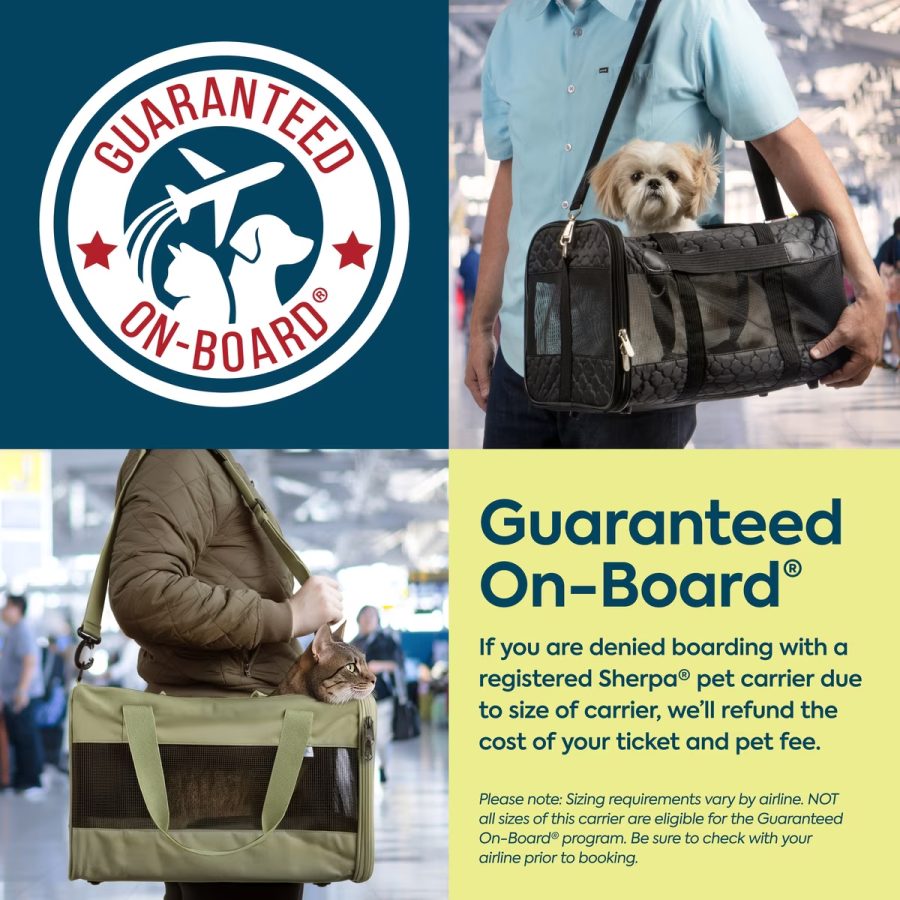
Sherpa Original Deluxe Airline-Approved Dog & Cat Carrier Bag
The spring-wire frame compresses to fit tight under-seat spaces, and the Guaranteed On-Board program refunds your ticket and pet fee if you’re denied boarding due to carrier size.
Hard Kennel for Cargo
If your dog is flying cargo, the kennel is the single most important piece of equipment you’ll buy. It needs to meet IATA standards: adequate ventilation on all sides, secure hardware, absorbent lining, and food and water dishes that attach inside the door. Measure your dog standing, turning, and lying down before you size the kennel. The brand’s size chart is a starting point, not the answer.
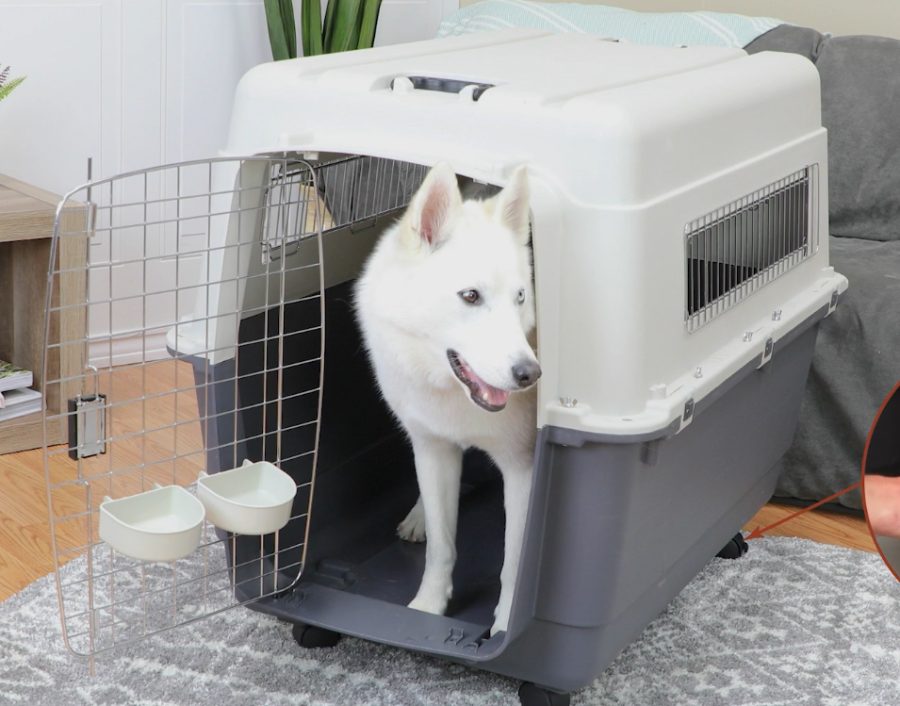
SportPet Designs Airline Compliant Dog Kennel
IATA compliant to the 2025 edition and comes with everything required for airline travel: dishes, metal bolts, nuts, and live animal stickers included. The accident moat pulls spills to the edges and away from your dog. The product videos on Chewy are worth watching. They cover sizing, assembly, and features better than any photo could.
Pee Pads
Line the carrier with one before your dog goes in and pack several extras. Most dogs hold it for the duration of a flight but delays happen, and a long travel day is a long time. Having a dry surface matters more for comfort than you’d think.
Not all pee pads are created equal for travel. The right choice depends on your flight situation.
| Best for | Product | Why it works |
|---|---|---|
| Long flights or cargo | DryFur Super Absorbent Pet Travel Pads | Rigid core stays flat even when your dog moves around. Dries instantly and insulates against heat and cold. |
| Odor control in cabin | Bark & Clean Premium Activated Charcoal Traveler’s Pads | Activated charcoal neutralizes odors and instant-gel technology locks liquid so nothing leaks through. |
| Custom fit for any kennel | Drymate Dog Crate Mat Liner | Trim to size, machine washable, and reusable. Waterproof slip-resistant backing keeps it in place. |
Collapsible Water Bowl
Your dog needs water access at the airport, after security, at the gate, and immediately after landing. A collapsible silicone bowl takes up almost no space and means you’re not improvising with a cupped hand or a paper cup that tips over. Keep it in your personal bag, not packed in the carrier.
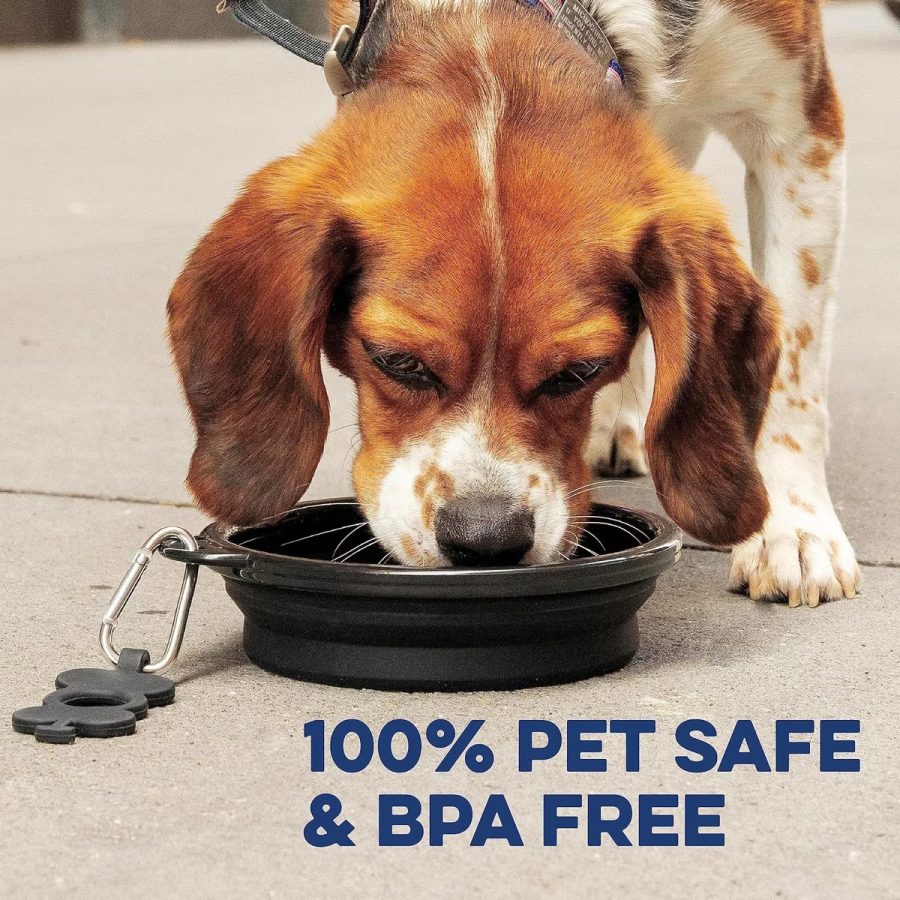
Collapsible Silicone Water Bowl
Clips directly to a leash or bag with the included carabiner so it’s always accessible without digging through a carry-on. Pops open in seconds, collapses flat for storage. Available in small, medium, and large.
Calming Spray
ThunderEase uses the same DAP pheromone technology vets have recommended for years under the Adaptil name. Same formula, rebranded for retail. It mimics the calming pheromone a mother dog produces and is drug-free, so there’s no sedation risk. Spray the inside of the carrier or your dog’s blanket about 15 minutes before they go in. Let it air first and don’t spray directly on your dog. Start using it in the weeks before travel so your dog associates the scent with the carrier before travel day arrives.

Spray on the carrier, blanket, or bedding 15 minutes before use, not directly on your dog. Reapply every 4 to 5 hours as needed for longer travel days.
Thundershirt
Gentle, consistent pressure reduces anxiety in many dogs, same principle as swaddling. The Thundershirt wraps snugly around the torso and stays on without restricting movement. The non-negotiable rule: trial it at home well before travel day, during something genuinely stressful like thunderstorms or fireworks. Some dogs settle immediately. Others fight the wrap or seem more agitated wearing it. You need to know which dog you have before you’re standing in an airport.

ThunderShirt Classic Anxiety & Calming Vest for Dogs
Proven effective in over 80% of dogs according to customer surveys. No training or medication required, just put it on 15 to 20 minutes before a stressful situation.
Calming Chews
Calming chews and supplements are a reasonable middle ground between doing nothing and asking your vet for a prescription. Most use a combination of ingredients like L-theanine, melatonin, or chamomile to take the edge off without sedating. They’re not a substitute for a vet conversation if your dog has significant anxiety, but for a dog that’s mildly stressed by travel they can help.
Calming chews aren’t one size fits all. These three are consistently well-reviewed and worth considering based on what your dog responds to best. Start a few days before travel, not just on the day of the flight, and check with your vet if your dog is on any other medications.
| Product | Key ingredients | Best for |
|---|---|---|
| ThunderBites Calming Chews | Varies by formula; melatonin, hemp seed, L-theanine, chamomile | Dogs with nervous stomachs during travel, added ginger helps settle digestion alongside the calming ingredients |
| Zesty Paws Calming Chews | Varies by formula; L-theanine and suntheanine common | Wide range of formulas and sizes; good starting point for first-time users |
| VetriScience Composure | Colostrum, L-theanine, thiamine | Clinically tested, works quickly, no grogginess; strong vet credibility |
One More Thing
The flight is a day. Your dog’s adjustment to wherever you’re going may take a few weeks. Give them that runway. A dog that seemed stressed or subdued after travel often settles completely once they’re in a new home with familiar people and familiar smells around them.
Most dogs come through flights fine. The ones that struggle most are usually the ones whose people were most unprepared. The prep is the variable you control.
Always verify current pet policies directly with your airline before booking. Policies change, and what’s accurate today may differ by the time you travel. For international travel, consult the USDA APHIS Pet Travel website and your destination country’s import requirements well in advance.