
Halloween Pet Safety: From the Week Before to the Morning After
Most Halloween pet emergencies come from them ingesting chocolate or sugar-free candy, slipping out the front door, chewing on decorations, or chomping up leftover candy and wrappers the next day. To help you pet stay safe: Keep candy locked away, keep pets in a closed room during trick-or-treat hours, ensure your contact info is on the tag or chip, and save a poison line number in your phone.
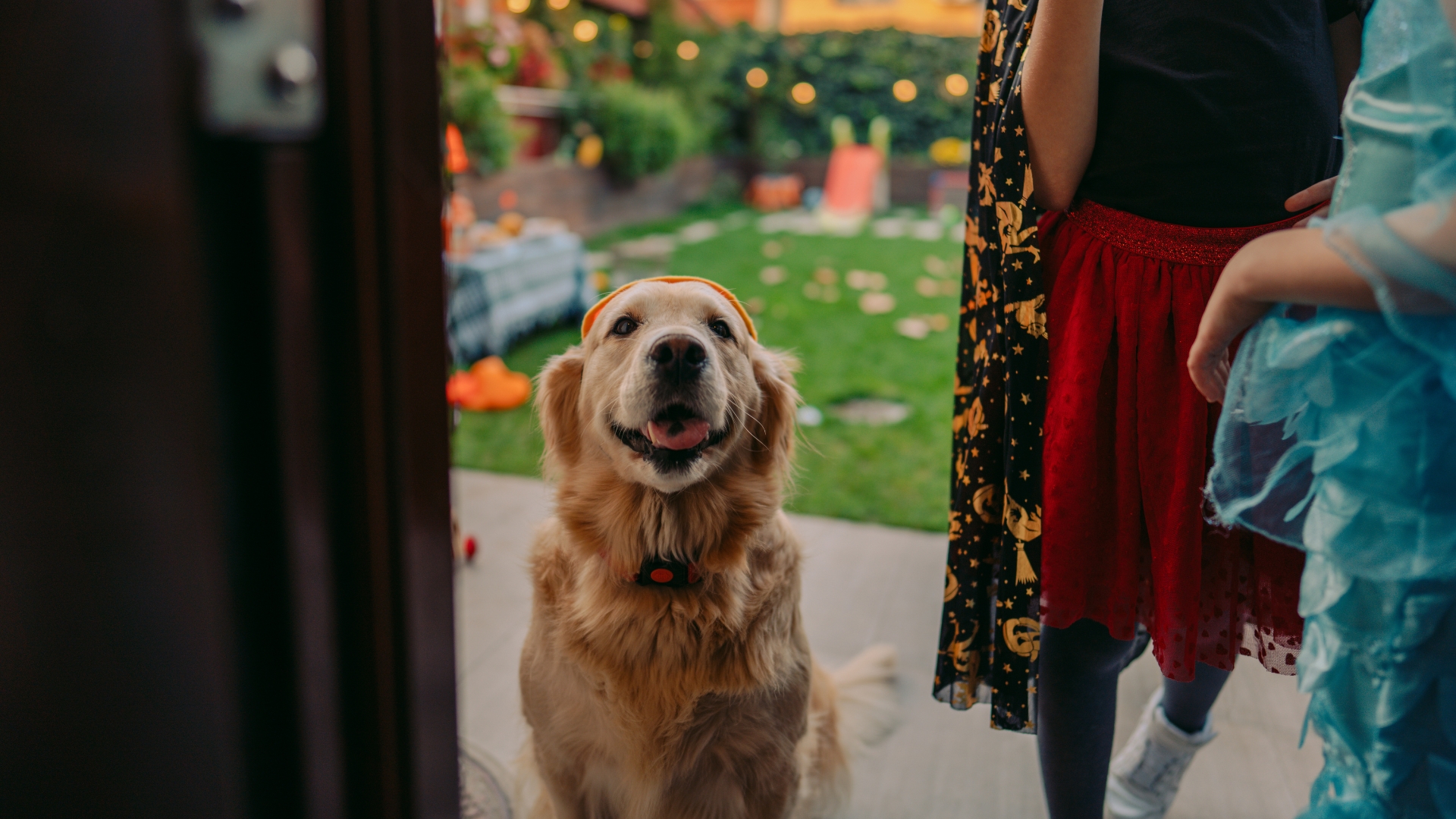
We’ve all been there, in one way or another. Your dog, who ignored the first twenty-nine doorbell rings, suddenly goes bananas when a super cute kid in a dinosaur costume rings the bell. Halloween trouble for pets tends to build like that, one open door or dropped wrapper at a time.
Which Halloween hazards hurt pets the most?
| Hazard | Why it’s dangerous | Most at risk | What to do |
|---|---|---|---|
| Chocolate | Contains theobromine; dark and baking chocolate are the worst | Dogs | Store it high and closed |
| Sugar-free candy and gum (xylitol) | Can cause a fast blood sugar drop and liver damage | Dogs | Check labels for xylitol or “birch sugar” |
| Raisins | Can cause kidney failure; no known safe amount | Dogs | Keep raisin boxes out of the candy bowl |
| Wrappers and lollipop sticks | Choking or intestinal blockage | Dogs | Lidded trash can |
| Open front door | Escapes and lost pets | Dogs, cats | Closed room during trick-or-treat hours |
| Glow sticks | Bitter liquid causes heavy drooling and panic | Cats | Keep out of reach; call if bitten |
| Button batteries | Can burn the mouth and gut | Dogs, cats | Vet visit right away |
| Real candles in jack-o’-lanterns | Burns and fire, including near hay | All, especially barns | LED candles |
| Fake cobwebs and string decor | Tangles in the gut if swallowed | Cats | Hang high or skip |
| Fog machines, scented candles, spray decorations | Airborne irritants | Birds | Keep birds in a separate room |
| Rotting pumpkins and decorative corn | Stomach upset; corn cobs can cause blockages | Dogs, horses | Toss old pumpkins; keep cobs out of reach |
The week before Halloween
Get the boring setup done early so Halloween night is easy.
- Check the microchip. Log in to the registry and confirm your phone number. A chip with an old number won’t get your pet home.
- Check the tag. Collar on, readable tag, current number.
- Take a recent photo of each pet. If anyone gets out, you’ll have one ready for a lost-pet post.
- Practice the doorbell. Play a doorbell sound on your phone at low volume, then give your dog a treat. Repeat over a few days and turn it up a little each time. A dog who hears “doorbell” and thinks “treat” has a calmer night.
- Try the costume, if you’re doing one. A few minutes at a time, with treats. If your pet freezes, tucks their tail, or tries to back out of it, that’s your answer.
- Buy candy with your pets in mind.
What candy should you hand out if you have pets?
Skip chocolate, sugar-free candy, and raisins. Kids won’t notice, and a dropped piece in your hallway is far less of a problem.
- Lower-risk picks: fruity chews and gummies without xylitol, small bags of pretzels or chips, or non-food treats like stickers, pencils, and small toys.
- Still choking hazards: hard candy and lollipops. Keep them away from dogs even though they aren’t toxic.
- Read the label on anything sugar-free. Xylitol can also appear as “birch sugar.”
Your kids will still bring chocolate home from everyone else’s house. Plan for that too.
For canine trick-or-treaters: Some of us keep a jar of dog treats by the door for the neighborhood dogs walking with their families. Ask the owner first, since some dogs have allergies or are on special diets.
Halloween day
- Walk dogs early, while it’s still light and before the costumes come out.
- Bring cats in before dark, and keep them in for the night.
- Set up the quiet room in the afternoon: water, a bed, a litter box for cats, a chew or food puzzle for dogs.
- Turn on a fan, TV, or music in that room to help cover the doorbell.
- Put the candy somewhere closed, like a high cabinet or a bin with a lid. A bowl on the coffee table is an invitation.
- Swap real candles for LED in jack-o’-lanterns.
Why are trick-or-treaters so scary for pets?
To a dog or cat, trick-or-treat hours are a loud stranger at the door every few minutes. Masks, hats, capes, and odd shapes change how people look, and a dog who’s friendly with every neighbor can still bark or back away from someone in a costume.
- Keep pets in the closed room for the whole trick-or-treat window, not only when the bell rings.
- Sit outside with the bowl if you can. No doorbell, no open door, no escape route.
- Or tape a note over the bell: “Please knock, sleeping dogs.” Fewer rings, less barking.
- Don’t bring your dog trick-or-treating unless they’re truly calm around crowds. Excited kids, dropped candy, and costumes add up fast.
Watch for the signs your pet is past their limit: flattened ears, a tucked tail, wide pupils, hiding.
Horses, birds, and small pets
Horses. Keep jack-o’-lanterns and candles well away from hay and barn aisles. Check gates and latches before dark, since horses near a road can attract pranks. Walk the fence line the next morning for candy wrappers and trash thrown over. If you ride in costume, introduce it slowly and expect herdmates to react to a “new” horse.
Birds. Birds are sensitive to anything in the air. Keep them away from fog machines, scented candles, potpourri, and spray-on decorations. Be sure to move the cage away from the front door commotion.
Small pets. Rabbits, guinea pigs, and other chewers go after cords and string decorations. Keep their space free of decor and away from the door.
The morning after Halloween
This is the part most people forget. The candy doesn’t disappear on November 1. It moves.
- Kids’ rooms. Candy bags on the floor or under the bed are easy for a dog to find. Agree on one closed spot for everyone’s stash.
- The trash. Wrappers smell like candy. Use a lidded can or take the trash out.
- The walk. Sidewalks and yards are full of dropped candy and wrappers the next morning. Keep dogs on a short leash and watch what they sniff.
- Pumpkins. Toss carved pumpkins once they start to soften or grow mold.
- The barn and pasture. Check fence lines and paddocks for trash.
What to do if your pet eats something
Call right away. Don’t wait for symptoms.
- Call your vet or nearest emergency vet clinic.
- Or call a pet poison line, both open 24/7:
- ASPCA Animal Poison Control: (888) 426-4435. A consultation fee may apply.
- Pet Poison Helpline: (855) 764-7661. $99 per incident.
- Have this info ready: what your pet ate, about how much, roughly when, and your pet’s weight. Keep the wrapper or package.
- Don’t make your pet vomit unless a vet tells you to.
Save both numbers in your phone today.
Halloween checklist
- Microchip and tag info current
- Recent photo of each pet
- Pet-safer candy in the bowl
- Candy stored high and closed
- Quiet room set up before dark
- LED candles, no real flames
- Birds away from fog and scented candles
- Poison line numbers saved
- Morning-after sweep: kids’ rooms, trash, walk route, fence line
By November 2, the dogs have stopped listening for the doorbell and the cats are back out from under the beds. That’s a good Halloween.
Written by the PetsBlogs editorial team, drawing on our own experience with dogs, cats, horses, and birds, plus current guidance from the AVMA, ASPCA, and Pet Poison Helpline. It isn’t a substitute for your veterinarian. If your pet may have eaten something toxic, call your vet or a poison line right away.
Last updated: October 18, 2026
Originally published: October 27, 2021