

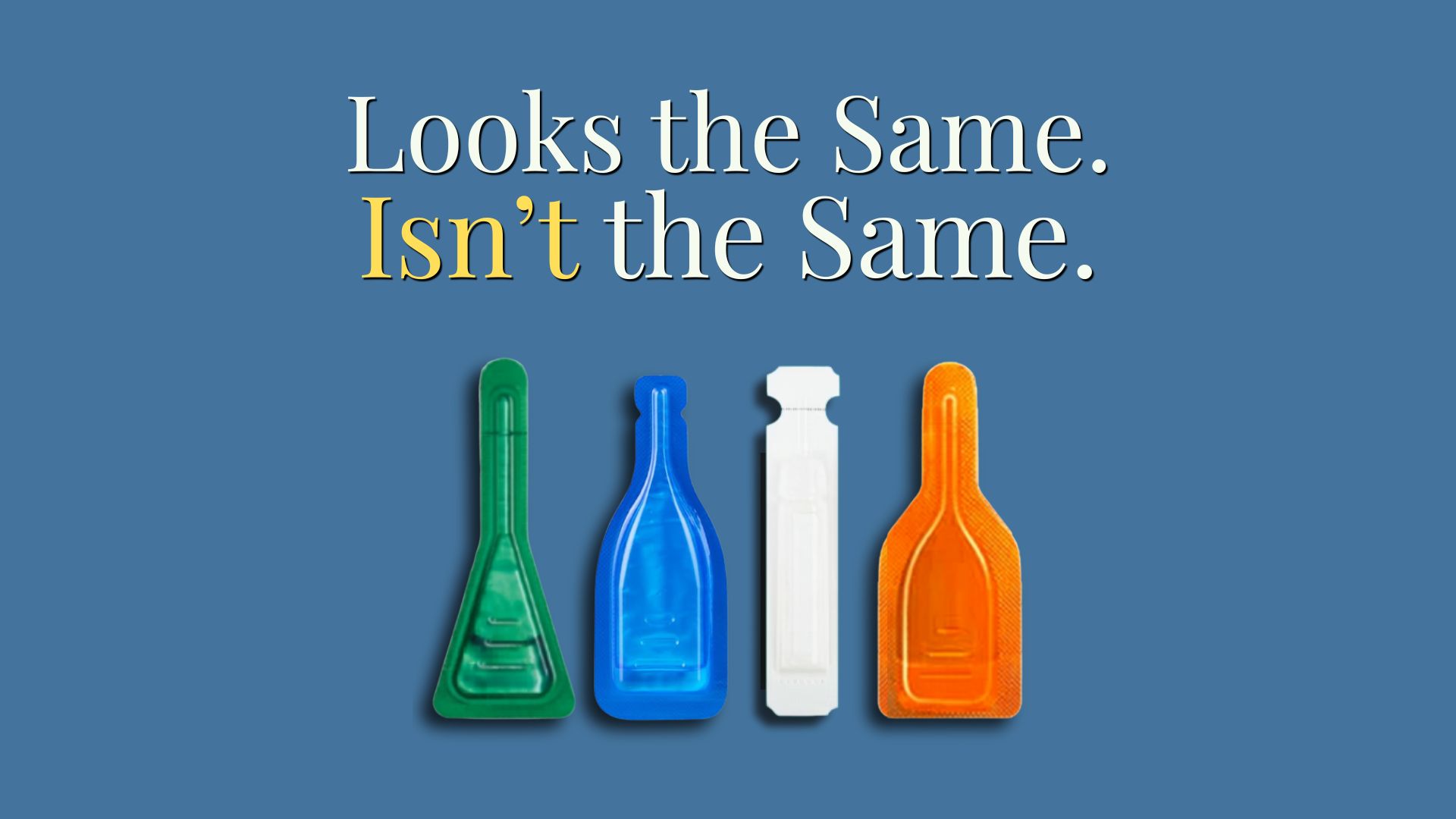
If you’ve been on TikTok lately, you’ve probably seen creators promoting “avermectin pour-on” drops as a cheap, easy hack for flea and tick prevention. The videos are convincing. A single 1 mL tube is split into “just a few drops,” with claims that it can treat multiple pets across an entire household.
jump to…
For anyone managing dogs and cats on a budget, that kind of shortcut is hard to ignore.
But when a product is measured in “little drops,” labeled only as a broad drug class, and used across different species, you are no longer following a clear or predictable treatment approach. You are guessing.
And with medications like these, small guesses can have real consequences. The difference between a “deal” and a neurological emergency can come down to a fraction of a milliliter.
TL;DR: What to Use Instead (Safe, Comparable Options)
People assume all ‘drops’ are interchangeable — they’re not.”
If you’re looking for a pour-on (spot on) flea and tick treatment, skip the “avermectin” labeled products you're seeing marketed to you on every social media platform and stick with products that use clearly labeled, regulated active ingredients and species-specific and weight-based dosing.
For Cats
OTC (spot-on)
Frontline-type generic (OnGuard Plus)
fipronil + (S)-methoprene
Prescription (spot-on)
Revolution Plus
flea, tick, mite, worm, heartworm coverage • prescription required
For Dogs
OTC (spot-on)
Frontline-type generic (OnGuard Plus)
fipronil + (S)-methoprene
Prescription (chew)
NexGard PLUS
flea, tick, heartworm, intestinal parasite coverage • prescription required
What to Avoid
Products labeled only as “avermectin”
Treatments measured in “drops” instead of mL/kg
Products used across multiple species with the same dose
Products without clear regulatory approval
Bottom Line
If you don’t know the exact ingredient, the correct dose, and whether it’s appropriate for your pet’s species, it’s not a shortcut—it’s a risk.
What Is Avermectin (Really)?
“Avermectin” sounds specific, but it really is not. It is a family of drugs, not a single compound.
These compounds come from Streptomyces avermitilis, a soil bacterium, and belong to the macrocyclic lactone class. That family includes ivermectin, abamectin, selamectin, doramectin, eprinomectin, and moxidectin.
In other words, saying a product contains “avermectin” is a bit like saying it contains “fruit” without telling you whether that fruit is an apple, a banana, or something that should not be on your plate in the first place.

That distinction matters because different avermectin-family drugs can behave differently in the body.
Some are designed and dosed for companion animals. Others are used more commonly in livestock or agricultural settings. Some have wider safety margins than others.
What matters is not just the family name, but the exact compound, the concentration, the formulation, the species, and the dose.
That’s why established products don’t rely on vague labeling. They clearly identify their active ingredients.
- Revolution Plus uses selamectin plus sarolaner and is labeled for fleas, ticks, ear mites, roundworms, hookworms, and heartworm prevention in cats.
- NexGard PLUS combines afoxolaner, moxidectin, and pyrantel specifically for dogs.
- OnGuard Plus uses fipronil and (S)-methoprene (the same active ingredients in Frontline), which is an entirely different chemistry from the avermectin family. While they use the same active ingredients for dogs and cats, the concentrations and dosages are very different.
These are not interchangeable products with different prices. They are different compounds, different delivery systems, and different safety profiles.
That might sound like a technical distinction, but it shows up in real-world products. Many of the “avermectin drops” being promoted on TikTok are labeled only at the family level, without clearly identifying the exact compound or formulation.
The issue is not that avermectins are inherently unsafe. Some of the safest and most effective parasite preventives available today are part of this same family.
The difference is clarity. Those products are clearly defined, properly dosed, and tested for specific species under controlled conditions.
What you’re seeing with loosely labeled “avermectin” products is the opposite:
- vague labeling
- unclear formulation
- no meaningful safety framework
At that point, it’s no longer a treatment. It’s pharmacological roulette.
Why Products Like This Raise Concerns
This is where the problem moves from terminology to real-world risk. When a product is labeled only as “avermectin,” without naming the exact compound, concentration, and species-specific use, you lose the ability to predict how it will behave.
Popularity does not equal safety. When you look closely at how these products are labeled and used, a few patterns stand out.
1. The label itself: What is it?
When a product clearly states something like “selamectin” or “fipronil 9.8%,” you know what compound you’re dealing with. When it just says “avermectin,” you don’t.
You are missing the specific drug, the concentration, and the safety margin that determines how it should be dosed. With established flea and tick treatments, that information is disclosed and easy to verify.
If you cannot verify what a product actually is, that uncertainty becomes part of the risk.
2. Missing product information: What does it do?
Well-defined treatments spell out how they work in practice. That includes duration, speed of kill, and exactly which parasites are targeted.
That information is what makes a product usable and predictable. It allows you or your veterinarian to decide whether it fits your pet’s situation.
When those details are thin or missing, you are left guessing what the product is supposed to do—and how reliably it will do it.
3. Parasite mismatch: Does it even apply?
Once you identify the active ingredient and the claimed targets, the parasite list should make sense for the species.
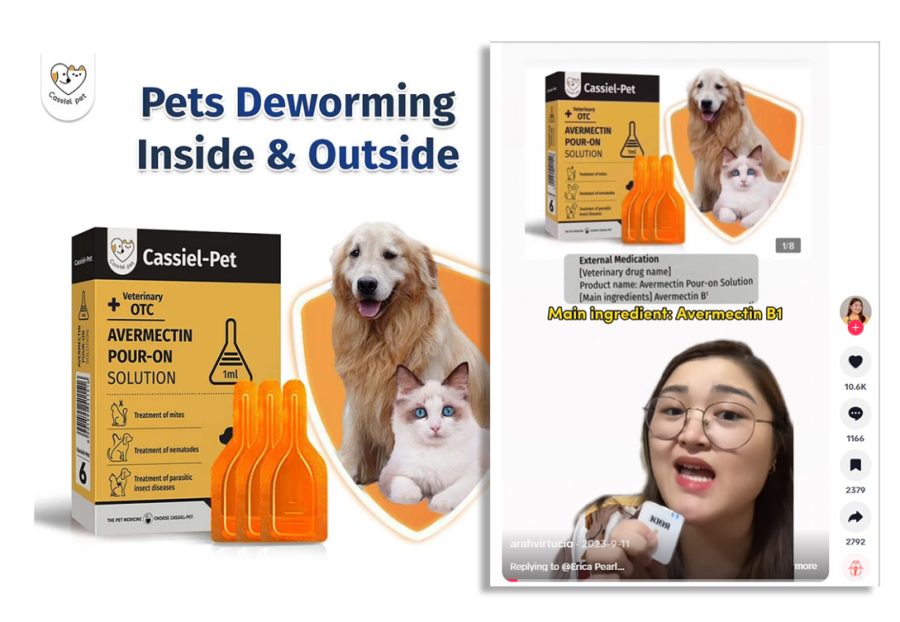
In trying to verify one of these products, we had to go beyond marketing pages and look at additional labeling shown in a veterinary review. That packaging included parasites that do not typically apply to dogs or cats.
As the veterinarian pointed out, one listed parasite is commonly associated with pigs. That raises a basic question: why is it listed on a product marketed for household pets?
If the parasite list does not align with the species, the product is not clearly designed for that use.
4. Side effects: What aren't you being told?
If the only clearly stated side effect is something like short-term salivation from the alcohol carrier, but the drug class itself carries known neurologic and systemic risks when misused, that gap matters.
Established treatments disclose adverse effects clearly enough for owners and veterinarians to recognize problems early.
Minimal labeling is not the same as minimal risk.
5. Regulatory ghosting: Can you verify it?
One of the simplest checks is whether a product can be traced to a real registration or approval record. In the U.S., flea and tick treatments typically carry either:
- an EPA Registration Number
- or an FDA NADA/ANADA number
These can be looked up and verified. If a product cannot be tied back to a verifiable regulatory record, you are relying on claims you cannot independently confirm.
The Real Risk: When Guessing Goes Wrong
This is where vague labeling stops being a technical detail and starts becoming a real safety risk.
Macrocyclic lactones work by disrupting nerve signaling in parasites. That is what makes them effective. It is also what makes them dangerous when the wrong drug, wrong dose, wrong species, or wrong patient is involved.
While ivermectin is just one member of the avermectin family, it is the most widely studied. As a result, much of the available safety data comes from ivermectin.
Merck notes that ivermectin toxicity in dogs can cause mydriasis, ataxia, tremors, collapse, coma, and respiratory compromise at high enough doses. Certain breeds are significantly more vulnerable due to differences in the blood-brain barrier linked to the MDR1 mutation.
That MDR1 issue is not theoretical.
Washington State University and Cornell both explain that dogs with the MDR1 (ABCB1) mutation can have severe or even life-threatening reactions to certain medications because the gene affects how drugs are kept out of the brain.
When P-glycoprotein function is impaired, drugs and toxins can cross into the brain more easily and accumulate to dangerous levels.
Some breeds have especially high mutation frequencies:
- Collies (70%)
- Australian shepherds (50%)
- Shelties (15%)
- Border collies (5%)
- English shepherds (15%)
- German shepherds (10%)
- Old English sheepdogs (5%)
- Mixed breed (5%)
- Silken windhound (30%),
- Long-haired whippet (50%)
The mutation is most commonly seen in herding breeds. Severity varies depending on whether a dog carries one or two copies of the mutation, but the risk is real across all affected breeds.
This is why the question is not just:
“Does this work on fleas?”
The real question is:
“What happens if this is the wrong compound, the wrong amount, or the wrong dog?”
If the answer includes stumbling, tremors, vision changes, seizures, or collapse, that is not bargain hunting. That's roulette.
Dogs with the MDR1 mutation can often tolerate the carefully controlled micro-doses used in FDA-approved heartworm preventives. But higher or poorly defined concentrations, such as those found in livestock-style pour-ons or loosely labeled products, can overwhelm those safeguards.
The result can be rapid-onset neurological toxicity, including blindness, tremors, seizures, or coma.
Toxicity Signs to Watch For
Early signs may include:
- drooling (hypersalivation)
- dilated pupils (mydriasis)
- lethargy
- vomiting
- weakness
More severe toxicity can include:
- ataxia (stumbling, loss of coordination)
- tremors
- vision changes
- seizures
- collapse or coma
These are not “wait and see” symptoms. They require immediate veterinary care.
If you’ve used an unregulated or unclear “avermectin” product, monitor your pet closely and seek veterinary care immediately if any of those signs appear.
Cheap vs. Predictable: The Real Cost
It is easy to frame this as a simple money question. Cheap TikTok drops versus an expensive prescription. But that is not really the choice.
The real choice is predictable vs. unpredictable.
A legitimate flea and tick product costs more because you’re not just paying for the liquid in the tube or the chew in the box.
You’re paying for:
- defined active ingredients
- species-specific dosing
- duration and efficacy data
- safety studies
- and labeling that clearly tells you what you’re using
That’s why regulated products come with detailed inserts and clearly defined target parasites, while vague products often feel underexplained.
Emergency care changes the math quickly.
Once you’re dealing with IV fluids, monitoring, hospitalization, neurologic support, and toxicology treatment, the idea of “saving money” up front disappears.
Treating avermectin toxicity can involve intensive care and Intravenous Lipid Emulsion (ILE) therapy, sometimes referred to as a “lipid sink,” which can help reduce the effects of certain fat-soluble toxins.
What to Use Instead
The goal isn’t to spend more. It’s to remove guesswork from what you’re putting on your pet.
A reliable way to save is to use regulated generic products.
These typically:
- use clearly identified active ingredients
- follow species- and weight-based dosing
- provide defined duration and efficacy data
- are transparent about what you’re applying
You’re not paying for a brand name. You’re paying for clarity and predictability.
For Everyday Flea & Tick Prevention (Topicals)
If you’re looking for standard flea and tick protection, Frontline-style generics (like OnGuard Plus) are a practical, budget-friendly option.
These products use well-established active ingredients like fipronil and (S)-methoprene, with dosing clearly defined by species and weight. They’re designed specifically for companion animals and provide predictable, targeted flea control.
These Are Not the Same Category
This is where a lot of confusion comes in.
Many viral “avermectin” drops are presented as if they cover everything—fleas, mites, worms, and more. In reality, basic flea control and broad-spectrum parasite protection are different categories, designed for different purposes with different safety considerations.
For Broader Protection (Prescription Options)
If you need coverage beyond fleas and ticks:
- Revolution Plus (cats)
Covers fleas, mites, worms, and heartworm prevention - NexGard PLUS (dogs)
Covers fleas, ticks, heartworm, and intestinal parasites
These products are:
- clearly defined
- species-specific
- backed by controlled safety and efficacy data
Not every pet needs this level of coverage. The right choice depends on your pet, your environment, and your risk factors. A veterinarian can help you decide what actually makes sense based on where you live and what your pet is exposed to.
More treatment is not automatically better. Using a product that doesn’t match your pet’s actual risk profile can expose them to medications they don’t need.
For Immediate Flea Problems (Fast Knockdown)
If you’re dealing with an active infestation and need fast results, there is a separate category to consider:
Capstar
- begins killing fleas within hours
- not a long-term prevention
- useful as a short-term “knockdown” tool
This matters because many viral products promise instant results. There are already safer, established options that do exactly that.
What to Avoid (Quick Filter)
Avoid products that:
- list only a broad drug class (e.g., “avermectin”)
- rely on vague dosing like “a few drops”
- are used across multiple species without clear guidance
- cannot be tied to transparent labeling or verifiable product information
Safe, Budget-Friendly Options
These are straightforward, regulated options for flea and tick control using topical or collar-based treatments.
For Dogs
| Type | Product Recommendation | Key Benefit |
|---|---|---|
| Topical (Drops) | OnGuard Plus for Dogs | Same active ingredients as Frontline, with species-specific formulation and dosing |
| 8-Month Collar | Seresto Flea & Tick Collar for Dogs | Long-lasting flea and tick protection without the hassle of monthly dosing |
For Cats
| Type | Product Recommendation | Key Benefit |
|---|---|---|
| Topical (Drops) | OnGuard Plus for Cats | Same active ingredients as Frontline, with species-specific formulation and dosing |
| 8-Month Collar | Seresto Flea & Tick Collar for Cats | Long-lasting flea and tick protection without the hassle of monthly dosing |
How to Evaluate Flea & Tick Products (With a Real Example)
You don’t have to be a veterinarian to look into this, but comparing pet medications is harder than it should be. Labels aren’t always clear, and it’s not always obvious what you’re actually looking at. That’s why it’s worth slowing down long enough to verify the basics:
- Is the active ingredient clearly named?
Not just a drug class like “avermectin,” but a specific compound you can look up. - Does the dosing make practical sense?
Legitimate products are organized by species and weight ranges. If dosing is vague, overly simplified, or doesn’t line up with how these medications are typically used, that’s worth questioning. - Is the product clearly built for one species?
Dogs and cats process these drugs differently. Clear, species-specific labeling matters. - Can you tell what it actually does?
Duration, target parasites, and expected effects should be easy to find and understand. - Can the product be traced back to something real?
In the U.S., flea and tick treatments typically have either an EPA Registration number or an FDA NADA/ANADA number.
These aren’t just formalities. They give you a way to verify that the product, its ingredients, and its use have been reviewed and documented.
We used that same approach when we looked more closely at one of the widely shared “avermectin” products behind these videos.
We followed that process while trying to answer a simple question: what is actually in these “avermectin” drops we keep seeing on TikTok.
What started as an easy assignment ended up a complicated rabbit hole. “Avermectin” isn’t a single drug, and the product itself doesn’t clearly identify the specific compound. To get a clearer answer, we had to go beyond the product listing and look at veterinary reviews and supporting materials.
In those sources, the ingredient is identified more precisely as Avermectin B1, also known as abamectin. That lines up with earlier packaging and documentation outside the U.S., even though current listings simplify it to just “avermectin.”
From there, we traced that back to the scientific review referenced in those materials. In that context, abamectin is discussed primarily for insect control, including mites and cockroaches, and has shown slightly greater toxicity than ivermectin in some animal studies. Reported signs in dogs have included vomiting, ataxia, hypersalivation, lethargy, mydriasis, diarrhea, and other gastrointestinal disturbances.
Looking more closely at one widely shared “avermectin” product, we reviewed the manufacturer's product page along with related materials and social posts. A few issues stood out:
- No clear active ingredient specifics from the manufacturer (we had to hunt for them elsewhere)
- Odd messaging on images provided from the manufacturer (Pets Deworming Inside & Out)
- No clear registration: At the time of our review, we could not locate an FDA approval number or EPA registration number for this product on the manufacturer’s public product information or the official listings we searched.
- Questionable references: Some circulating EPA numbers trace back to entirely different products (for example, Cheristin for cats, which uses a different active ingredient altogether)
- Overextended claims: Marketing that bundles fleas, ticks, worms, and mites into a single topical “drop,” without the kind of detail you would expect from a product designed and tested for that scope
You don’t have to prove a product is unsafe to decide not to use it.
If you can’t clearly identify what it is, how it’s supposed to work, and where it comes from, that uncertainty is part of the decision.
What This Really Comes Down To
If you want something affordable and proven, use a Frontline-style generic like OnGuard Plus.
If you want broader protection, use a prescription option like Revolution Plus for cats or NexGard PLUS for dogs.
If you are seeing an “avermectin pour-on” on TikTok, skip it.
This isn’t really a question of cheap versus expensive. It’s predictable versus unpredictable.
When the ingredient isn’t clearly defined, the dose isn’t properly measured, and the safety data isn’t there, you’re not making a budget decision. You’re taking on uncertainty.
And with parasite medications, that uncertainty is how you end up playing pharmaceutical roulette with your pet’s health.
References
El-Saber Batiha, G., Alqahtani, A., Ilesanmi, O. B., Saati, A. A., El-Mleeh, A., Hetta, H. F., & Magdy Beshbishy, A. (2020). Avermectin Derivatives, Pharmacokinetics, Therapeutic and Toxic Dosages, Mechanism of Action, and Their Biological Effects. Pharmaceuticals (Basel, Switzerland), 13(8), 196. https://doi.org/10.3390/ph13080196
Nolan, T. J., & Lok, J. B. (2012). Macrocyclic lactones in the treatment and control of parasitism in small companion animals. Current pharmaceutical biotechnology, 13(6), 1078–1094. https://doi.org/10.2174/138920112800399167
(PetMD) Ivermectin Toxicity in Dogs – https://www.petmd.com/dog/poisoning/ivermectin-toxicity-in-dogs
(VCA) Multidrug Resistance Mutation (MDR1) – Malcolm Weir, DVM, MSc, MPH; Tammy Hunter, DVM; Catherine Barnette, DVM. – https://vcahospitals.com/know-your-pet/multidrug-resistance-mutation-mdr1
(Cornell) Drug sensitivity: MDR1 – https://www.vet.cornell.edu/departments-centers-and-institutes/riney-canine-health-center/canine-health-topics/drug-sensitivity-mdr1
Geyer, J., & Janko, C. (2012). Treatment of MDR1 mutant dogs with macrocyclic lactones. Current pharmaceutical biotechnology, 13(6), 969–986. https://doi.org/10.2174/138920112800399301
(FDA) Safe Use of Flea and Tick Products in Pets – https://www.fda.gov/consumers/consumer-updates/safe-use-flea-and-tick-products-pets
AVMA Safe use of flea and tick preventive products – https://www.avma.org/resources-tools/pet-owners/petcare/safe-use-flea-and-tick-preventive-products
Vet Review: Cassiel Pet Avermectin Pour-on – Arah Virtucio – https://www.youtube.com/watch?v=OtPkgQ48chw
Last updated: July 26, 2026
Originally published: March 29, 2026