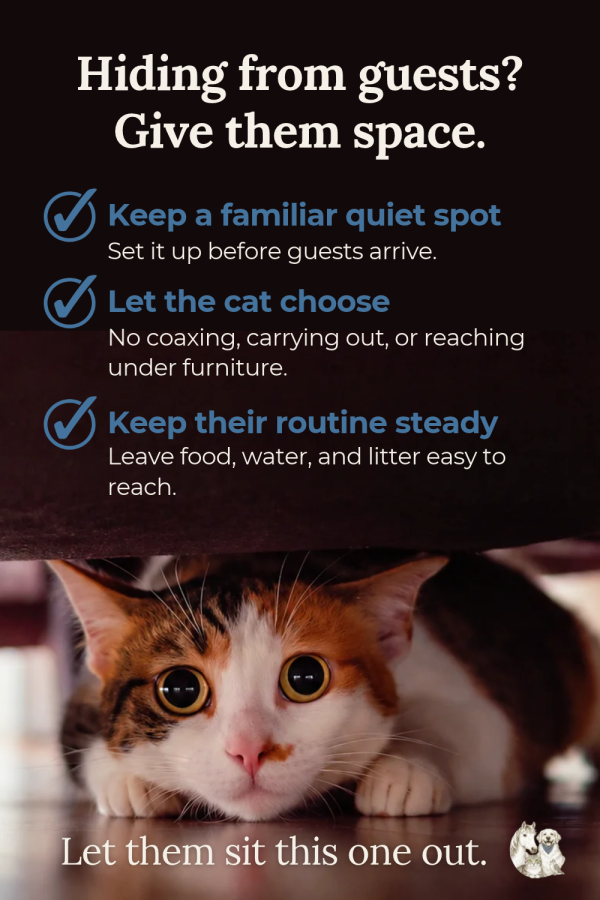

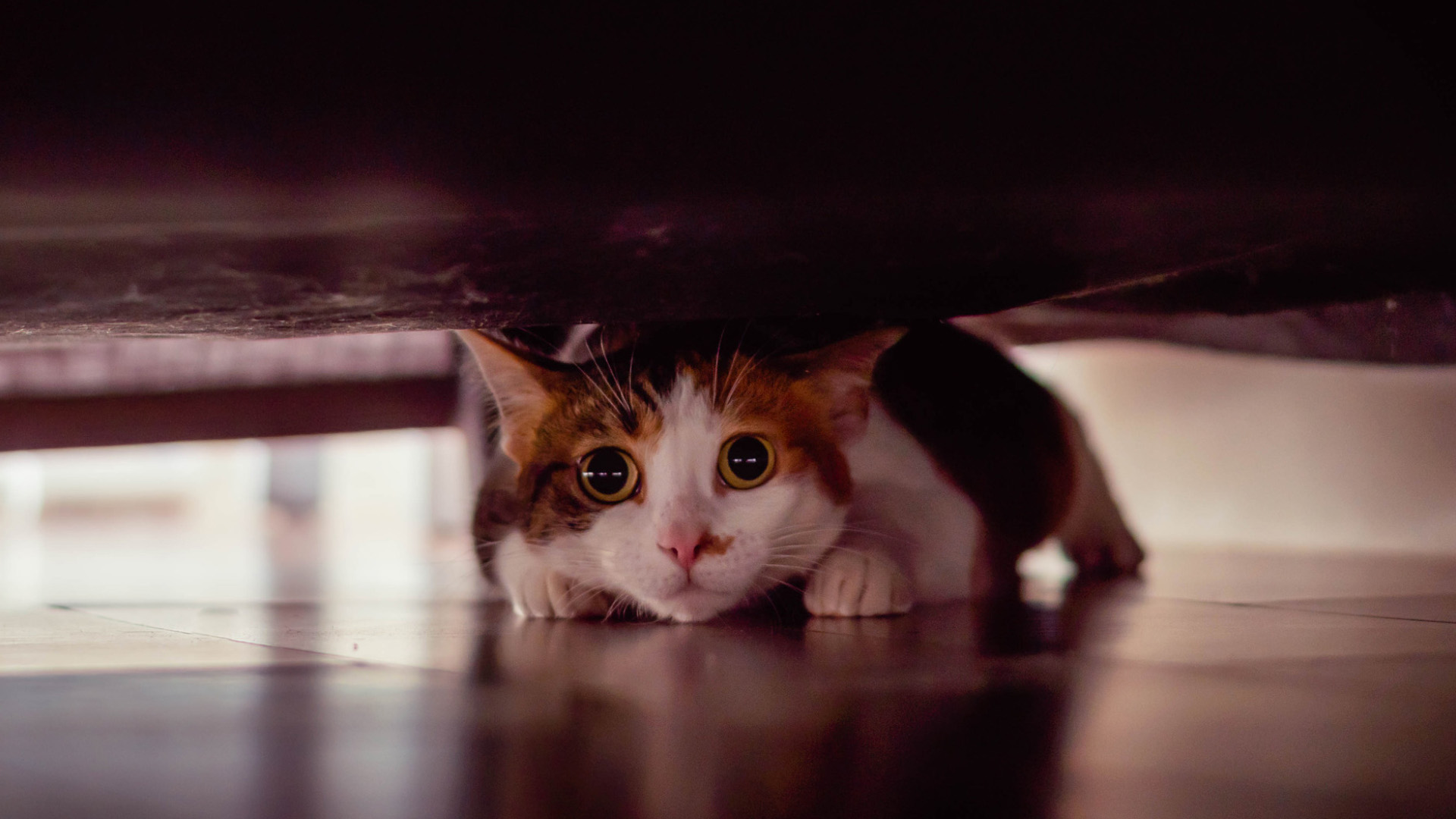
If your cat disappears the moment the doorbell rings, let them stay hidden. The most useful thing you can do before company comes is give your cat a quiet place they already know and ask your guests to leave that spot alone. Your cat can come out later if they feel like it. Some will wait until the last car is out of the driveway.
At my house, the vacuum sends the cats from the windowsill straight under the futon, and three of the four still duck out of sight for a minute when someone they know well comes home. If a familiar voice can do that, a house full of strangers is a lot to ask.
Set up the quiet spot before anyone arrives
Start with where your cat already goes when the house gets loud. If that’s your bedroom, use your bedroom. A familiar room beats a freshly arranged one they rarely visit.
Leave their usual bed or blanket in there. An open carrier they already like works, and so does a sturdy cardboard box on its side. The top of a cat tree counts, too. For a lot of cats, height is its own kind of hiding place, which is one more reason a good cat tree earns its floor space.
Whatever you use, make sure your cat can get in and out without being cornered. The Feline Veterinary Medical Association recommends safe spots a cat can enter and leave from more than one side. A box under the bed with one opening is fine for a cat who picked it. It turns into a trap when a curious kid lies down on the floor in front of it.
If the door will stay closed while people come and go, set out fresh water and a litter box, with some distance between them. Keep the TV off and the door shut. Pop in once or twice to check, and resist the urge to coax them out.
In a multi-cat home, give each cat a spot of their own. Two cats who get along fine on a quiet Tuesday may want separate corners when the house is full.
Guests smell like other places
Cats notice things we don’t. Someone who lives with a dog brings that dog in on their coat. Suitcases smell like airports, car trunks, and other people’s houses.
Put coats and bags in a closet or a spare room instead of piling them on the bed or the sofa where your cat sleeps. It keeps the places your cat counts on smelling like home.
Some people plug in a pheromone diffuser a day or two before company comes. Feliway is the name most people know. The research on these is mixed. A 2010 systematic review found little solid evidence that pheromone products change behavior, while a 2023 evidence summary found some studies showing fewer signs of stress in cats at the vet. If you want to try one, it’s a low-risk addition. Just don’t count on it to do the work a quiet room does.
Watch the front door
If your cat tends to make a break for it, get them settled in their room before the first guest arrives. It’s easier to set things up early than to move a startled cat while someone stands in the open doorway holding a casserole.
Before a big gathering, check that collars and ID tags are on, and look up your cat’s microchip registration to make sure your phone number is still the right one. The AVMA puts it plainly: a microchip only gets your cat home if the registration information is up to date. An evening of people coming and going is when doors get left open.
Tell guests what to do if the cat comes out
“Just let her come to you” covers most of it. Ask guests to leave the hiding spot alone, especially kids who want to peek under the bed. A cat who wanders out may only want to see what’s going on. Give them room to walk away, and let them decide whether to get closer. The FelineVMA’s cat-care guide files this under “positive, consistent, and predictable human-cat social interaction”: remind guests and everyone in the house not to force interaction, and let the cat decide when contact starts, what kind, and how much.
Even some cat lovers need the reminder, usually the ones who are sure every cat adores them. Reaching under the sofa, carrying a cat out to say hello, or luring them toward someone new with a treat all take away the exit the cat was counting on.
If your cat likes treats, leave one somewhere familiar where they can eat it in peace.

When guests stay overnight
A few hours in the bedroom is fine. Four days isn’t. When people stay over, the job shifts from hiding the cat to keeping their normal life running around the visit.
- Feed at the usual times, in the usual spot.
- Keep the litter box where it always is, even if that means telling your guest the laundry room is off limits.
- If the guest room is where your cat naps, move their bed somewhere else a few days before anyone arrives, so they’ve already claimed a new spot.
- Mention doors to your guest. A bedroom door closed for the night can cut a cat off from their food or litter box until morning.
Some cats warm up as the visit goes on. Others stay scarce until the suitcases leave, and that’s their call.
After everyone leaves
Once the last guest is out the door, let your cat come out on their own schedule. Put things back where they usually are and carry on with the normal routine. If they wait until you’re washing dishes or settled in front of the TV to reappear, that’s fine.
Normal hiding or worth a call to your vet?
Hiding from company is ordinary cat behavior. Hiding can also be one of the first signs a cat doesn’t feel well, so it helps to know which one you’re looking at.
| Usually normal | Worth a call to your vet |
|---|---|
| Hides while guests are over | Keeps hiding after the house is back to normal |
| Comes out once things are quiet again | Starts hiding when nobody’s visiting |
| Eats, drinks, and uses the litter box as usual | Skips meals or eats much less |
| Back to their routine by the next day | Litter box changes, low energy, or just seems off |
Your cat’s quiet-house normal is the baseline. Appetite matters most. A cat who stops eating needs attention sooner rather than later, because a loss of appetite can point to a long list of health problems. If you’re not sure, call your vet and describe what changed.
If you’re still wondering
Should I make my cat come out and say hello?
No. A cat pulled out from under the bed has lost the one thing keeping them calm. If your guests meet the cat, it should be because the cat decided to show up.
Why does my cat hide from some guests and not others?
Loud voices, quick movements, kids, and the smell of someone else’s dog can all send a cat under the bed. The quiet guest who ignores the cat is sometimes the one the cat checks out first.
Is it okay to keep my cat shut in a room during a party?
For an evening, yes, as long as they have water, a litter box, and somewhere comfortable to tuck into. Plenty of cats are happier behind a closed door than out dodging feet.
Your cat already has a plan for company. Your part is making sure nobody wrecks it.