
Choosing the right cage is one of the most important decisions you’ll make when bringing a pet bird into your home. A cage is more than just a place for your bird to sleep, it’s their primary living space, where they eat, play, and spend much of their day.
Because of this, the cage you choose should provide enough room, safety, and durability to keep your bird healthy and comfortable.
Size Matters Most
The most important factor when selecting a bird cage is size. Birds need enough room to move freely, stretch their wings, and hop comfortably between perches.
As a general rule of thumb, it’s best to choose the largest cage you can reasonably afford and fit in your home, since birds benefit from having plenty of space to move, climb, and stretch their wings.
A cage that is too small can lead to stress, boredom, and unhealthy behaviors such as feather plucking or excessive noise. Remember that food dishes, toys, and perches will take up space inside the cage, so it’s always better to choose a cage that is slightly larger than the minimum recommended size.
Different bird species require different cage sizes. For example:
- Budgies and small parakeets can live comfortably in medium-sized cages.
- Cockatiels and conures require larger cages with room to climb and play.
- Large parrots such as macaws need very spacious cages designed specifically for larger birds.
If you’re still deciding which bird might be right for your household, you might also want to read our article, Choosing The Best Bird For Your Child, which discusses beginner-friendly bird species and what families should consider before bringing one home.
If you’re unsure what size cage is appropriate, many reputable pet retailers like Chewy allow you to filter cage sizes for different bird species as well as material type, bar spacing, and price range.
Choose a Safe Cage Design
Safety should always come first when selecting a bird cage.
Look for cages that have:
- Smooth bars without sharp edges
- Secure doors and latches
- Solid construction that cannot be easily bent or broken
Birds are curious animals and will chew, climb, and explore their environment constantly. A poorly made cage can quickly become damaged or unsafe.
Pay Attention to Bar Spacing
When choosing a bird cage, the distance between the bars is just as important as the overall cage size.
If the bars are spaced too far apart, small birds may escape or become injured. As a general guideline:
- Finches, canaries, and budgies: about ½ inch bar spacing
- Cockatiels and similar birds: around ½ to ¾ inch
- Large parrots: ¾ inch to 1 inch or more, depending on the species
Proper spacing prevents birds from getting their heads stuck between the bars while still allowing good visibility and airflow.
Some larger parrots also benefit from horizontal cage bars, which allow them to climb and exercise. Climbing is a natural behavior for many parrot species and helps keep them mentally stimulated.
Cage Material and Durability
Most modern bird cages are made from coated metal or stainless steel.
Powder-coated metal cages are common and generally affordable. These cages are designed to resist rust and chipping and work well for many pet birds.
Stainless steel cages are extremely durable and resistant to corrosion, but they tend to cost significantly more. For larger parrots or birds that chew frequently, stainless steel can be a worthwhile long-term investment.
Regardless of the material, make sure the cage is specifically designed for birds and uses non-toxic coatings.
Consider the Shape of the Cage
The shape of the cage can also affect how comfortable your bird feels in its environment.
Many bird experts recommend cages with rectangular or square shapes rather than round cages. Straight sides provide more usable space and allow birds to climb along the bars more easily.
A rectangular cage also allows you to position perches, food dishes, and toys in ways that encourage natural movement and activity.
Leave Room for Toys and Accessories
Birds are intelligent animals that require stimulation and enrichment. Your cage should have enough room for:
- Multiple perches
- Food and water bowls
- Safe bird toys
- Space for movement and exercise
Providing toys and different perch levels helps prevent boredom and keeps your bird mentally engaged.
A Comfortable Home for Your Bird
Selecting the right bird cage helps create a safe and comfortable environment where your pet can thrive. By choosing a cage that offers plenty of space, safe construction, and durable materials, you’re giving your bird a healthy place to live and play.
Taking the time to select the right cage now can help ensure that both you and your feathered companion enjoy many happy years together.
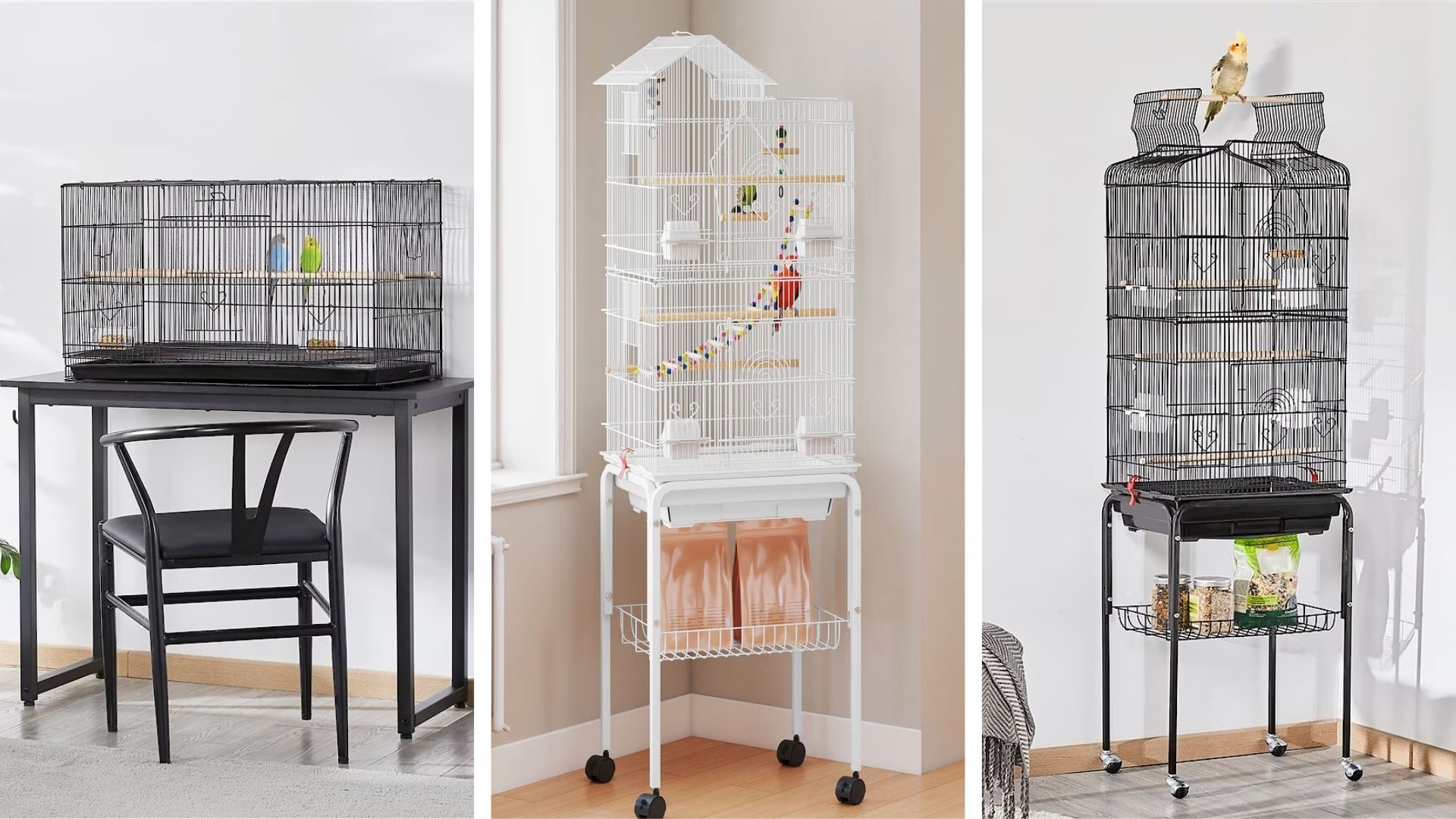
Featured in the featured image:
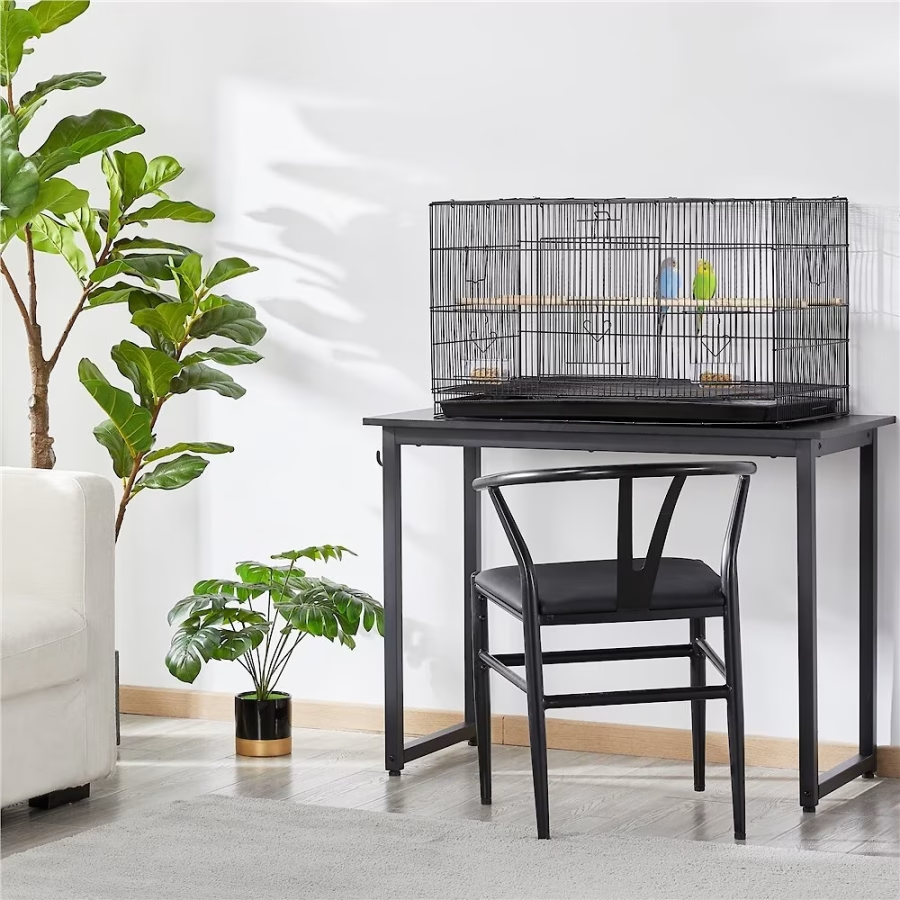
Yaheetech Flight Extra Space Wood Perches Bird Cage
Main door opens two different ways for easy access and plenty of room to include fun decorations and toys. Lightweight and the perfect size to fit on a desk or table and compact enough to take anywhere.
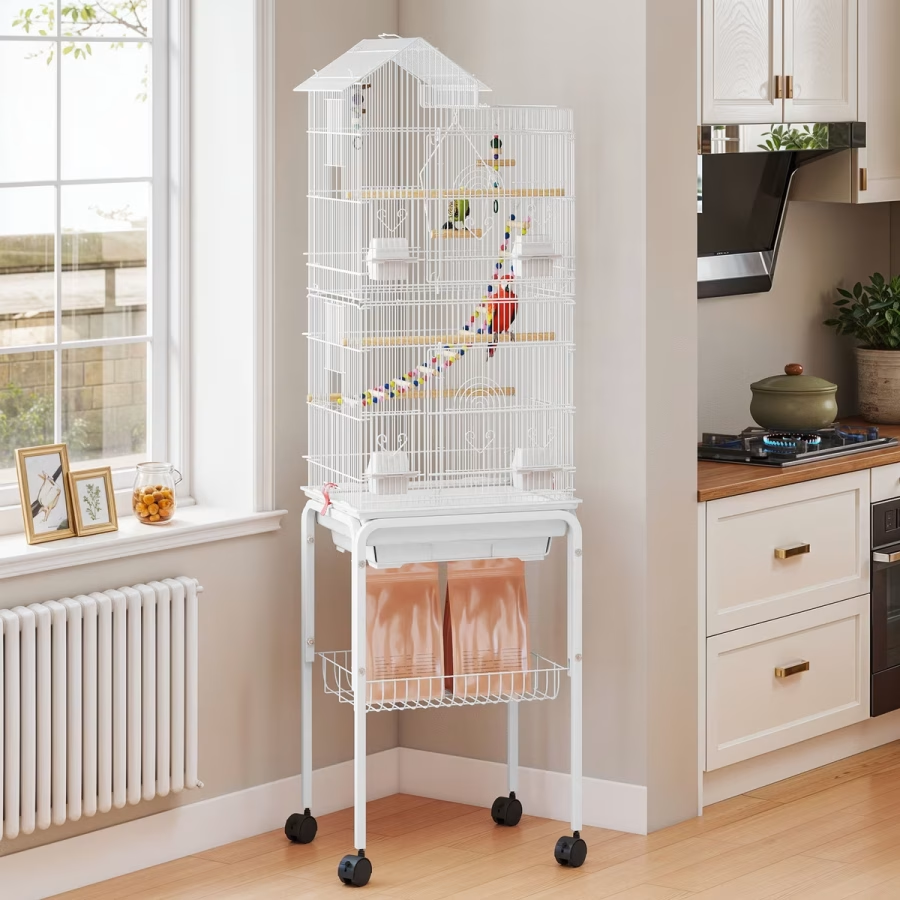
Yitahome 62-inch Bird Cage
Spacious bird cage featuring a 4-door set up along with a detachable tray and removable mesh grate to make cleaning easier. All-in-one on swivel castors with a shelf for storing supplies make this an easy choice. Comes in white or black.
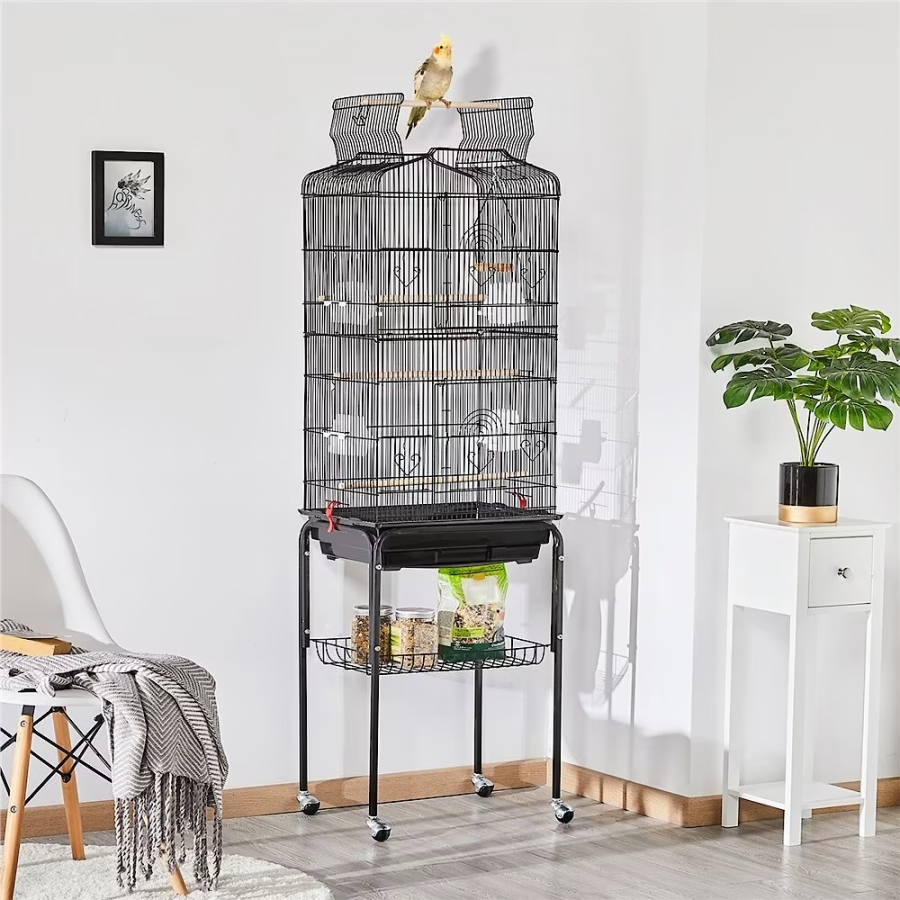
Yaheetech 64-in Open Top Metal Parrot Cage with Detachable Rolling Stand
One of the standout features is the open play-top, which allows birds to perch outside the cage for supervised time with their owners. When it’s time to settle in, the roof can easily be secured to keep your bird safe.


4 Comments
I have found that there should also be enough room to put bird safe tree branches in the cage. All my birds, from love birds up to the cockatoo, love to have natural tree branches to climb around on and chew. That has now become my standard for cage size, can I fit a good sized branch in it.
Awesome advice, Flo. I had a cockatiel when I was in college and I put her cage on a stand beneath my huge ficus tree. I’d let her out of the cage when I was home and she’d sit up in the tree for hours. That and she’s perch on my shower curtain rod whenever I took a shower. It’s been decades and I still miss having her around!
If I ever get another bird, I’ll make absolutely sure a tree branch can fit in the cage since I no longer have a tiny apartment with a huge ficus tree that’s safe for a bird to enjoy. 🙂
I’ve a macaw bird and I truly adore it. But it was a huge problem to choose a cage for my bird.
This is the second article I have read on your site and I love it, thank you. Very informative.
aviary