
Updated November 2026. Talk to your vet before starting a weight-loss plan for your cat. Cats can get seriously sick if they lose weight too fast.
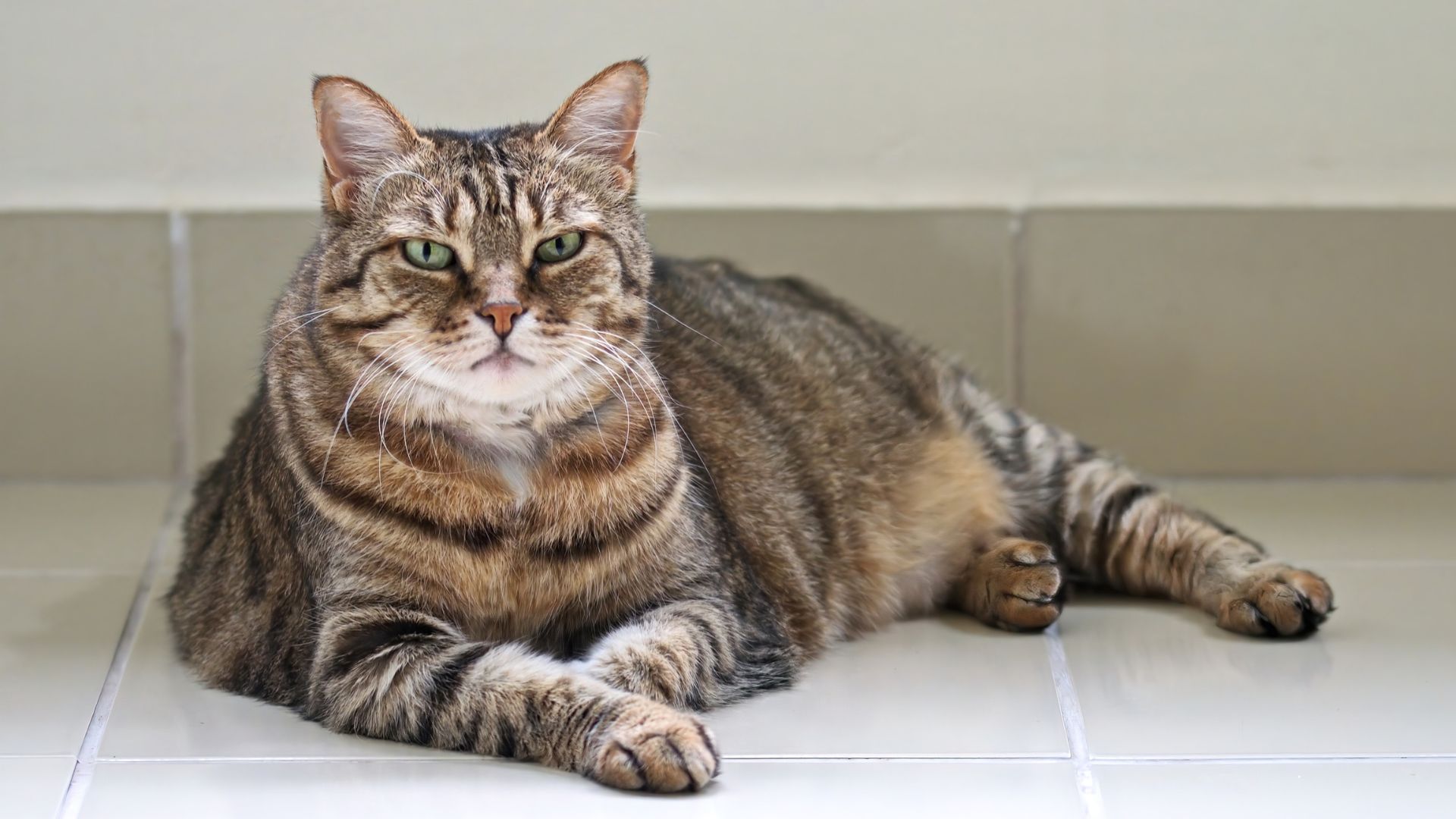
Cats are good at hiding extra weight under fur and attitude. In the most recent national survey, vets found 61% of cats were overweight or had obesity, and about a third of all cats fell in the obese range.
Here’s the catch: a cat isn’t a small dog. Cutting food hard, or a cat suddenly eating much less, can trigger a dangerous liver problem. So the goal is slow, steady, and planned with your vet.
Check your cat’s shape
Vets use a body condition score instead of the number on the scale. You can do a rough check at home:
- Ribs: with light pressure, you should feel them easily under a thin layer of fat.
- Waist: from above, you should see a slight tuck behind the ribs.
- Belly: many cats have a loose flap of skin low on the belly. That’s normal and isn’t the same as a round, firm middle.
Your vet can tell you exactly where your cat lands and set a goal weight.
Why cats can’t crash diet
When a heavy cat stops eating or loses weight too quickly, fat can build up in the liver. It’s called hepatic lipidosis, or fatty liver disease, and it can be life-threatening.
Veterinary nutritionists aim for 0.5% to 2% of body weight a week. For a 15-pound cat, that’s roughly 1 to 5 ounces a week. Slower is fine. Faster isn’t.
If your cat stops eating or eats much less than usual, stop the plan and call your vet.
Does “diet” cat food work?
Sometimes, but not the way the bag suggests. Most “weight control” or “light” foods from the store are built to help a cat maintain weight, not lose it. Feeding less of them can work, but it can also shortchange a cat on protein and nutrients.
Prescription weight-loss diets from your vet are made for this job, and Cornell’s feline specialists rate them better for ease of use, effectiveness, and nutritional balance. Wet food helps too, since the water adds volume without adding calories.
Measure the meals
- Skip free-feeding. A bowl of dry food out all day is one of the biggest reasons cats gain weight.
- Use a real measuring cup, and level it off. The amount on the bag means a standard 8-ounce cup, not a mug or a scoop.
- Split the daily amount into small meals. Several small meals suit how cats like to eat and help with the 4 a.m. “feed me” campaign.
- Make them work for it. A food puzzle or treat ball slows eating and gives an indoor cat a job.
Play counts
Most indoor cats don’t get much exercise on their own. Two or three short play sessions a day with a wand toy or something to chase goes a long way, and it’s attention your cat will actually want.
Treats and attention
- Count everyone’s contribution. A few treats from every person in the house adds up fast on a 10-pound animal.
- Offer attention instead of food. When the begging starts, a play session or a brushing often works just as well.
When to call the vet first
Check in before you start, and sooner if your cat:
- drinks or pees much more than usual
- eats less, hides, or seems unusually tired
- has lost weight without trying, or is already on medication
Extra weight raises a cat’s risk of diabetes, and some health problems need treatment before any diet starts.
If you only do three things
Measure the meals instead of leaving a bowl out, add a little play every day, and go slowly. If your cat stops eating, call the vet.
Working on a heavy dog too? Here’s how to help your overweight dog lose weight.
Last updated: November 27, 2026
Originally published: May 29, 2005