
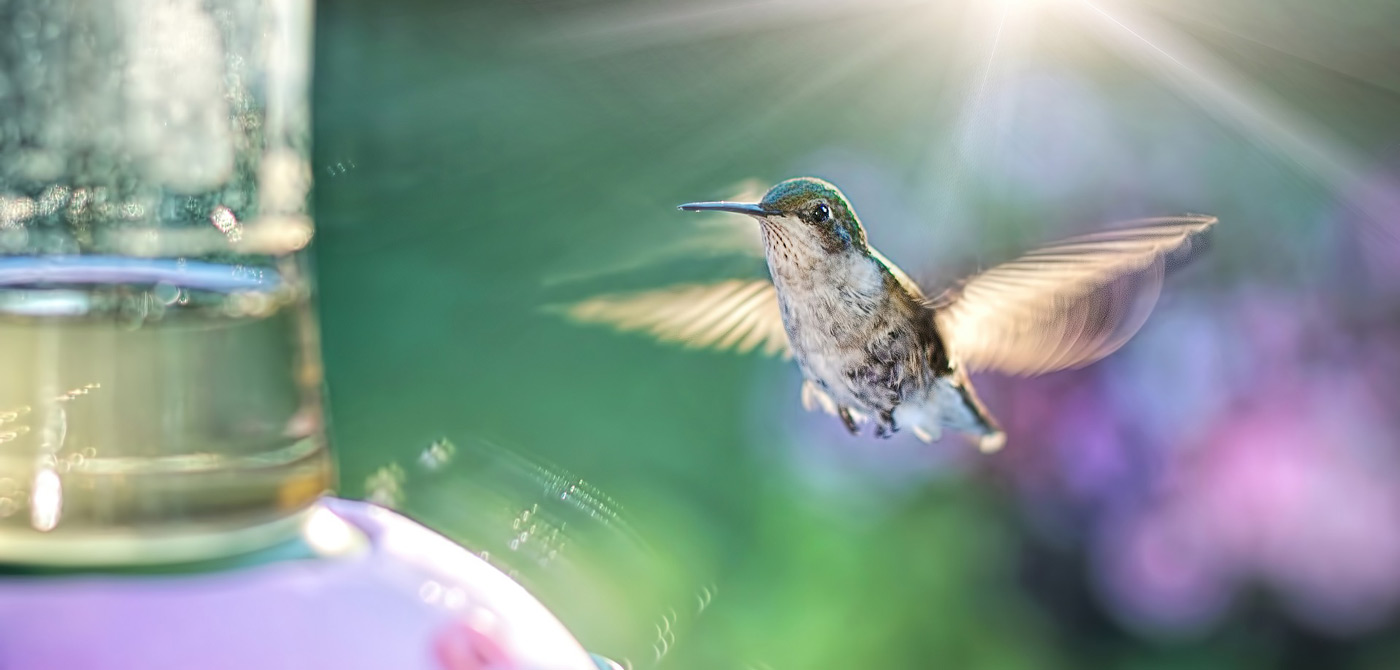
I’ve been watching hummingbirds in this yard since the early 2000s. Some years they show up before I’ve even gotten the feeders out. Most years I’m ready for them. The difference between those two scenarios is just paying attention to a few things.
Here’s what’s actually worked for us over two decades of watching these birds come back, nest nearby, and stay through the season.
Know When They’re Coming
Hummingbirds migrate, and timing varies depending on where you live. Ruby-throated Hummingbirds, the species most of us east of the Mississippi will see, typically show up in the Southeast in March or April. Males arrive first. They’re scouting food sources ahead of the females, and they move fast.
The Hummingbird Central migration map tracks reported sightings in real time each spring. We check it every year and use it as our cue to get feeders out. A hummingbird that finds nothing on its first pass through your yard will move on. One that finds a full feeder will be back.
Get the Feeder Up Early
One feeder is enough to start. Put it somewhere you can see it from inside the house. Partial shade is better than full sun. Nectar stays fresh longer when it’s not sitting in direct heat all afternoon.
If you already have hummingbirds coming and want to reduce the territorial fighting around a single feeder, add a second one out of sight of the first. Hummingbirds guard food aggressively. Two feeders they can’t both see at once means neither one can run the other off effectively.
After 20-plus years of going through feeders, the only thing that actually matters is whether it’s easy to clean. Skip anything with narrow tubes or hard-to-reach corners. And don’t go bigger than you need. A feeder that holds more nectar than your birds can drain every few days in hot weather means you’re dumping good nectar more often than you’d like.
If you need a feeder, Chewy carries a good selection at reasonable prices, practical plastic ones and nicer glass options. I go for this 13-ounce, wide-mouth feeder because it’s easy to clean. I also adore this 12-ounce feeder because it’s easy to clean and you get a better view (and photos) of the hummers who come to it.
For the nectar recipe, cleaning schedule, and the printable reference card, see How to Make Hummingbird Food. That covers the 1:4 ratio, what not to use, and how often to clean feeders in different weather. No point repeating it here.
Plant Things They’ll Actually Come Back For
Feeders get their attention. Plants give them a reason to stay, nest nearby, and show up again next year. A note on annuals vs. perennials: some of these come back on their own every year, some you replant. Zone matters, so check what works where you are.
A few that have worked well for us:
Butterfly bush (Buddleia) — perennial in most zones — blooms from early summer into fall and earns its space. Hummers share it with butterflies all season long. It does spread, so deadhead the spent blooms if that’s a concern where you are.
Trumpet vine (Campsis radicans) — perennial — is the one everyone recommends, and they’re not wrong. Hummers love those orange-red flowers. But it is a beast. It will take over a fence, climb a tree, work its way under siding if you give it the chance. Give it something it genuinely cannot destroy, or plan to cut it back hard every single year.
Coral honeysuckle (Lonicera sempervirens)— perennial — also called trumpet honeysuckle, is the better-behaved alternative. Native to the eastern US, not invasive, and hummers are drawn to the tubular red flowers. Worth tracking down at a local native plant nursery if you can find it.
Lantana — annual in most of the Southeast, perennial in warmer zones — blooms from midsummer until frost and hummers visit it constantly. Heat tolerant, drought tolerant once established, and easy to find at any garden center. One caution: the berries and unripe fruit are toxic to pets, livestock, and children.
Petunias — annual — are not natives, but hummers visit them reliably all season. Easy to find, easy to grow, and they do their job.
Salvias — perennial or annual depending on variety — especially the red and scarlet native varieties, are genuinely excellent hummingbird plants. Long bloom time, drought tolerant once established, and the flower shape is exactly what hummingbirds evolved to feed from.
Portulaca / moss rose (Portulaca grandiflora) — annual — is one I don’t see mentioned enough for hummingbirds. Heat tolerant, low maintenance, and hummers visit it regularly. Works well as a container plant or ground cover in sunny spots, easy to tuck in where other plants struggle.
Purslane (Portulaca oleracea) — annual — is technically a weed around here, though you can also buy it. Same family as moss rose, same heat tolerance, and hummers visit it, too. If it shows up in your garden on its own, you could do worse than leaving it. (It’s also edible and nutritious for us humans.)
When you’re picking plants, look at bloom times, too. One spectacular plant that blooms for two weeks in July doesn’t do much. A mix of early, mid, and late-season bloomers keeps nectar in the yard across the whole season. If you want to plan a full garden around attracting hummingbirds, the Brooklyn Botanic Garden has a practical 15-step guide worth taking a look at.
A Water Source Helps
I don’t put out a water source unless it’s really hot and dry. When I do, I use a shallow clay pot saucer (the type that sits under a planter), filled with fresh water and rinsed out every single day. Standing water in summer heat goes bad fast, and hummingbirds can pick up bacterial and fungal infections from contaminated water the same way they can from a dirty feeder. If you’re not going to clean it daily, it’s probably not worth putting out.
If it’s been a particularly hot, dry stretch, try putting a garden hose on the mist setting and letting it run for a bit near where the hummers are active. I’ve done this and watched them fly right through it. I’ve never set up a dedicated misting system, but a hose on mist costs nothing to try.
Give Them Somewhere to Sit
Hummingbirds spend more time perching than most people expect. They sit between feedings, watch for rivals, and guard their territory from a high spot with a clear view.
Trees and taller shrubs near your feeders help. Dead branches are often exactly what they want. A yard that’s mostly open lawn with no vertical structure is a harder sell, even with good feeders and plants in it.
What Works Against You
Pesticides. Hummingbirds eat insects as well as nectar. Gnats, aphids, small spiders. A treated yard removes part of their diet and can expose them directly. If you’re trying to attract them, reduce pesticide use where you can.
Invasive plants. Some plants sold as hummingbird plants, Japanese honeysuckle being the common example, are invasive across much of the US. They crowd out the native plants that support the broader ecosystem hummingbirds depend on. Native alternatives almost always perform as well.
Going inconsistent mid-season. Once they’ve built a routine around your feeders, an empty or spoiled feeder matters, especially when females are feeding chicks. If you’re going on vacation, take the feeders down rather than leaving old nectar to sit and ferment.
They Come Back
Ruby-throated Hummingbirds return to the same locations year after year. The birds at your feeders this summer are likely offspring of birds that used them in previous seasons. A yard that’s been reliable gets remembered.
I’ve had a hummer appear at the exact spot where a feeder hung the season before, before I’d even put it back up. A few seasons of reliability builds something that takes care of itself.
Last updated: May 22, 2026
Originally published: May 17, 2005