


It usually starts at the back end. A big dog takes a beat longer to get up off the floor, sits down halfway through a walk, or stands at the car like it grew a foot overnight.
When arthritis strikes your pooch, most of the advice out there is about the joint: what’s wearing down and what might cushion it. That matters. But the muscle around the joint matters just as much, and it’s the part that slips away quietly in older dogs. Holding on to that muscle is one of the most useful things you can do, and much of it happens at home.
Arthritis (osteoarthritis, or OA) can’t be cured. A lot can make it easier to live with: a leaner body, steady movement, better footing, real pain control from your vet, and a couple of supplements with decent evidence behind them.
Who gets it, and where it shows up
Arthritis in dogs is common and probably more common than diagnosed. Studies disagree on the exact numbers because they count it in different ways, but researchers agree it’s often missed, even in young dogs. Veterinary pain guidelines from AAHA point out that it often starts early in life, long before a dog looks old.
Big dogs tend to have it worse, and the hind legs take the brunt of it. Hips and knees carry a lot of load, and a few things raise the odds:
- Size and breed. Labs and Golden Retrievers show up often in the research.
- Old injuries and joint problems. A torn cruciate ligament or hip dysplasia can lead to arthritis later. Dysplasia is a hip that formed loose while the dog was growing, and over the years that loose fit usually wears into arthritis. If your dog was diagnosed with dysplasia young, everything below applies.
- Extra weight. Every extra pound rides on those joints all day.
The signs are easy to write off as “just getting older.” If you’re not sure what you’re seeing, start with signs of arthritis in pets and why osteoarthritis pain is so easy to miss. (Cats hide it even better. See signs of arthritis in cats.)
Joint pain isn’t always arthritis
Arthritis is the most common reason an older dog gets stiff and sore, but it’s not the only one. Injuries like a torn cruciate ligament, kneecap problems, infections, tick-borne diseases such as Lyme and ehrlichiosis, immune conditions, and even cancer can all cause joint pain or limping. Those need a different plan, and supplements won’t fix them.
Get your dog to the vet soon, not at the next routine visit, if you see:
- A limp that comes on suddenly, or won’t let up after a day or two
- A joint that’s swollen, hot, or painful to touch
- Fever, low energy, or not eating along with the stiffness
- Lameness that moves from leg to leg
- Joint pain in a young dog
- A firm swelling on a leg bone
Why muscle matters
A joint doesn’t hold itself steady. The muscles in the hips, thighs, and back do that work, and they soak up a lot of the shock with every step. When those muscles shrink, more of the load lands on cartilage and bone that are already worn.
It turns into a loop. A sore dog moves less. Moving less costs muscle. Less muscle means less support, so the joint hurts more.
Age adds its own kind of muscle loss, called sarcopenia, and it’s common in older dogs. The tricky part is that the scale won’t show it. A dog can hold the same weight while muscle quietly turns into fat.
Vets check for this with a muscle condition score, graded as normal, mild loss, moderate loss, or severe loss. You can get a rough feel at home. Run your hands along the spine, over the hips, and down the back of the thighs. If bones are getting easier to feel than they used to be, or one back leg feels thinner than the other, mention it at the next visit. Our mobile vet caught exactly this on our old dog during a routine check.
What helps hold on to muscle:
- Regular use. Short walks, gentle slopes, and swimming if your dog likes water.
- Enough protein. Ask your vet before changing food, especially for a dog with kidney issues.
- Possibly a supplement. More on that below.
What helps at home
Keep them lean
This one has the strongest evidence of anything on this list. In a lifelong study of Labradors, dogs fed 25% less than their littermates developed hip arthritis later and less severely, and they lived about 1.8 years longer. If your dog is carrying extra weight, losing it is real pain relief. Our exercising with your dog article covers weight loss you can actually stick with.
Move a little, often
Several short walks beat one long weekend hike. Let your dog set the pace, keep it steady, and skip the hard stop-and-start ball chasing on stiff days. See exercising with your dog for gentler activities that still keep muscles working.
Fix the footing
Slick floors are hard on sore hips. Put rugs or runners down on the paths your dog uses most, especially where they get up from resting. Keep nails trimmed so feet can grip.
Add a ramp or steps
The car, the couch, and the bed are where a lot of jolts happen. A ramp or a set of pet steps takes the jump out of it. There are plenty of options, like these ramps and steps from Chewy.
Give them a bed that supports
Thin beds bottom out on hard floors. Thick, supportive foam that’s easy to step onto helps a stiff dog rest and get up again. Our dog bed article covers what to look for, and what type of bed is best for your dog walks through the styles.
Warmth and gentle massage
Warmth can ease stiffness. Use something warm, not hot, wrapped in a towel, and check the skin often. Never leave heat on a dog that can’t easily move away from it. A slow, gentle rub of the big muscles around the hips and thighs is fine if your dog enjoys it. Stop if they flinch.
What your vet can do now
Vets have more options for arthritis pain than they used to. Current guidelines push for treating pain early and using more than one approach at a time, instead of waiting until a dog is struggling.
| Option | What it is | Worth knowing |
|---|---|---|
| NSAIDs (carprofen, meloxicam and others) | Daily anti-inflammatory pain medicine | The most studied option. Your vet will want bloodwork. Never give human pain relievers. |
| Librela | A monthly injection that blocks a pain signal (NGF). FDA approved in 2023 | In 2024 the FDA alerted vets to reported side effects, mostly neurological. Ask your vet about them. |
| Adequan | An injection that supports the joint | FDA approved for managing arthritis signs in dogs |
| Rehab and hydrotherapy | Guided exercises, underwater treadmills | Builds muscle without pounding the joints |
One thing we learned the hard way: what works can stop working as well. A joint chew that had been helping our big dog slowly did less as he aged. When that happens, it’s time to go back to the vet, not just push through.
Supplements, honestly
Supplements are not medicine, and the research on them varies a lot. Here’s where the main ones stand.
| Supplement | What the research says |
|---|---|
| Omega-3s (fish oil) | The best evidence of any joint supplement. See omega-3s for dogs. |
| Green-lipped mussel | Most dog studies show some benefit. It’s also a source of omega-3s. |
| Glucosamine and chondroitin | Very widely used, and vets often recommend them, but the research is mixed. |
| Fortetropin (MYOS) | Early research on keeping muscle, mostly funded by the company that makes it. |
A few rules we follow:
- Start one at a time so you know what caused any stomach upset.
- Dose by the label’s weight chart, and give it with food.
- Give it at least four weeks before judging.
- Tell your vet, especially if your dog takes other medicine.
- Check for allergies. Many joint supplements contain shellfish or egg.
These are the two we use for our big dog, and why.
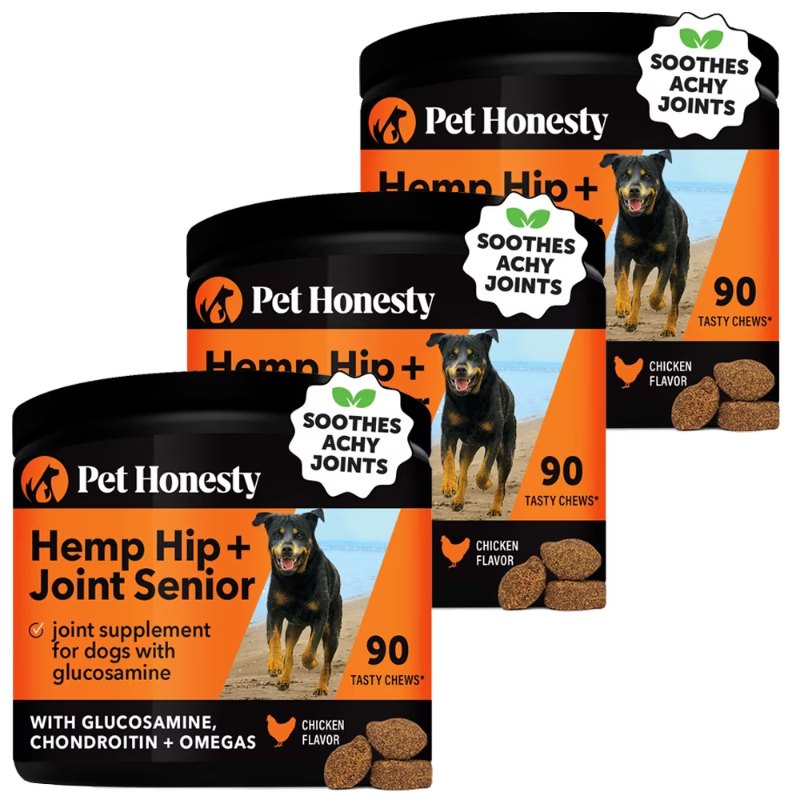
What we use: Pet Honesty Hemp Hip + Joint Health Senior
A joint chew we’d been using seemed to stop doing as much for our big dog. Our little dogs’ vet suggested looking for green-lipped mussel, and after reading a lot of labels, this is where we landed. It lists a real amount of green-lipped mussel near the top of the label.
Every two chews have 400 mg green-lipped mussel, 800 mg glucosamine, and 200 mg chondroitin, plus MSM, eggshell membrane, and hemp seed oil. (Hemp seed oil isn’t CBD.) The label says one chew per 25 pounds of body weight, and our vet signed off on the dose for ours. He won’t eat them plain, so they go down tucked into something he likes.
Good for: older dogs, big dogs, and anyone looking for a joint chew with green-lipped mussel.
Watch for: contains shellfish and egg. The label warns it may upset the stomach in high doses and to check with your vet first if your dog takes blood thinners or has stomach ulcers.
What we use: MYOS Canine Muscle Formula
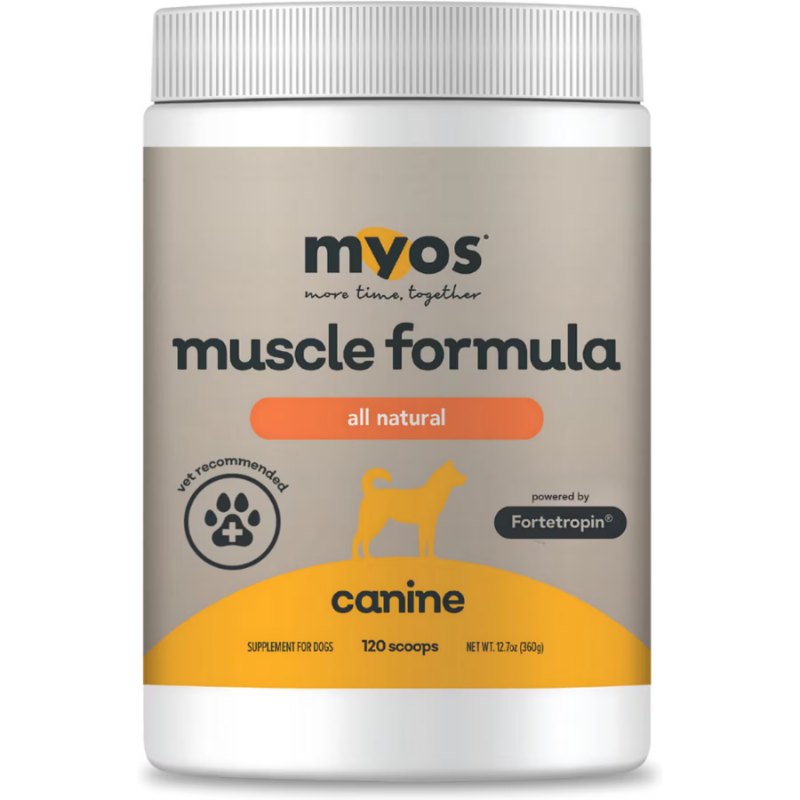
At a recent visit, our mobile vet noticed our old dog’s muscle starting to slip and suggested MYOS. Her take: it won’t build new muscle, but she likes it for helping him keep what he has. That lines up with the best study so far, where dogs recovering from knee surgery held on to their thigh muscle better than dogs on a placebo.
It’s a single-ingredient powder you mix into food. The ingredient, Fortetropin, is made from fertilized chicken egg yolk. Start small. The maker suggests beginning at half the dose; we go even smaller and work up, because too much too soon gave our dogs diarrhea.
Good for: older dogs losing muscle, and dogs coming back from injury or surgery (ask your vet).
Watch for: egg-based. Loose stool if you start too fast.
The two don’t overlap. One works on the joint, the other on the muscle around it, and stronger muscle takes load off the joint.
Where to start
If you do one thing this week, make it a vet visit that covers pain, weight, and muscle, not just a quick look at the hips. Then work on the house: rugs on the slick spots and a ramp at the car. None of it turns back the clock, but it buys more good days on their feet, and for a big dog who still wants to go out and patrol the yard, that’s worth a lot.
Last updated: November 20, 2026
Originally published: January 27, 2012



This is such a sad thing to happen to a dog. The worst is seeing them deteriorate and not be able to do the same things they used to be able to do, like jump in the car back seat with ease, but still want to keep up with you 🙁
I’ve found natural supplements work marvellously – not as a cure of course, but they certainly ease discomfort. Much love to all the arthritic pooches & their loving owners xx