

How much they need, and ideas that fit your dog’s size, age, and energy
Most dogs need somewhere between 30 minutes and two hours of activity a day. What fills that time is the fun part. A young herding dog may need a run and a puzzle toy before they’ll settle, while a senior hound is happiest with a long, slow sniff around the block or a quiet walk in the woods.
Build it around the dog you actually have. Start with how much exercise your dog needs, find the lane that fits them, then pick from the ideas below. Do it together, and you’ll both be better for it.
Why exercising together is good for both of you
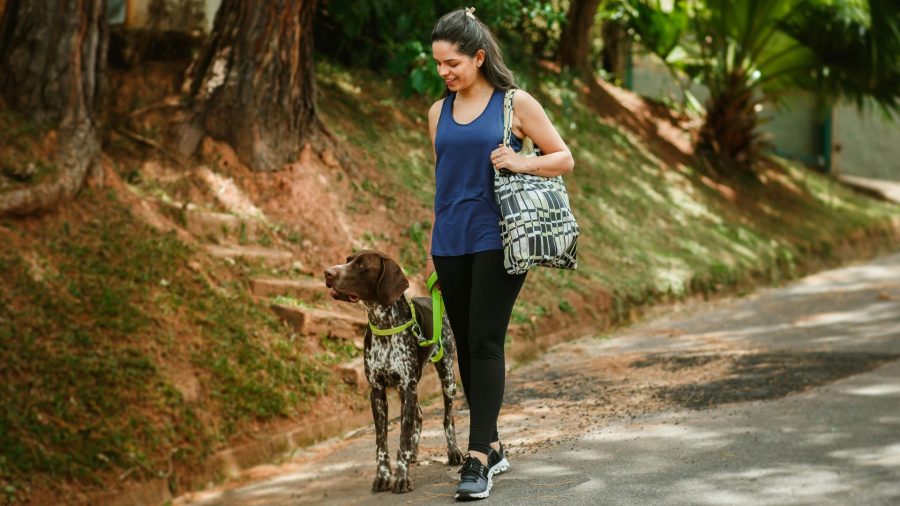
Your best workout buddy has four legs, and they’re the most reliable partner you’ll ever have. They don’t cancel, they don’t care that it’s drizzling, and they’re thrilled every single time. When researchers talked with people about walking their dogs, many described their dog as a big source of motivation and companionship for getting out the door.
That consistency adds up. In a 2019 University of Liverpool study, 64% of people with dogs met physical activity guidelines through dog walking alone.
It’s the walking that counts, not just having a dog. In a study of adults ages 71 to 82, people who regularly walked their dogs were about twice as likely to still be meeting recommended walking levels three years later. Only about a third of the people with dogs in that study walked them three or more times a week, though.
There may be a heart bonus, too. The American Heart Association has said that owning a dog is probably linked to a lower risk of heart disease, most likely because people with dogs tend to be more active. It also says not to get a dog for that reason alone, which seems fair. A dog is a big commitment, not a prescription.
And the benefits run both ways:
| For your dog | For you |
|---|---|
| A healthy weight and strong muscles | More steps without trying |
| Less boredom, chewing, and barking | A built-in reason to get outside |
| Confidence from new places and smells | Fresh air and time off your phone |
| A stronger bond with you | A stronger bond with your dog |
Your dog doesn’t care about your step count. They just want to go with you, and that’s half the reason it works.
How much exercise does your dog need?
That 30-minute-to-two-hour range is the general rule. The AKC points out that the right amount depends on age, health, and breed, and that’s why one-size advice falls flat.
A few things move your dog up or down that range:
- What they were bred to do. Herding, sporting, and working breeds were built to work all day, so they usually sit at the top. Many toy breeds and sighthounds need less than you’d guess.
- Their build. Flat-faced dogs like Pugs and Bulldogs can’t cool themselves well, so short, easy sessions beat long ones. And size alone doesn’t tell you much. A big dog isn’t automatically built for long runs.
- Their age. Puppies and seniors each have their own rules, covered in the lanes below.
- Their health. Check with your vet before you start anything new, especially if your dog is carrying extra weight or moving stiffly.
A dog who isn’t getting enough usually lets you know. Chewing, barking, pacing, and wild zoomies at 9 p.m. are all common signs. A tired dog is a much easier dog to live with.
Find your dog’s lane
Most dogs fit one of these lanes, and some fit two. A senior Lab and a young Border Collie are both “active breeds,” but they need very different days.
| Your dog | What they usually need | Good fits | Go easy on |
|---|---|---|---|
| Little dogs | Several short sessions | Walks, indoor fetch, tug, scent games | Long runs, lots of stairs for long-backed breeds |
| Big and giant dogs | Steady over fast | Walks, hikes, swimming, sniffing | Running on pavement, repeated jumping, heat |
| High-energy breeds | A job for body and brain | Fetch, frisbee, flirt pole, training, scent work | Endless fetch with no off switch |
| Seniors | Daily, gentler, shorter | Short walks, swimming, sniff walks | Jumping, slick floors, long sessions |
| Puppies | Short bursts of play | Play, training games, short walks | Structured running, high jumps |
| Couch potatoes | A small, steady start | One daily walk plus one game | Going from zero to a long hike |
Little dogs
Small dogs get a lot done indoors, and a game of hallway fetch really does count. Two little dogs can turn a living room into a racetrack.
They still need real walks, though. A walk is where they sniff, meet the world, and burn off the nervous energy that turns into barking. For long-backed breeds like Dachshunds and Corgis, keep jumping and stair running to a minimum.
Big and giant dogs
Big dogs tend to do best with steady exercise rather than speed: long walks, hikes, swimming, and plenty of time to sniff. Most aren’t built for miles of running on pavement, even when they look strong enough for it.
If you’ve ever had two big dogs at once, you know they’ll exercise each other for hours if they have room. Just watch them closely on hot days. Big bodies hold heat, and they rarely slow down on their own.
High-energy breeds
Herding and sporting dogs want a job. Physical exercise alone often isn’t enough, and a dog who runs for an hour can come home just as wound up.
Mix in brain work: training games, scent work, or puzzle toys. Ten minutes of nose work can tire out a busy dog as much as a long game of fetch. And since many of these dogs won’t quit on their own, you have to be the one who ends the game.
Senior dogs
Older dogs still need daily movement, just gentler and in smaller doses. Two short walks usually beat one long one. Swimming is easy on the joints, and a slow sniff walk keeps their mind busy.
An old big dog often sets his own pace, and that’s worth respecting. Watch how your dog moves the day after a big outing. If they’re stiff or sore, scale back next time and talk with your vet about joint support.
Puppies
Puppies have bursts of wild energy, but their bones are still growing. Stick to free play, short walks, and training games, and let them rest when they want to.
Hold off on regular running and high jumps until their growth plates have closed. For most dogs that’s around 18 months, and later for large breeds. Your vet can tell you when your puppy is ready.
Couch potatoes
Some dogs would rather nap, and some have gotten out of the habit. Start small: one daily walk and one short game. Build from there over a few weeks.
Find what your dog actually enjoys. A food-motivated dog who ignores a ball may light up for a treat hunt in the backyard.
Get moving with your dog
Once you know your dog’s lane, the fun part is picking ways to get moving together that you’ll both enjoy. Most dogs do best with a mix: a daily walk as the base, then one or two activities they love. Use the chart to narrow it down, then read on for how to start.
| Activity | Best for | Effort |
|---|---|---|
| Walks | Every dog | Low to medium |
| Sniff walks | Every dog, especially seniors | Low |
| Running | Fit adult dogs built for it | High |
| Biking or canicross | Fit, leash-trained adult dogs | High |
| Hiking | Big dogs, high-energy dogs | Medium to high |
| Swimming | Water lovers, seniors, stiff joints | Medium |
| Fetch | High-energy dogs, retrievers | High |
| Frisbee | Athletic, ball-crazy dogs | High |
| Tug | Most dogs, little dogs | Medium |
| Flirt pole | Fit, high-energy adults | High |
| Training workouts | Every dog | Low to medium |
| Scent games | Every dog, couch potatoes | Low |
| Backyard obstacle course | Young, active dogs | Medium |
| Stair fetch | Young, healthy dogs | High |
| Hide-and-seek | Every dog | Low to medium |
| Dog yoga | Seniors, anxious dogs | Low |
| Playdates and dog parks | Social dogs | Medium to high |
Out the door
Walks. The daily walk is still the foundation. Keep the leash loose, mix up the pace, and aim for 30 to 45 minutes for most adult dogs. Two shorter walks work just as well.
Sniff walks. Let your dog lead and stop wherever their nose says to. Sniffing is how dogs take in the world, and it tires them out more than you’d think. It’s one of the best things you can do for a senior dog.
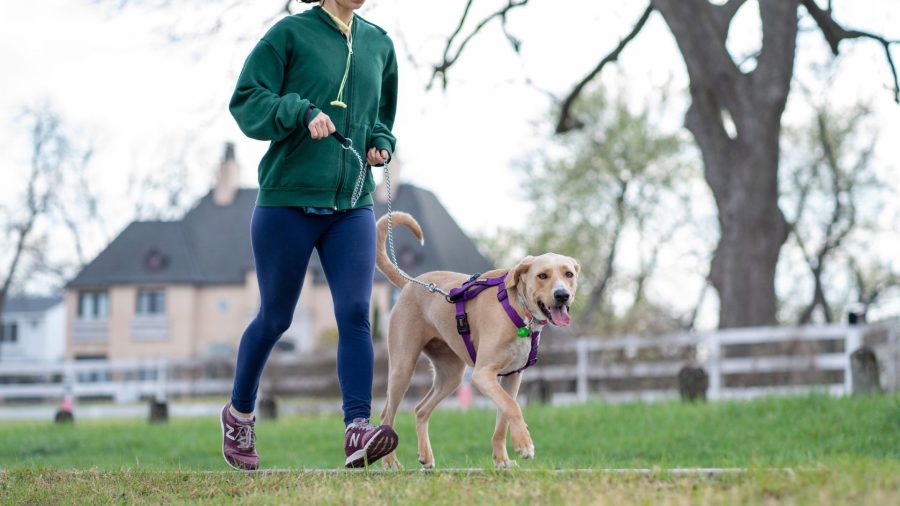
Running. Running works great for some dogs and poorly for others, so start with our guide to running with your dog. If your dog is a good fit, warm up with a walk, alternate short jogs with walking, and build over a few weeks. A hands-free running leash keeps your hands free and your dog at your side.
Biking or canicross. For fit adult dogs with solid leash manners, a slow bike ride or canicross (running with your dog harnessed to your waist) burns a lot of energy. Stick to quiet paths and soft ground, keep the pace at your dog’s comfortable trot, and stop well before they’re tired. A bike leash attachment keeps your dog at a safe distance from the wheels.
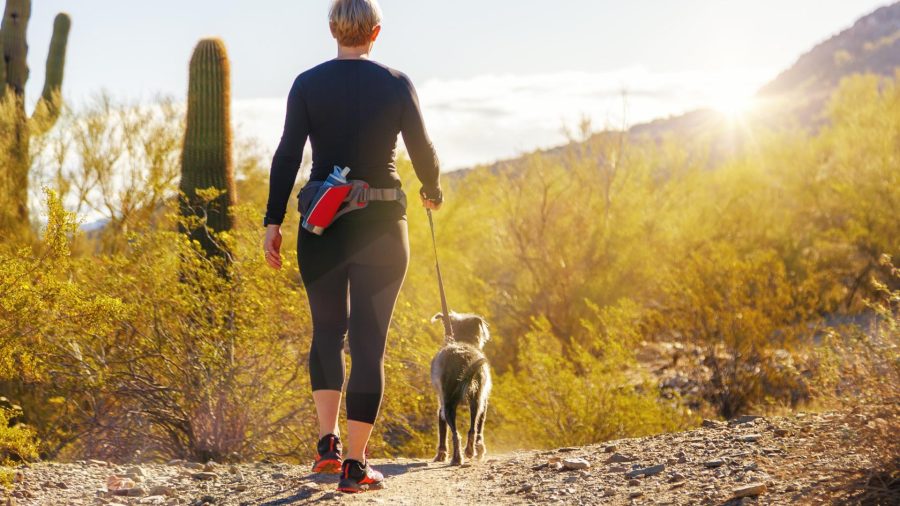
Hiking. A new trail is a feast of smells, so it works the nose and the legs. Follow the National Park Service’s B.A.R.K. rule: Bag your pet’s waste, Always leash your pet, Respect wildlife, and Know where you can go. Pack water and a collapsible water bowl. Here’s why we think hiking with your dog is worth it.
In the water
Swimming. Swimming is easy on the joints, which makes it great for older dogs and stiff ones. Not every dog is a natural swimmer, though. Start in shallow water, stay close, and put new swimmers in a dog life jacket. Once they’re comfortable, a floating toy turns laps into a game. Rinse your dog off afterward, and read up on pets and pool safety before summer.
Play
Fetch. For ball-crazy dogs, nothing burns energy faster. Keep sessions to short bursts with breaks in between, and remember that some dogs will chase until they drop. A ball launcher saves your arm.
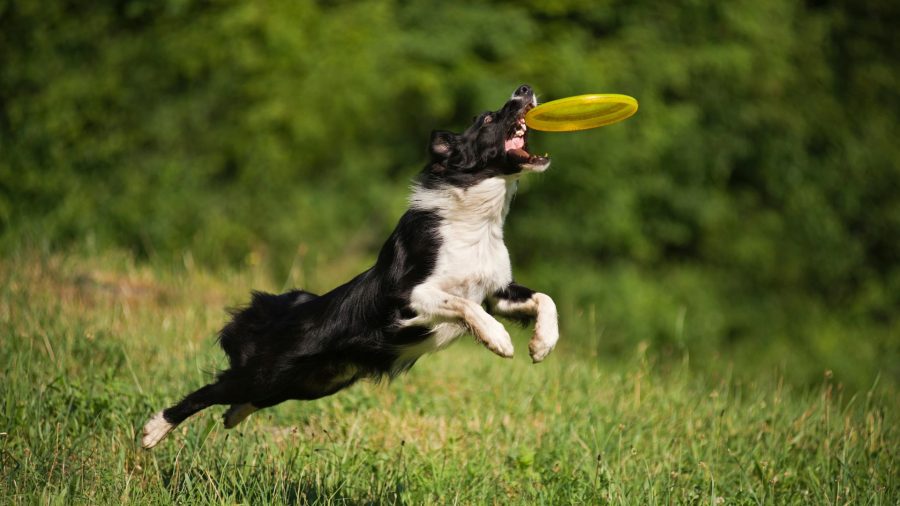
Frisbee. A great next step for athletic dogs who’ve mastered fetch. Use a soft dog disc, throw low and flat at first, and skip high leaping catches for puppies and seniors.
Tug. Tug is a real workout, especially for little dogs, and it fits in a living room. Let your dog win sometimes, and teach a “drop it” so the game ends when you say so.
Flirt pole. A toy on a rope at the end of a pole, and high-energy dogs go wild for it. Five minutes can tire out a dog who’d fetch for an hour. Keep sessions short, since quick turns are hard on joints, and skip it for puppies and seniors. Look for a flirt pole with a sturdy handle.
Brain and body
Training workouts. This one works your dog’s body and brain at the same time. Pick a few bodyweight moves and give a cue with each: a squat means “sit,” a lunge means “down,” and a plank means “stay.” Rotate the cues so your dog has to listen, and finish with a treat. Fifteen minutes in the living room counts.
Scent games. Hide treats around a room or the yard and let your dog hunt for them, or start with a snuffle mat. Nose work is calm, easy on the body, and surprisingly tiring. For more ideas, see our brain exercises for dogs.
Backyard obstacle course. Set up a few low jumps, a tunnel, and some cones to weave through. Keep jumps low, go slow while your dog learns, and make it a game, not a test.
Indoors
Stair fetch. Tossing a toy up a flight of stairs is a big workout in a small space. It’s best for young, healthy dogs. Skip it for seniors, long-backed breeds, and slippery stairs.
Hide-and-seek. Have someone hold your dog while you hide, then call them. It’s exercise, training, and a confidence boost in one game. For more indoor ideas, see 3 Unusual Ways To Get Pets Moving.
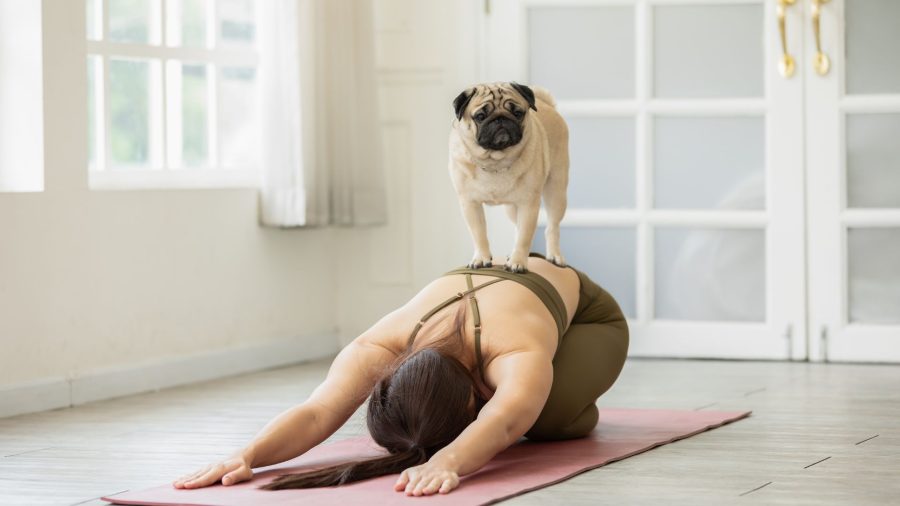
Dog yoga. Honestly, this is less a workout for your dog than a calm way to share the floor. Roll out a mat, stretch slowly, and let your dog settle beside you. Gentle, slow time together suits seniors and anxious dogs.
With friends
Playdates and dog parks. A good playmate can tire a dog out faster than anything you can do. Not every dog enjoys a crowd, though. Start with one calm dog your dog already likes, watch body language, and leave if play gets too rough.
Losing weight together
If you and your dog are both carrying a few extra pounds, you may be the perfect team. The PPET study (People and Pets Exercising Together) followed overweight people and their overweight dogs through a year-long weight loss program. On average, the dogs lost 12 pounds, about 15% of their body weight, and the people lost 11.
Dogs whose people joined in were more likely to finish the program than dogs dieting on their own. The study was funded by Hill’s, which makes weight-loss dog food, so keep that in mind. Still, the takeaway makes sense: it’s easier to stick with a plan when your partner is counting on you.
If you’re starting a plan together:
- Start with your vet. They can confirm how much your dog should lose, check for a medical cause, and set a safe pace.
- Measure meals and count treats. Extra calories add up fast for a dog. For ideas, see healthy treats for an overweight dog.
- Walk together most days. The PPET program asked for at least 30 minutes of moderate activity three days a week, which is a realistic place to start.
- Go slow. Steady progress is safer for both of you than a crash plan.
- Track it. A step counter works for you, and a monthly weigh-in works for your dog.
Safety tips for exercising together
- Build up slowly. Dogs build endurance the same way we do. Going from the couch to a five-mile run is how injuries happen.
- Watch the heat. Dogs overheat faster than we do, and flat-faced breeds and big dogs struggle most. Heat illness isn’t just a hot-car problem, either: a hard workout on a warm, humid day can do it too. On warm days, go early in the morning or in the evening. Try the park ranger test: if you can’t hold the back of your hand on the pavement for five seconds, it’s too hot for paws.
- Know when to stop. Heavy panting, lagging behind, limping, or seeming confused all mean the workout is over. Get to shade, offer water, and call your vet if your dog doesn’t settle.
- Bring water. If you need it, so does your dog.
- Mind your manners. Keep your dog leashed in public, step aside on trails when others pass, and always pick up after your dog.
- Check paws afterward. Look for cuts, burrs, and small stones between the toes. A little paw balm helps in rough weather.
Common questions
How much exercise does my dog need each day?
Most dogs need 30 minutes to two hours. High-energy herding and sporting breeds sit at the top of that range, while many toy breeds, flat-faced breeds, and seniors need less. Your vet can help you find the right amount for your dog.
Is walking enough exercise for my dog?
For many dogs, yes, especially if they get plenty of time to sniff. High-energy breeds usually need more. Add a game of fetch, a run, or brain work like scent games.
How do I know if my dog is getting too much exercise?
Watch for heavy panting, lagging behind, limping, or stiffness the next day. If you see any of these, cut back, and talk with your vet if it doesn’t improve.
When can I start running with my puppy?
Wait until your puppy’s growth plates have closed, which for most dogs is around 18 months and later for large breeds. Until then, stick to free play and short walks.
What’s the best exercise for a senior dog?
Short walks, swimming, and slow sniff walks are all easy on aging joints. Two short walks usually beat one long one.
How can I exercise my dog when it’s too hot or raining?
On hot days, go early in the morning or in the evening. On bad-weather days, try tug, hide-and-seek, hallway fetch, or a training workout in the living room.
Can my dog and I lose weight together?
Yes. In the PPET study, dogs and their people both lost weight over a year, and dogs whose people joined in were more likely to stick with it. Start with a vet visit so you know your dog’s target weight.
Fitting it into a busy week
Pick a regular time if you can. Dogs love routine, and a set walk time makes it harder for either of you to skip it. Short on time? Finding Time To Ensure Your Dog Is Exercising Enough has practical ideas, from setting a schedule to trading walks with a neighbor. For warm-weather plans, see Fun Activities To Do With Your Dog This Summer.
The best exercise plan is the one your dog looks forward to. And however you get moving, your dog’s infectious joy for exercise will remind you why exercise is good for your heart in more ways than one.
Last updated: November 20, 2026
Originally published: March 1, 2013



I absolutely love walking with my dogs. They are great for accountability because they will drive me nuts until they get to go for a nice walk. Just as good as human walking buddys, even better because they don’t talk constantly!
Hi there,
My golden retriever is a great exercise buddy particularly due to the fact that he’s so outgoing and is not considered to be a house dog. He gets really antsy when he’s not let out every other day, so I’ve been able to squeeze in some moderate amounts of exercise thanks to his insatiable energy. Quick tip though: some breeds are exclusively search dogs, and may keep you going for hours if they get a hold of a particular scent. Great blog!
Alana
Briards are herding dogs. They are not at all hyper, but they do need daily exercise. I bought a dog treadmill, but she won’t use it. The WoofStick works well and she enjoys it. It looks like a giant cat toy — a pole, a rope with the plush toy attached with Velcro. It’s great for playing in small spaces. . I am not in any way associated with this product. I just think it’s a good find.