
Editor’s Note (2026): This article was originally published in 2006 when COOL DOG® was a new canine hydration formula. While the original product is no longer manufactured, we’ve preserved its story because it highlights an important point that hasn’t changed: proper hydration is one of the best ways to help dogs cope with hot weather. We’ve updated this article with current information on keeping dogs hydrated and when modern hydration products may be appropriate.
The Original COOL DOG® Product
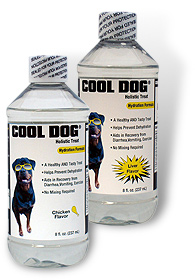
When PetsBlogs first covered COOL DOG® in 2006, the product was introduced as a flavored canine hydration formula designed to encourage dogs to drink more fluids during hot weather and after exercise.
According to Animal Business Concepts (ABC), LLC, founder Jonathan Lewis came up with the idea after noticing that his Rottweiler, Malcolm, wasn’t drinking enough water during long walks. The company developed a ready-to-serve liquid formulated specifically to encourage dogs to drink more and support hydration.
As the company grew, it expanded beyond COOL DOG® to introduce similar liquid wellness products for cats, horses and birds.
What Happened to COOL DOG?
Animal Business Concepts continued expanding its line of liquid pet wellness products for several years before the original COOL DOG® hydration formula was eventually discontinued.
Although the company is no longer in business and the original products are no longer available, the underlying goal of helping dogs stay properly hydrated during hot weather remains just as important today.
While the products have changed over the past two decades, the basics have not. Fresh water, shade, common sense, and knowing when additional hydration support may be appropriate are still the foundation of keeping dogs safe in hot weather.
Helping Dogs Stay Hydrated in Hot Weather
One of the best ways to help your dog stay safe during hot weather is proper hydration.
For most healthy dogs, that starts with something simple: making sure clean, fresh water is always available before, during and after time outdoors.
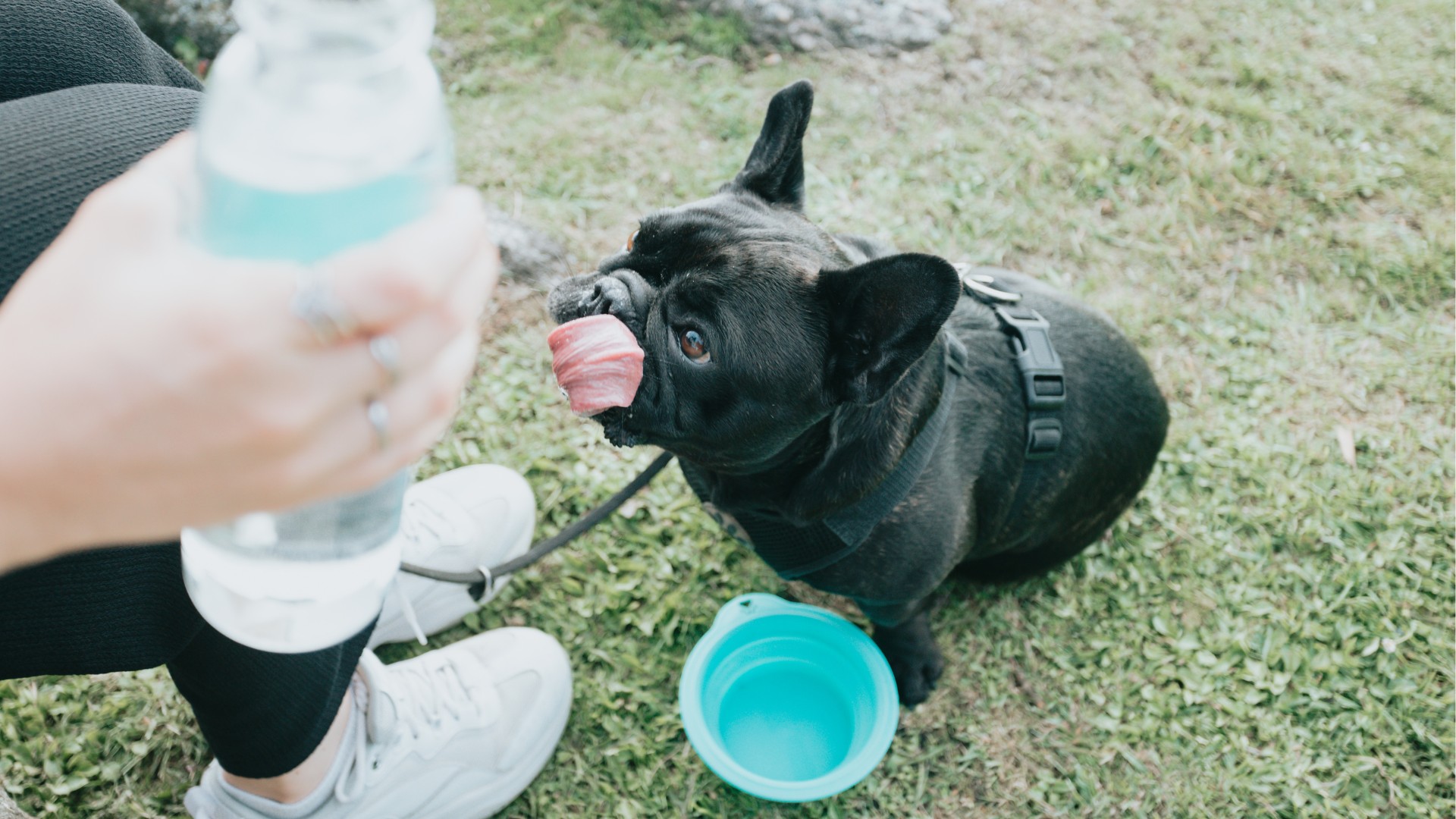
Whether you’re taking a neighborhood walk, heading to the beach, spending the afternoon at the park or traveling together, don’t wait until your dog is obviously thirsty. Offer water regularly, bring a portable bowl or travel water bottle, and encourage short drinking breaks throughout the day.
Every dog handles heat a little differently. Some happily stop for a drink whenever water is offered, while others become so focused on exploring or playing that they’ll keep going long past the point where they should take a break. Learning your own dog’s habits makes it easier to stay ahead of dehydration before it becomes a problem.
For healthy dogs enjoying normal summer activities, fresh water remains the gold standard. Most dogs do not need electrolyte supplements simply because it’s hot outside.
Why Hydration Matters More Than You Might Think
Dogs regulate body temperature differently than people. Instead of sweating through their skin, they cool themselves primarily by panting. Panting helps release heat, but it also increases water loss.
As dehydration develops, your dog’s body has a harder time regulating temperature, circulating blood efficiently and supporting normal organ function. Even mild dehydration can leave a dog tired, less willing to exercise and slower to recover after activity.
Some dogs are also at greater risk than others, including:
- puppies and senior dogs
- brachycephalic (flat-faced) breeds
- overweight dogs
- dogs with underlying medical conditions
- highly active or sporting dogs
For these dogs especially, offering water frequently is one of the simplest ways to reduce heat-related risk.
Dogs don’t always realize when they’ve had enough activity, especially if they’re excited, swimming, hiking or simply having too much fun. Taking regular water breaks, and sometimes even ending the outing a little earlier than your dog would choose, is often the better decision on hot days.
What We Know About Pet Hydration Today
When this article was first published in 2006, COOL DOG® was marketed as a flavored canine hydration formula designed to encourage dogs to drink more.
Today, pet owners have many more hydration products available, including portable water bottles, collapsible travel bowls and veterinary oral rehydration solutions designed for dogs.
Researchers have also learned much more about hydration over the past two decades. Modern veterinary medicine recognizes that while fresh water remains the foundation for healthy dogs, specially formulated oral rehydration solutions can be beneficial in certain medical or recovery situations.
The important difference is that these products are meant to support hydration when appropriate, not replace fresh drinking water as part of everyday care.
When Are Electrolyte Solutions Helpful?
Electrolyte solutions for dogs are very different from sports drinks made for people.
Veterinary oral rehydration solutions (sometimes called ORS) are formulated specifically for dogs and contain carefully balanced amounts of water, electrolytes and carbohydrates to help replace fluids lost through illness or other conditions.
Your veterinarian may recommend an electrolyte solution for situations such as:
- mild dehydration caused by vomiting or diarrhea
- recovery after certain illnesses
- prolonged physical exertion or working dogs
- nursing mothers, weaning puppies or other situations where additional hydration support is appropriate
Healthy dogs spending a normal day outdoors generally do not need electrolyte supplements simply because temperatures are high. Fresh drinking water is still the best choice for everyday hydration.
Skip the Gatorade
Human sports drinks are not formulated for dogs.
Products like Gatorade contain sugar levels and electrolyte balances designed for human athletes, not canine physiology. Some flavored hydration products may also contain ingredients that are unsafe for dogs, including xylitol, which is highly toxic.
If your dog needs more than fresh water because of illness or dehydration, it’s best to use a veterinary oral rehydration solution recommended by your veterinarian rather than a human sports drink.
- VetClassics Pet-A-Lyte Oral Electrolyte Solution from Chewy
- VetClassics Pet-A-Lyte Oral Electrolyte Solution from Amazon
For everyday summer outings, though, we’d still pack a bottle of fresh water before packing an electrolyte product. Most healthy dogs simply need regular opportunities to drink, especially when they’re active or spending time outdoors.
How to Check Your Dog for Dehydration
One of the easiest ways to monitor your dog is to become familiar with what “normal” looks like before a problem develops.
One advantage of living with the same dog every day is that you quickly learn what’s normal for them. A dog that’s unusually tired after a short walk or suddenly uninterested in water may be telling you something long before obvious signs of dehydration appear.
Check the gums
Healthy gums should feel moist and slippery.
Dry, sticky or tacky gums can be an early sign of dehydration.
Try the skin turgor (skin tent) test
Gently lift the loose skin over your dog’s shoulders and release it.
In a well-hydrated dog, the skin should spring back quickly.
If it remains “tented” or returns slowly, dehydration may be present. Keep in mind that this test is less reliable in older dogs and some breeds, so it should never be used by itself.
Watch for other signs
Contact your veterinarian if your dog develops signs such as:
- excessive panting
- lethargy
- weakness
- sunken eyes
- dry or sticky gums
- refusal to drink
- vomiting or diarrhea
Know When It’s an Emergency
Dehydration and heatstroke are not the same thing, but they often occur together. Heatstroke is a life-threatening medical emergency that requires immediate veterinary care.
If your dog collapses, becomes disoriented, has difficulty breathing, vomits repeatedly, develops bright red or pale gums, or cannot keep water down, act immediately.
Move your dog to a cool, shaded or air-conditioned area as quickly as possible and begin gentle cooling with cool (not ice-cold) water applied to the paws, belly and body. Do not use ice baths or force your dog to drink water if they are unable or unwilling to swallow.
As soon as you’ve started cooling your dog, contact your veterinarian or the nearest emergency veterinary hospital and transport your dog for immediate evaluation. Continue gentle cooling during transport if it can be done safely.
The Takeaway
Jonathan Lewis’s original idea came from wanting to help his own dog stay hydrated during long walks. While the products have changed over the years, that simple goal hasn’t.
Whether you’re heading out for a neighborhood walk or spending the day exploring together, paying attention to your dog’s hydration is one of the simplest ways to help them stay healthy, comfortable and safe in hot weather. A few extra water breaks, a little shade and knowing when it’s time to head home can make all the difference.
Last updated: July 24, 2026
Originally published: January 29, 2006