

I grew up riding Western, mostly in barns where the horses and their saddles were already a matched set. Nobody explained saddle fit to me. It was just understood: that saddle goes on that horse. At the time I didn’t think much about why. Now I do.
Buying a saddle can get confusing fast. Ask five horse people about saddle fit and you’ll probably get six different opinions. Some riders swear by specific brands or tree styles. Others insist you need custom fitting, tracings, or expensive measuring systems before you even think about buying.
The truth usually lands somewhere in the middle.
How Real Horse People Think About Saddle Fit
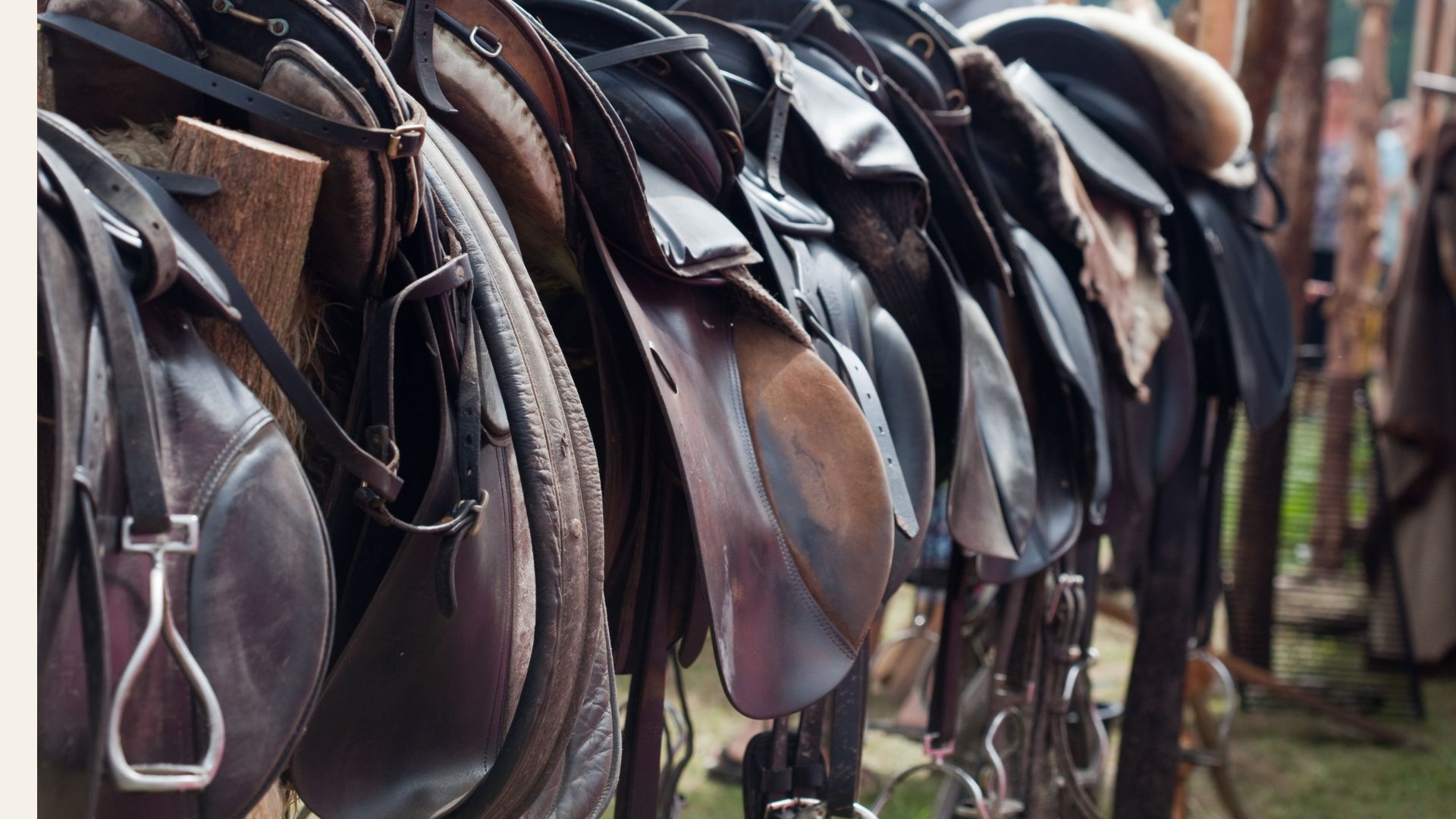
Spend any time in a working barn and you’ll notice something. Certain saddles quietly become attached to certain horses. Nobody labels them. Nobody makes a formal announcement. But everybody knows that saddle goes on that horse. Because it fits, and the horse is fine in it, and that’s enough.
You’ll also notice the saddle that lives in the corner of the tack room. It doesn’t fit any of the current horses well enough to be in regular rotation, but it hasn’t gone anywhere either. Because horses change, and new ones arrive, and that saddle might be exactly right for one of them someday.
Experienced riders don’t usually talk about saddle fit in technical language. They say things like:
- “She goes best in that saddle.”
- “That one pinches his shoulders.”
- “He’s too wide for that tree.”
- “That horse is just hard to fit.”
- “She changed shape after winter.”
That last one matters more than people expect. A horse that gained muscle through a conditioning program, or lost topline over a long winter, or came back from an injury is a different horse to fit than the one you measured six months ago. Fit isn’t a one-time problem you solve and forget.
Most experienced riders judge fit as much by behavior and movement as by measurements. A shortened stride, pinned ears during saddling, a horse that hollows his back, refuses transitions, or suddenly decides he has strong feelings about being caught in the pasture. All of it goes into the mental file. The horse is telling you something. It’s usually not subtle, just easy to misread as a training problem.
1. Not Every Saddle Fits Every Horse
This sounds obvious, but it’s where a lot of saddle problems start.
A saddle that works beautifully on one horse can sit terribly on another, even if the horses seem similar at first glance. Wide-backed draft crosses, narrow Thoroughbreds, stocky Quarter Horses, and round Haflingers all carry a saddle differently. Two horses of the same breed standing next to each other can have completely different withers height, back length, and shoulder angle.
In barns with multiple horses, you’ll often find one saddle that fits almost everything, and one horse that fits almost nothing. Both are completely normal.
The saddle has to fit the horse you’re putting it on. The specific one, right now.
2. “Average Fit” Sometimes Works, But Not Always
There’s a reason certain saddle sizes and tree types are so common. Many western saddles built on semi-quarter horse bars fit a large percentage of stock horses reasonably well. The same goes for medium-tree English saddles. Some riders buy a saddle, throw it on several different horses, and never think twice about it.
But pretty close isn’t always good enough.
If a saddle pinches, bridges, rocks, or puts pressure in the wrong places, your horse will let you know, eventually. Sometimes it shows up as soreness. Sometimes it’s resistance, behavioral changes, or a horse that suddenly doesn’t seem happy under saddle anymore. There’s a well-known story in saddle-fitting circles about a horse that developed a sudden, inexplicable problem crossing a particular bridge on trail rides. Balking, getting sticky, eventually threatening to rear. The rider tried everything. Turns out the saddle fit had changed as the horse gained condition (filled out). Once the saddle was sorted, the bridge problem disappeared completely.
Horses communicate. They just don’t do it in plain English.
Horses change shape more than people realize. A saddle that fit beautifully two years ago may not fit the same horse after aging, weight changes, conditioning, or long stretches out of work. That’s one reason experienced riders periodically reassess fit instead of assuming a saddle is “good forever.”
3. It’s Easy to Fall in Love With Looks
We’ve all done it. You see a saddle with beautiful tooling, rich leather, silver accents, or that perfect old-western look and immediately start imagining it on your horse.
Horses don’t care how pretty the saddle is.
A saddle can be absolutely stunning and still fit terribly. Some of the best-fitting saddles aren’t the flashy ones. Looks matter, and budget matters, but fit has to come first.
4. A Little Knowledge Goes a Long Way
You don’t need to become a saddle-fitting expert. But understanding a few basics before spending serious money makes the whole process a lot less overwhelming.
The tree is the rigid internal frame that gives a saddle its shape and structure. Think of it as the skeleton. The seat, panels, and all the leather or synthetic material on the outside are built around it. If the tree width is wrong for your horse, nothing else can compensate. Too narrow and it pinches the withers and blocks shoulder movement. Too wide and it drops down onto the spine. Either causes pain, and pain causes behavior issues (rightly so).
A few things worth checking yourself, with the saddle on the horse, no pad, girth loose:
- Wither clearance. Two to three fingers between the pommel and the top of the withers. That gap compresses under a rider’s weight, so more is better than less.
- Spine clearance. Look through the gullet from behind. You should see daylight end to end, with nothing pressing on the spine.
- Panel contact. Run your hand under the panels. You want even contact across the full length. Bridging is a gap in the middle that concentrates pressure at both ends. Rocking means the fit isn’t stable.
- Balance. The seat should look level from the side, or very slightly lower at the front. Tipping forward or back usually signals a tree width or placement problem.
- Shoulder clearance. The front of the panels need to sit behind the shoulder blade so it can rotate freely at every stride.
It also helps to work with a retailer or saddle maker who actually asks questions. If someone is trying to sell you a saddle without asking about your horse’s build, age, or discipline, that’s not a great sign.
Western vs. English: Where the Details Differ
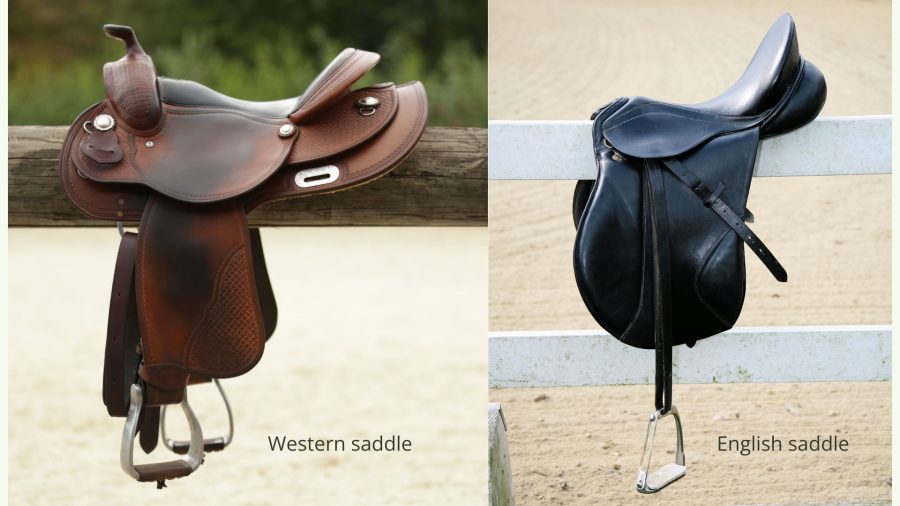
The fit principles above apply to both disciplines, but the fitting vocabulary is different.
Western saddles are sized by gullet width: semi-quarter horse bars, full quarter horse bars, and a few others. Semi-quarter horse bars fit a reasonable middle of stock-type horses, maybe 80% of them by the old rule of thumb. But that’s not good enough odds if your horse is in the other 20%, and you won’t know which side of the line you’re on until you put it on and ride.
English saddles are fit by tree width (narrow, medium, wide, extra-wide) and tree angle. A horse with heavy shoulder muscle or unusual conformation may need something outside the standard range, or a saddle with adjustable or reflocked panels.
The checks are the same in either case. The vocabulary is different; the fit principles are not.
Fit to the Rider Matters, Too
A saddle that fits the horse but puts the rider in a bad position creates its own problems. A rider who is gripping, bracing, or working to stay balanced is harder for the horse to carry.
Seat size is the starting point. For Western saddles, it is measured from the front of the swell to the top of the cantle. For English, from the button to the cantle across the seat. Most adult riders fall somewhere between 15.5 and 17 inches, but build varies enough that sitting in it matters more than the number.
5. If You’re New to Horses, Bring Someone Experienced
This is probably the most practical advice I can give.
If you’re new, and you’re headed out to do some saddle shopping, bring an experienced horse person with you. They can often spot obvious fit problems within seconds, just by watching the saddle sit on the horse or seeing the horse move under it.
That doesn’t mean you need an expensive professional fitter for every situation, especially for a general-use saddle and casual riding. But a knowledgeable trainer, barn friend, vet, or experienced rider can save you a lot of frustration and potentially a lot of money.
When fit issues go beyond what you can assess yourself, or if you’re already seeing soreness, resistance, or muscle changes alongside the withers and spine, a certified saddle fitter is worth calling. They can do withers tracings, assess panel contact accurately, and refloc panels as the horse’s body changes over time.
Signs worth taking seriously before assuming it’s a training problem:
- Resistance or pinned ears at tacking up.
- New bucking, spooking, or rushing with no other explanation.
- Muscle atrophy alongside the withers or spine.
- Back soreness on palpation (pressing along the back with your hands to check for pain).
- Dry spots under the saddle after a ride. They indicate pressure points. The saddle pressed hard enough there that the horse couldn’t sweat normally.
- White hairs developing under the saddle area. If you ever see that, there’s a story behind it.
I once had an older mare who came to me with a small patch of white hairs directly at the top of her withers, right underneath where the front of a western saddle would have sat. She was sweet, sound, and comfortable by the time she became mine, but those white hairs told a story.
In the horse world, people often call marks like that “saddle scars” or “saddle marks.” They’re usually left behind by years of pressure, rubbing, or an improperly fitting saddle sitting too low on the withers. Once those hair follicles are damaged from long-term pressure or friction, the hair often grows back white permanently.
I never rode her myself, but if I had, I would have been really careful about wither clearance and pressure in that area. On a horse with prominent withers or old saddle-related damage, details like proper saddle balance, adequate gullet clearance, and even the shape of the saddle pad matter a lot. A contoured pad with built-in wither relief can make a real difference for a horse carrying that kind of history.”
And honestly, horses carry these stories with them for years. Sometimes a tiny patch of white hair is the only visible reminder that a saddle once sat where it never should have.
6. You Don’t Really Know Until You Ride In It
At some point the measuring, researching, and comparing has to stop.
The real test is how the saddle performs once it’s on the horse and you go ride. Does it stay balanced? Does your horse move freely? Are there dry spots or sore areas afterward? Does your horse pin his ears when you saddle up?
There’s probably no such thing as a perfect fit for every horse in every situation. But there’s a clear difference between a saddle that works with your horse and one that doesn’t.
Your horse usually knows the difference long before you do.
If your horse is showing behavior changes or back soreness, saddle fit is one piece of the picture. A lameness exam with your vet can help rule out other causes.
Last updated: June 3, 2026
Originally published: July 17, 2005